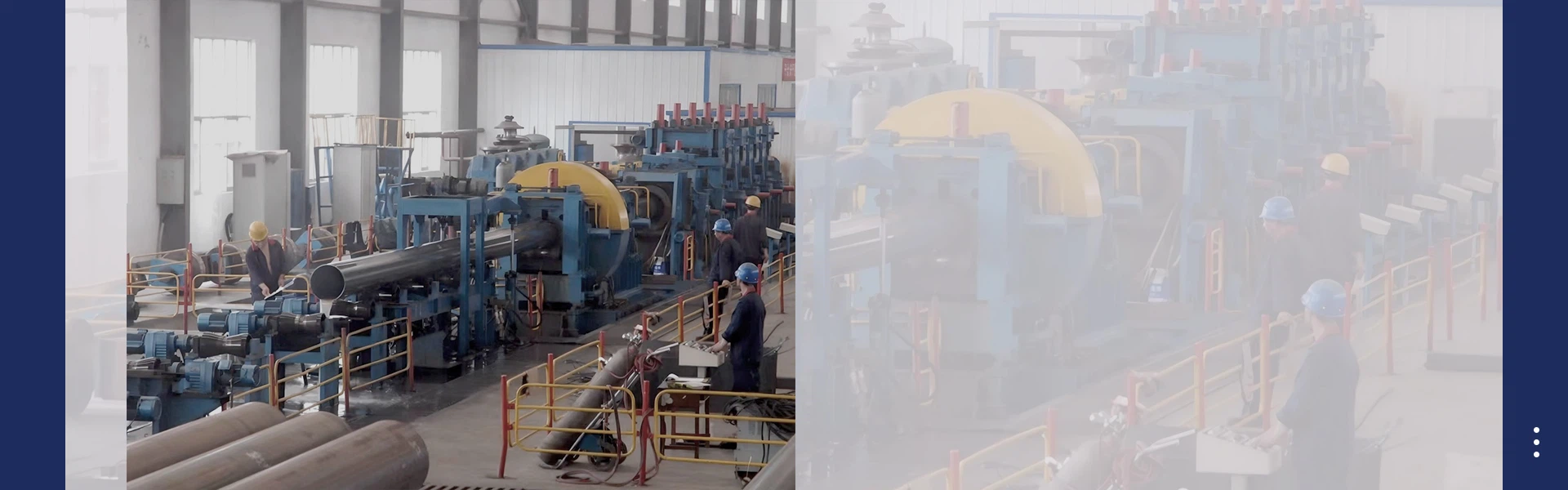
Tianjin Binhai Yashanway Import and Export Co., Ltd. is one of the leading manufacturers and suppliers of high-frequency erw steel tube mill in China, specialized in providing high quality customized service. If you're going to wholesale the newest high-frequency erw steel tube mill made in China, welcome to get free sample from our factory. For price consultation, contact us.
Continuous Tube Production
Converts steel strip or coil into welded tubes through forming, high-frequency welding, sizing, cutting, and downstream handling.
Multiple Tube Profiles
Configurable for round tubes as well as square and rectangular hollow sections, subject to the selected tooling and production range.
Project-Based Configuration
Mill configuration is determined by tube dimensions, wall thickness, steel grade, target production speed, testing requirements, and applicable standards.
Production Flow & Main Equipment
Typical Production Flow
Steel Coil → Coil Car → Uncoiler → Leveling → Shearing & Butt Welding → Accumulator → Forming → Fin-Pass → HF Welding → Weld Bead Removal → Cooling → Sizing → Straightening → Flying Cut-Off → Run-Out → Inspection → Bundling
Coil Entry Section
Includes coil handling, uncoiling, strip leveling, end preparation, butt welding, and strip accumulation for continuous material feeding.
Forming & Welding Section
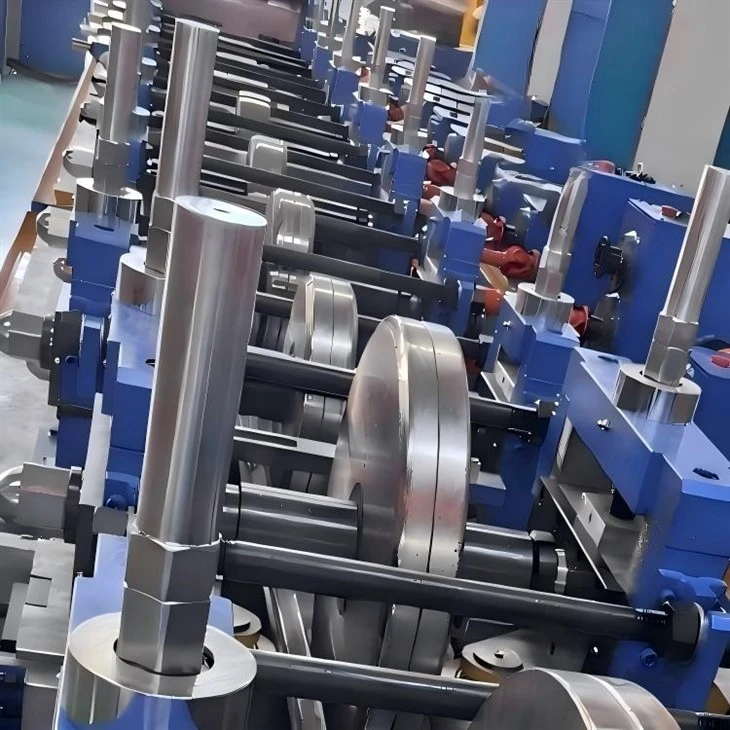
Uses forming stands, fin-pass stands, seam guidance, HF welding equipment, squeeze rolls, and weld bead removal equipment.
Sizing, Cutting & Handling
Includes cooling, sizing and straightening stands, flying cut-off equipment, run-out handling, and downstream inspection or bundling systems as specified.
Technical Specifications
|
Technical Item |
Configuration / Selection Basis |
|
Tube Profiles |
Round, square, rectangular, or specified profiles |
|
Tube Size Range |
Based on required minimum and maximum tube dimensions |
|
Wall Thickness |
Selected according to tube size, material, application, and applicable standard |
|
Steel Materials |
Carbon steel, low-alloy steel, or specified grades |
|
Strip Width / Thickness |
Matched to the required finished tube range |
|
Line Speed |
Determined by tube size, wall thickness, material, welding conditions, and downstream equipment |
|
HF Welding System |
Power and frequency selected according to production requirements |
|
Cut-Off System |
Flying saw, cold cut-off, or specified cutting configuration |
|
Tube Length |
Configured according to finished product requirements |
|
Inspection |
Dimensional inspection, ECT, UT, hydrostatic testing, or other specified methods |
Mill Selection Considerations
Product Range
Specify the minimum and maximum tube dimensions, wall thickness, profiles, and steel grades before selecting the mill.
Production Requirements
Evaluate required output together with line speed, product mix, tooling changeover, welding conditions, and actual operating requirements.
Tooling & Changeover
Review tooling sets, forming configuration, roll change methods, and expected changeover requirements when producing multiple tube sizes.
Plant Integration
Confirm workshop space, electrical capacity, cooling water, compressed air, material handling, and downstream equipment requirements before installation.
Applications
Structural Tubes
Suitable for production of square and rectangular hollow sections used in construction and fabricated steel structures, subject to the specified product requirements.
Mechanical Tubes
Used for round and shaped tubes for machinery, equipment frames, fabricated components, and other mechanical applications.
Industrial Tubes
Configurable for general industrial tube production where the required dimensions, material grade, and testing specifications can be matched.
Manufacturing & Factory Acceptance
Mechanical & Tooling Inspection
Roll geometry, machined components, shaft alignment, assembly accuracy, and surface condition can be inspected against project requirements.
System Integration
Mechanical drives, electrical controls, HF welding equipment, cooling, sizing, and cutting systems are checked during assembly and commissioning.
Factory Acceptance Testing (FAT)
Pre-shipment verification can cover machine operation, drive synchronization, control functions, welding system operation, and agreed inspection criteria.
Quality Control & Testing
Dimensional Inspection
Finished tubes can be checked for outside dimensions, wall thickness, straightness, and cut length according to the applicable specification.
Weld & NDT Inspection
Eddy Current Testing (ECT), Ultrasonic Testing (UT), or other weld inspection methods can be incorporated according to product requirements.
Hydrostatic Testing
Hydrostatic testing can be included where required by the finished tube specification or applicable product standard.
Customization & Configuration
Tube Range Configuration
Forming stands, sizing sections, tooling, and welding capacity can be configured around the required tube size and wall thickness range.
Automation & Controls
Electrical control, drive systems, production monitoring, and automation level can be specified according to the project scope.
Downstream Equipment
Cutting, inspection, run-out handling, bundling, and other downstream systems can be configured according to the finished tube requirements.
RFQ Information
To prepare an appropriate ERW tube mill configuration, provide:
Product Range - Tube profiles, minimum/maximum dimensions, and wall thickness.
Material - Steel grades, strip width, strip thickness, and coil specifications.
Production Target - Required line speed, production capacity, and finished tube length.
Technical Requirements - Applicable standards, testing requirements, automation level, and workshop conditions.
FAQ
Q: What information is needed to select an HF ERW tube mill?
A: Provide the required tube profiles, size range, wall thickness, steel grades, coil specifications, target production requirements, tube length, applicable standards, and testing requirements.
Q: Can one mill produce round, square, and rectangular tubes?
A: Yes, a suitably configured mill can produce multiple tube profiles when the forming, sizing, and tooling systems are designed for the required product range.
Q: What determines the practical production speed?
A: Production speed depends on tube dimensions, wall thickness, material grade, welding conditions, forming stability, tooling configuration, cutting requirements, and downstream equipment.
Q: What testing systems can be included?
A: Depending on the product specification, the system can be configured with dimensional inspection, Eddy Current Testing, Ultrasonic Testing, hydrostatic testing, and other specified inspection equipment.
Q: What should buyers verify before purchasing an ERW tube mill?
A: Review the actual product range, tooling configuration, HF welding capacity, drive and control systems, factory assembly, FAT procedures, testing capability, and technical documentation.
Q: What information should be included in an ERW tube mill RFQ?
A: An RFQ should include tube dimensions, wall thickness, profiles, steel grades, strip specifications, target output, finished tube length, applicable standards, testing requirements, automation expectations, and available plant utilities.
Hot Tags: high-frequency erw steel tube mill, China high-frequency erw steel tube mill manufacturers, suppliers, factory, pipe edge forming welding line, pipe strip forming welding line, pipe welding forming line, tube cutting forming line, tube fabrication line, tube seam forming line