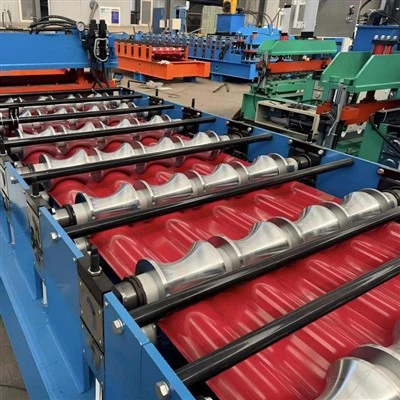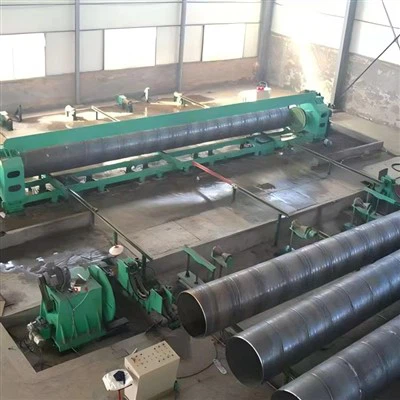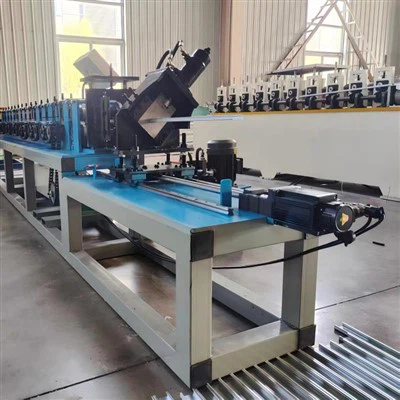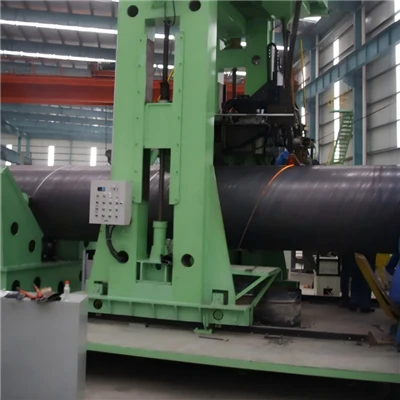
Product overview
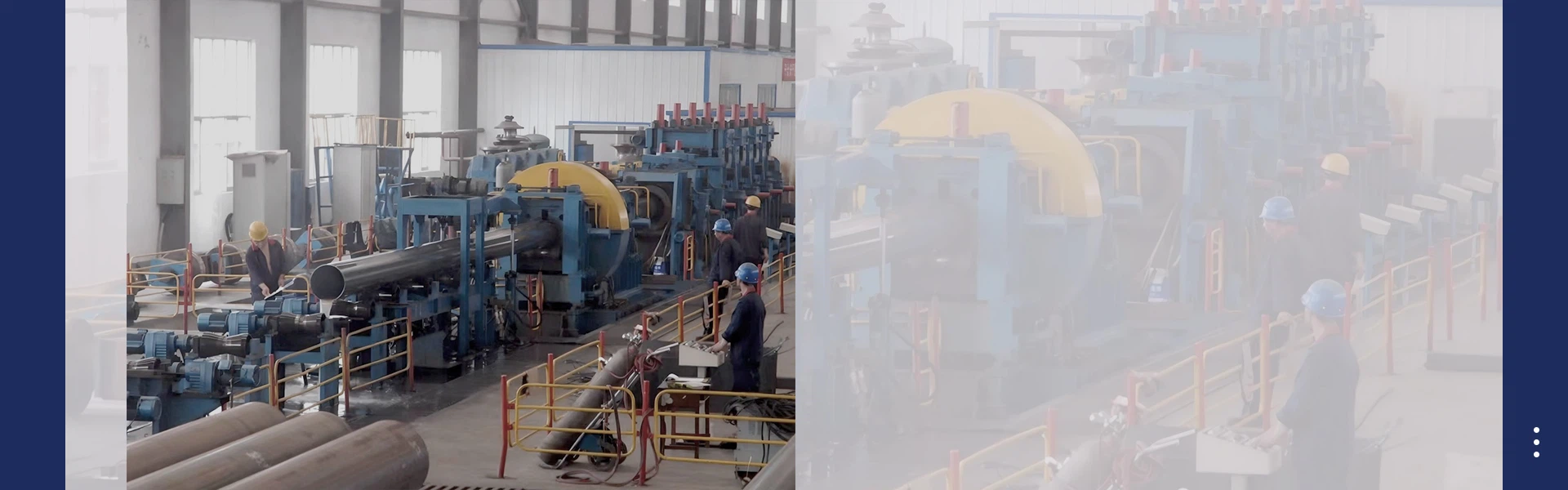
An ERW steel pipe production line converts steel strip or coil into welded steel pipes through forming, high-frequency welding, sizing, and cutting. It is designed for manufacturers producing round, square, or rectangular tubes for construction, machinery, furniture, and other industrial applications, depending on the line configuration.
For equipment buyers, the key selection factors are pipe diameter, wall thickness, steel grade, required output, dimensional tolerances, and applicable product standards.
-
![Spiral Pipe Machine]() Spiral Pipe MachineMainly used for producing spiral welded steel pipes in various diameters and thicknesses for water supply, gas transmission, and structural applications.view more
Diameter Range: 168mm – 4000mm(customizable)
Wall Thickness: 6mm –... -
![Industrial High-Frequency Pipe Making Machine]() Industrial High-Frequency Pipe Making MachineA continuous HF tube mill converts steel strip coils into welded round, square, rectangular, and other tube profiles through forming, high-frequency welding, sizing, and cutting. The mill configuration is determined by the target tube...view more
-
![Industrial High-Frequency Pipe Maker]() Industrial High-Frequency Pipe MakerA continuous HF tube mill converts steel strip coils into welded round, square, rectangular, and other tube profiles through forming, high-frequency welding, sizing, and cutting. The mill configuration is determined by the target tube...view more
-
![Small Diameter HF Tube Mill]() Small Diameter HF Tube MillA Small Diameter HF Tube Mill continuously converts steel strip coils into welded tubes through forming, high-frequency welding, sizing, straightening, and cutting. The line is configured according to the required tube diameter, wall...view more
-
![Carbon Steel HF Welded Pipe Plant]() Carbon Steel HF Welded Pipe PlantA Carbon Steel HF Welded Pipe Plant continuously converts steel strip coils into longitudinally welded pipes through strip preparation, roll forming, high-frequency welding, sizing, cutting, and finished-pipe handling.view more
-
![Stainless Steel HF Tube Production Line]() Stainless Steel HF Tube Production LineA stainless steel HF tube production line continuously converts stainless steel strip coils into welded tubes through forming, high-frequency welding, sizing, cutting, and tube handling.view more
-
![HF Induction Welded Pipe Mill]() HF Induction Welded Pipe MillThe HF induction welded pipe mill converts steel strip into round welded tubes through continuous forming, high-frequency longitudinal seam welding, sizing and cutting.view more
-
![High-Frequency Welded Tube Machine]() High-Frequency Welded Tube MachineA High-Frequency Welded Tube Machine is a continuous tube mill for forming steel strip into round, square, or rectangular welded tubes. The production line integrates strip preparation, roll forming, high-frequency seam welding, sizing,...view more
-
![Oil And Gas Spiral Pipe Production Line]() Oil And Gas Spiral Pipe Production LineLine configuration is determined by pipe diameter, wall thickness, steel grade, coil dimensions, production capacity, and inspection requirements.view more
-
![Submerged Arc Welded Pipe Machine]() Submerged Arc Welded Pipe MachineSubmerged Arc Welded (SAW) pipe production lines are used to manufacture large-diameter steel pipes through controlled forming and internal/external submerged arc welding. Depending on the required pipe design, production lines can be...view more
-
![Heavy Wall Spiral Welded Tube Mill]() Heavy Wall Spiral Welded Tube MillA Heavy-Wall Spiral Welded Tube Mill converts steel strip coils into large-diameter spiral welded steel pipes through continuous strip preparation, helical forming, tack welding, and internal and external Submerged Arc Welding (SAW)....view more
-
![SSAW Steel Pipe Production Equipment]() SSAW Steel Pipe Production EquipmentA SSAW steel pipe production line converts hot-rolled steel coil into spiral welded steel pipe through coil preparation, spiral forming, internal and external submerged arc welding, pipe cutting, inspection, and finishing. Line...view more


Production line types and applications
Different mill configurations are designed for different pipe size ranges, material thicknesses, and production requirements. The final working range depends on the selected model and tooling.
|
Line type |
Typical application areas |
Key selection factors |
|
Small-diameter ERW mill |
Furniture tubes, steel conduit, fencing, and light structural tubes |
Small OD range, thin-wall processing, changeover requirements |
|
Medium-size ERW mill |
Scaffolding, greenhouse structures, and general structural tubes |
Pipe dimensions, wall thickness, output requirements |
|
Large-diameter ERW mill |
Large structural tubes and selected industrial pipe applications |
Forming method, steel grade, wall thickness, welding configuration |
The available OD and wall thickness ranges should be confirmed for each proposed model before equipment selection.
Technical specifications
The following parameters should be confirmed against the actual machine configuration and target pipe specifications.
|
Technical parameter |
Selection requirements |
|
Raw material |
Steel grade, coil width, thickness, and mechanical properties |
|
Pipe dimensions |
Minimum and maximum OD, wall thickness, and section shape |
|
Coil handling |
Maximum coil weight, coil ID, and OD |
|
Production speed |
Speed range for the specified pipe dimensions and material |
|
High-frequency welder |
Rated power and frequency matched to the production requirements |
|
Cutting system |
Flying saw type, pipe length, and cutting tolerance |
|
Control system |
PLC configuration, operator interface, and automation options |
|
Utilities |
Power supply, cooling water, compressed air, and installation requirements |
Actual operating speed and output depend on pipe dimensions, material, tooling, welding conditions, and line configuration.
Entry section
Includes coil handling, strip-end preparation, and joining equipment as configured. The entry system must match the coil dimensions and required production continuity.
Forming section
Roll stands or other specified forming systems shape the steel strip into the required pipe profile. Roll tooling is selected according to the target dimensions and product range.
High-frequency welding section
The strip edges are heated and pressed together to form a longitudinal weld. Welding parameters must be matched to the material, wall thickness, and production speed.
Cooling and sizing section
Cooling and sizing equipment bring the welded pipe to the specified dimensions. Straightening and calibration requirements depend on the finished pipe specification.
Cutting and discharge section
A flying saw or other suitable cutting system separates the pipe into specified lengths. Cutting method and tolerance should be confirmed for the intended product.
Optional equipment may include automatic coil handling, quick-change tooling, online inspection, and automatic bundling, subject to the selected configuration.

Quality control and inspection
Dimensional inspection
Pipe OD, wall thickness, length, and straightness requirements should be defined according to the finished product specification.
Process monitoring
Welding parameters, forming conditions, and cutting operations should be monitored according to the equipment design and production requirements.
Weld inspection
Online eddy current testing or other suitable inspection equipment can be specified according to the required detection capability and applicable standards. Additional inspection may be necessary for particular applications.
Acceptance criteria
Before ordering, buyers should define the required pipe tolerances, weld inspection method, test procedures, and acceptance criteria. Compliance with a product standard depends on the complete manufacturing and inspection process, not the production line alone.
Customization and production planning
Pipe size range
Provide the minimum and maximum OD, wall thickness, pipe shape, and finished length to determine the appropriate mill configuration.
Material requirements
Specify the steel grades and material properties to be processed. Confirm compatibility with the forming and welding systems.
Production targets
Share the required output, operating hours, product mix, and expected changeover frequency. Production capacity should be evaluated against the actual product mix rather than maximum line speed alone.
Automation options
Coil joining, tooling changeover, online inspection, cutting, and bundling can be evaluated according to labor requirements, production plans, and budget.

Site preparation
Foundation drawings, equipment layout, power requirements, cooling arrangements, and compressed-air specifications should be confirmed before installation.
Installation and commissioning
The scope of mechanical installation, electrical connection, operator training, and trial production should be defined in the supply contract.
Spare parts and maintenance
Confirm the recommended spare parts list, tooling availability, maintenance schedule, and technical support arrangements before ordering.
Lead time, on-site engineering, remote troubleshooting, and after-sales service should be confirmed for the specific project.
Frequently asked questions

Request a quote
To receive a suitable production line proposal, please provide:
Target pipe OD, wall thickness, shape, and length
Steel grades and incoming coil specifications
Required production output and operating schedule
Applicable product standards and inspection requirements
Available factory utilities and installation conditions
Preferred automation level and budget range
Tianjin Binhai Yashanway Import and Export Co., Ltd. is one of the most reliable steel pipe production line manufacturers and suppliers in China, also supports customized service with low price. Welcome to wholesale bulk steel pipe production line made in China here from our factory. Contact us for quotation.
High Frequency Welding Machine, Double Submerged Arc Welding Line, Spiral Pipe Machine