Large-Diameter Spiral Welded Pipe Mill
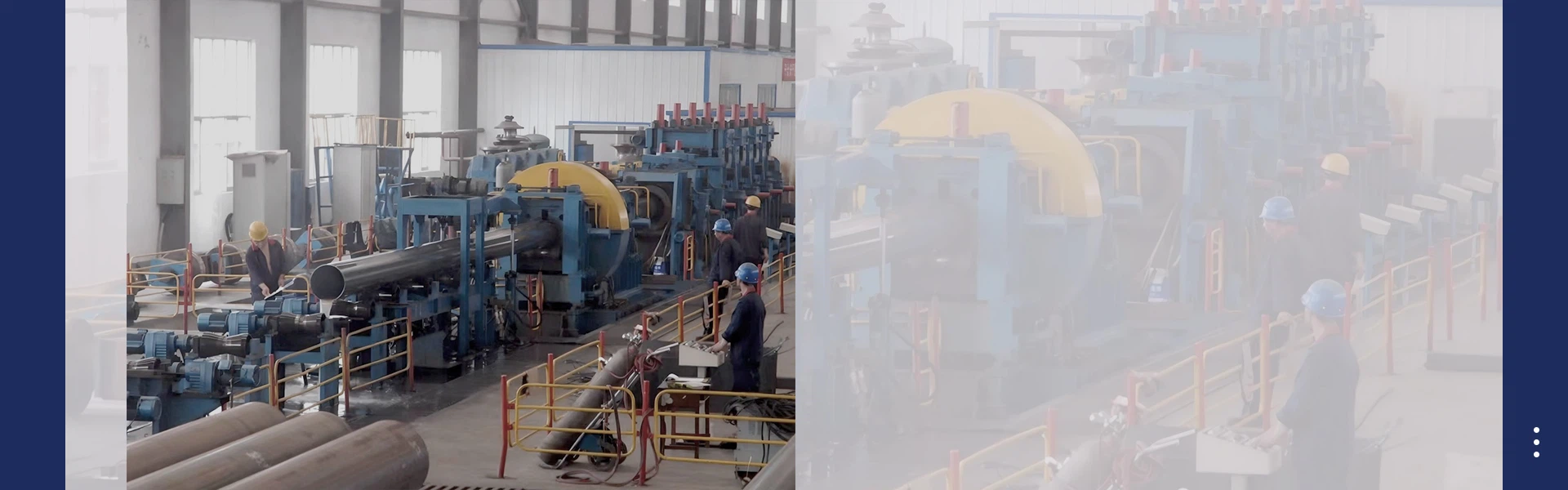
A spiral welded pipe mill, also known as an HSAW pipe production line, continuously forms steel strip into a spiral pipe and joins the helical seam by submerged arc welding. The line can be configured for large-diameter water pipes, structural pipes, piling pipes, and selected line pipe applications according to pipe specifications, material grades, production capacity, and applicable standards.
-
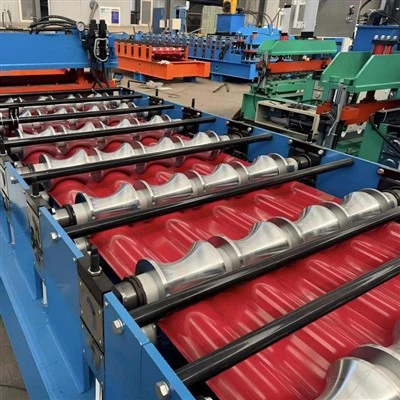
![Oil And Gas Spiral Pipe Production Line]() Oil And Gas Spiral Pipe Production LineLine configuration is determined by pipe diameter, wall thickness, steel grade, coil dimensions, production capacity, and inspection requirements.view more
-
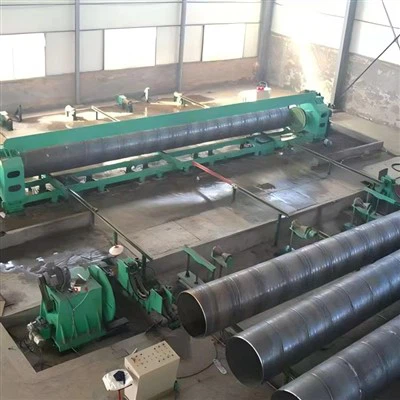
![Submerged Arc Welded Pipe Machine]() Submerged Arc Welded Pipe MachineSubmerged Arc Welded (SAW) pipe production lines are used to manufacture large-diameter steel pipes through controlled forming and internal/external submerged arc welding. Depending on the required pipe design, production lines can be...view more
-
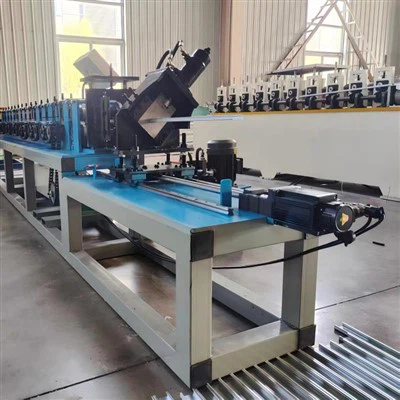
![Heavy Wall Spiral Welded Tube Mill]() Heavy Wall Spiral Welded Tube MillA Heavy-Wall Spiral Welded Tube Mill converts steel strip coils into large-diameter spiral welded steel pipes through continuous strip preparation, helical forming, tack welding, and internal and external Submerged Arc Welding (SAW)....view more
-
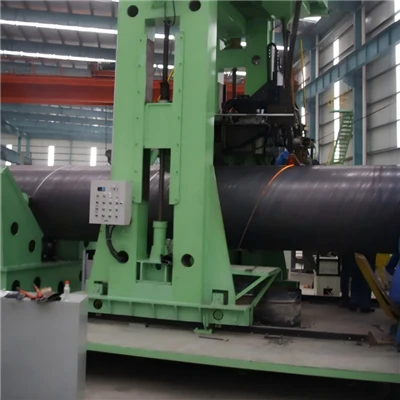
![SSAW Steel Pipe Production Equipment]() SSAW Steel Pipe Production EquipmentA SSAW steel pipe production line converts hot-rolled steel coil into spiral welded steel pipe through coil preparation, spiral forming, internal and external submerged arc welding, pipe cutting, inspection, and finishing. Line...view more
-
![Large Diameter Spiral Pipe Mill]() Large Diameter Spiral Pipe MillA Large Diameter Spiral Pipe Mill converts hot-rolled steel coil into spiral welded steel pipes through strip preparation, spiral forming, internal and external Submerged Arc Welding (SAW), pipe cutting, inspection, and finishing.view more
-
![Spiral Welded Steel Pipe Machine]() Spiral Welded Steel Pipe MachineA continuous production system for manufacturing large-diameter spiral welded steel pipes from steel strip. The line integrates coil feeding, strip preparation, butt welding, spiral forming, internal and external submerged arc welding,...view more


Coil Preparation
Uncoiling, leveling, strip alignment, edge preparation, and automatic strip butt welding prepare continuous steel strip for spiral forming.
Spiral Forming
The forming bridge, forming rolls, guide rolls, and drive system control the strip path and forming geometry according to the required pipe diameter.
Internal and External Welding
Internal and external SAW systems join the helical seam. Welding power, wire feeding, flux handling, and welding parameters are configured according to pipe specifications.
Cutting and Finishing
The formed pipe is cut to the required length and transferred for end finishing, beveling, inspection, testing, and subsequent handling.
Typical Flow:
Coil Handling → Leveling → Edge Preparation → Strip Butt Welding → Spiral Forming → Internal SAW → External SAW → Cutting → End Finishing → NDT → Hydrostatic Testing → Pipe Handling
The exact downstream sequence may vary according to pipe specifications and inspection requirements.
Technical Specifications
Reference Production Range
The actual production range depends on the forming configuration, steel strip dimensions, pipe specification, material grade, and required production capacity.
|
Parameter |
Reference Range / Configuration |
|
Pipe Outside Diameter |
219–4,220 mm |
|
Wall Thickness |
5–25.4 mm |
|
Incoming Strip Width |
400–2,000 mm |
|
Material |
Carbon steel, structural steel, selected micro-alloyed steels |
|
Forming Method |
Continuous spiral forming |
|
Welding Process |
Internal and external Submerged Arc Welding (SAW) |
|
Control System |
PLC-based industrial control with HMI |
|
Inspection Options |
UT, RT, dimensional inspection and hydrostatic testing, according to requirements |
Configuration Matching
Pipe diameter, wall thickness, strip width, strip thickness, steel grade, and production capacity are considered together when selecting the forming and welding configuration.
Material Compatibility
The line can be engineered for specified carbon steel, structural steel, and selected line pipe grades. Final material compatibility should be confirmed against the required pipe specification and welding procedure.
Applications and Applicable Standards
Oil, Gas and Slurry Pipelines
Suitable configurations can be developed for selected line pipe applications where the required steel grade, welding procedure, NDT scope, and product specification are defined.
Example standards: API Spec 5L, ISO 3183.
Water Transmission
Large-diameter spiral welded pipes are commonly used for water transmission and related infrastructure projects. Selection depends on diameter, wall thickness, coating requirements, and project specifications.
Example standard: AWWA C200.
Structural and Piling Applications
The mill can be configured for selected structural pipe and piling applications where dimensional requirements, material grade, and load-related specifications are defined.
Example standards: ASTM A252, EN 10219 and applicable project specifications.
Applicable standards depend on the finished pipe specification, service conditions, project requirements, and destination market.

Quality Control And Testing
Incoming Steel Strip Verification
Material certificates, thickness, width, surface condition, edge condition, and heat or batch identification can be checked before production.
Forming and Welding Control
Key process parameters include strip alignment, forming geometry, welding current and voltage, wire feed, flux supply, and welding seam conditions.
Finished Pipe Inspection
Finished pipes can be inspected for outside diameter, wall thickness, length, straightness, weld condition, and other dimensional requirements.
NDT and Pressure Testing
UT, RT, hydrostatic testing, and other inspection methods can be incorporated according to the applicable pipe standard and customer requirements.
Production Capacity and Line Selection
Pipe Size
The required minimum and maximum pipe diameter directly influence the forming system and applicable strip dimensions.
01
Wall Thickness and Steel Grade
We are a solution provider to meet the needs of different customers,widely used in iron ore mining,raw material yardmanagement,coking and sintering,blast furnace ironmaking to steelmaking and rolling,etc. to ensure the safety of power supply.
02
Production Target
Required output should be specified in tonnes per day, tonnes per shift, or metres per shift. Actual capacity depends on pipe size, wall thickness, material, welding configuration, pipe length, and inspection requirements.
03
Workshop Conditions
Available power supply, workshop dimensions, crane capacity, foundation conditions, and material-handling arrangements should be considered during line engineering.
04

Pipe Specification Matching
The mill can be configured around the required pipe diameter, wall thickness, pipe length, steel grade, strip dimensions, and production target.
Welding and Inspection Configuration
Welding systems, flux handling, NDT equipment, hydrostatic testing, and downstream finishing can be selected according to the required product standard.
Automation and Control
PLC-based control and HMI systems can coordinate strip feeding, forming, welding, cutting, and key process parameters.
Information Required for a Technical Proposal
Please provide the following information for equipment selection and quotation:
|
Required Information |
Details to Confirm |
|
Pipe Diameter |
Minimum and maximum outside diameter |
|
Wall Thickness |
Minimum and maximum thickness |
|
Steel Grade |
Q235, X42, X52, X65, X70, etc., as applicable |
|
Strip Specification |
Width, thickness and maximum coil weight |
|
Production Target |
t/day, t/shift or m/shift |
|
Pipe Length |
Standard and maximum pipe length |
|
Product Standard |
API Spec 5L, AWWA C200, ASTM A252, project specification, etc. |
|
Inspection Requirements |
UT, RT, hydrostatic testing and other required tests |
|
Workshop Utilities |
Voltage, frequency, phase and available power |
FAQ
Tianjin Binhai Yashanway Import and Export Co., Ltd. is one of the most reliable spiral welded pipe mill manufacturers and suppliers in China, also supports customized service with low price. Welcome to wholesale bulk spiral welded pipe mill made in China here from our factory. Contact us for quotation.
tube cutting forming line, tube roll forming welding line, tube welding and sizing line