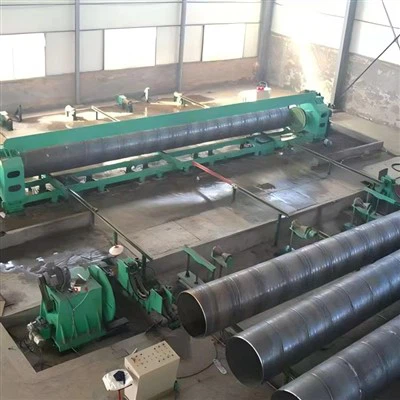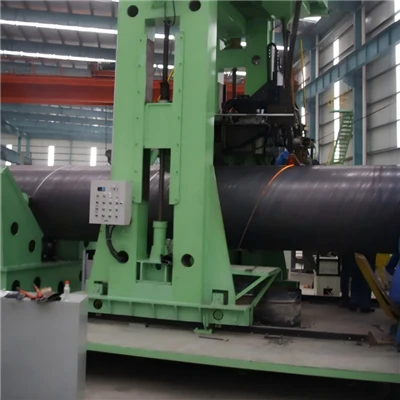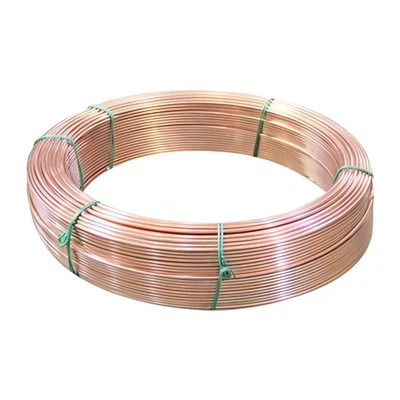
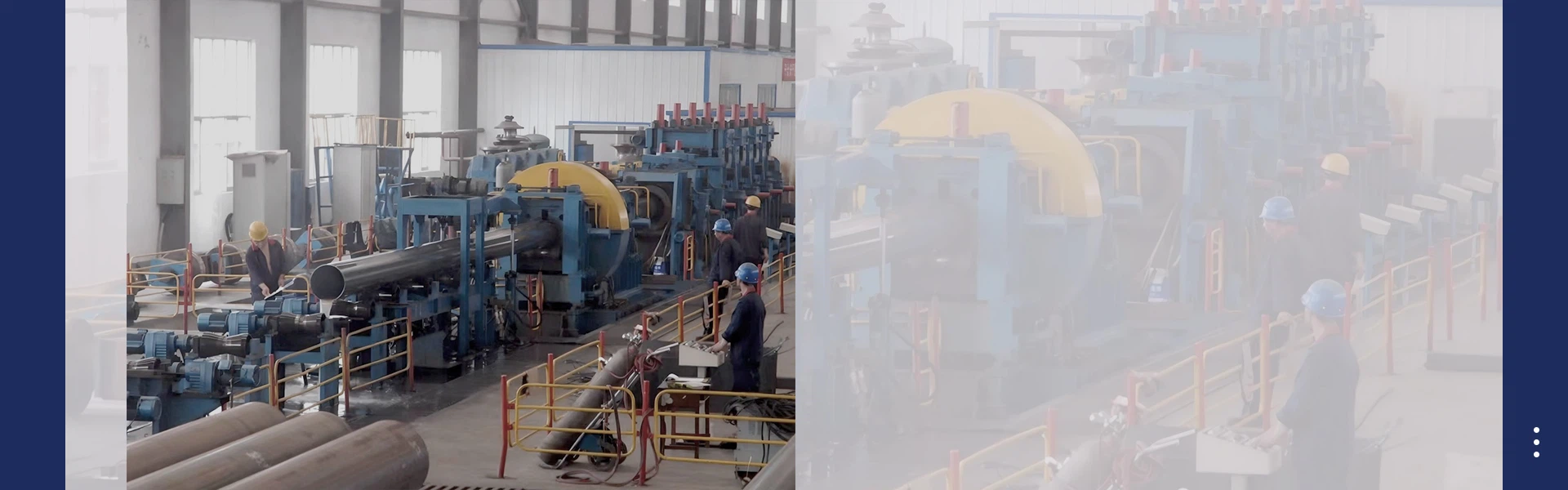
Submerged Arc Welding (SAW) is widely used in the manufacturing of large-diameter steel pipes, particularly in SSAW and LSAW pipe production. The process uses a continuously fed welding wire and granular flux to create a stable welding arc beneath a layer of flux. Although welding machines, operating parameters, and operator skills are important, the selection of welding consumables also has a direct influence on weld quality.
Welding wire and flux work together to determine the mechanical properties, chemical composition, penetration, weld bead appearance, and overall performance of the welded joint. Even when the welding equipment is properly adjusted, unsuitable consumables can lead to defects, unstable welding, excessive slag, or inconsistent mechanical properties.
For manufacturers, choosing the correct submerged arc welding wire and flux is therefore an important part of maintaining reliable production. The selection should consider the base steel grade, pipe application, wall thickness, welding position, required mechanical properties, and applicable standards.
Understanding the Roles of Welding Wire and Flux
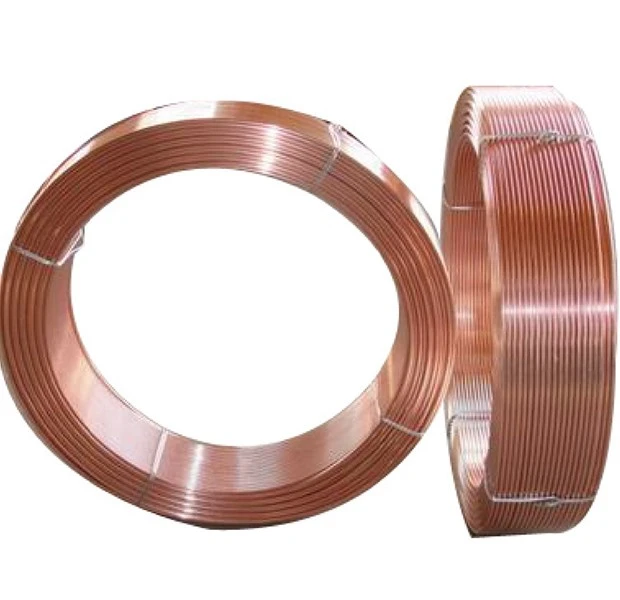
In submerged arc welding, welding wire acts as the filler metal, while flux protects the molten weld pool from atmospheric contamination and helps control the welding process.
The welding wire melts under the heat generated by the electric arc and combines with the base material to form the weld metal. Its chemical composition influences the strength, toughness, and other mechanical properties of the finished weld.
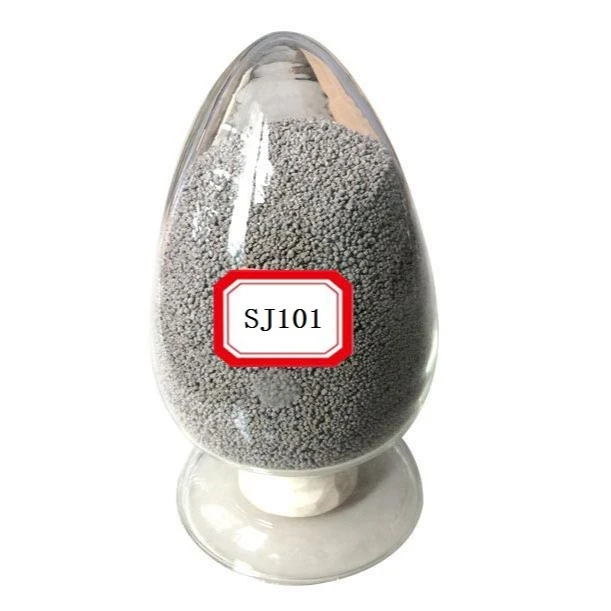
The granular flux covers the welding area and creates a protective environment around the arc. As the welding process continues, part of the flux melts and forms slag over the weld bead. This helps protect the molten metal during solidification and influences the chemical and metallurgical characteristics of the weld.
The final weld properties depend on the interaction between the wire, flux, base material, and welding parameters. Therefore, selecting wire and flux separately without considering their compatibility can create problems.
How Welding Wire Selection Affects Weld Quality
Submerged arc welding wire is available in different grades and chemical compositions. The correct grade must be selected according to the base material and the required properties of the welded joint.
Important factors include:
- Carbon content
- Manganese content
- Silicon content
- Alloying elements
- Tensile strength
- Impact toughness
- Wire diameter
- Surface condition
Different steel grades require different welding consumables. A wire suitable for ordinary carbon steel may not be appropriate for higher-strength or alloy steel applications.
The wire should provide sufficient strength without creating an excessively hard or brittle weld structure. Its chemical composition must also be compatible with the selected flux and the base metal.
The Importance of Flux Selection
Welding flux is not simply a protective covering. It plays an active role in controlling the welding arc, protecting the molten metal, and influencing weld chemistry.
Fluxes are available in different classifications and compositions. Depending on their manufacturing process and chemical characteristics, they can be broadly divided into several categories.
- Fused flux: Produced by melting and combining raw materials at high temperatures before cooling and crushing them into granules. It generally offers consistent chemical composition and good storage stability.
- Bonded flux: Made by mixing powdered ingredients with a bonding agent and forming them into granules. It can provide flexibility in adjusting chemical composition.
- Agglomerated flux: Produced by combining fine raw materials with binders and processing them into granules. It is widely used in industrial welding applications.
The selection depends on the welding procedure, wire classification, base material, and required weld properties.
Wire and Flux Compatibility Is Essential
One of the most important considerations in submerged arc welding wire and flux selection is compatibility.
A welding wire cannot always be evaluated independently because the flux may influence the chemical composition of the deposited weld metal through chemical reactions during welding.
For example, certain flux combinations may increase or reduce the transfer of specific alloying elements into the weld metal. This can affect tensile strength, toughness, and other mechanical properties.
Manufacturers should therefore select wire and flux combinations based on approved consumable classifications and welding procedure qualifications.
A combination that performs well with one steel grade or welding parameter may not produce the same results under different conditions.
Influence on Weld Penetration and Bead Formation
Wire and flux selection can influence the shape and quality of the weld bead.
Depending on their characteristics, consumables can affect:
- Arc stability
- Penetration depth
- Weld bead width
- Reinforcement height
- Slag formation
- Spatter and surface appearance
In SSAW pipe production, consistent welding is particularly important because the weld seam follows a helical path along the pipe. Changes in welding conditions can affect the consistency of the internal and external welds.
However, penetration and bead formation are not controlled by consumables alone. Welding current, voltage, travel speed, wire feed speed, wire diameter, and torch position must also be properly adjusted.
If penetration is insufficient, the joint may not achieve the required fusion. Excessive penetration or an unsuitable bead profile may also create problems during subsequent processing and inspection.
Matching Consumables With the Base Steel Grade
The base material is one of the first factors to consider when selecting welding consumables.
For example, ordinary carbon steel, higher-strength pipeline steel, and alloy steel may require different wire and flux combinations.
The selection process should consider:
|
Factor |
Why It Matters |
|
Base steel grade |
Determines the required weld metal properties |
|
Tensile strength |
Helps ensure adequate joint strength |
|
Impact toughness |
Important for low-temperature or demanding applications |
|
Chemical composition |
Influences compatibility with welding consumables |
|
Wall thickness |
Affects heat input and welding procedure requirements |
|
Pipe application |
Determines service and performance requirements |
|
Applicable standard |
Defines qualification and acceptance requirements |
For pipeline applications, consumables should be selected according to the relevant material specification and qualified welding procedure rather than relying only on general product descriptions.
How Wire Diameter Influences Welding Performance
Welding wire diameter affects current-carrying capacity, wire feed requirements, deposition rate, and welding stability.
Common wire diameters used in industrial submerged arc welding include 2.0 mm, 2.4 mm, 3.2 mm, and 4.0 mm, although the appropriate sizes depend on the equipment and welding procedure.
A larger wire diameter can support higher deposition rates under suitable conditions. However, the welding power source and operating parameters must be compatible with the selected wire.
An unsuitable wire diameter may cause feeding difficulties, unstable arc conditions, or an inappropriate deposition rate.
For SSAW pipe welding, manufacturers should consider the pipe wall thickness, welding speed, required deposition rate, and whether the internal or external welding system is being configured.
Flux Particle Size and Condition Affect Welding Stability
Flux particle size and physical condition can also influence welding performance.
The granules should have a suitable size distribution for the welding equipment and application. If the particles are too fine, dust generation and changes in flux feeding behaviour may occur. If they are too coarse, the flux coverage and welding conditions may become less consistent.
Flux should also be clean and dry before use.
Moisture in flux can introduce hydrogen into the weld metal, increasing the risk of hydrogen-related cracking under certain conditions. Contamination from oil, rust, dust, or other materials can also affect welding quality.
Manufacturers should follow the flux supplier's instructions for storage, drying, handling, and recycling.
Flux Recovery and Reuse Require Proper Control
Many SSAW and LSAW production lines use flux recovery systems to collect unused flux during welding.
Recovered flux can help reduce material waste and operating costs. However, it should not be reused without proper control.
During production, flux may become mixed with:
- Welding slag
- Metal particles
- Dust
- Scale
- Moisture
- Other contaminants
- Contaminated or degraded flux may affect welding stability and weld quality.
A suitable recovery system should separate reusable flux from slag and foreign materials. Manufacturers should also follow the consumable manufacturer's recommendations regarding the proportion of recycled flux that can be mixed with new flux.
Welding Parameters Must Match the Consumables
Even the correct welding wire and flux combination cannot guarantee good weld quality if the operating parameters are unsuitable.
Important parameters include:
|
Parameter |
Influence on Welding |
|
Welding current |
Affects penetration and deposition rate |
|
Arc voltage |
Influences bead width and arc characteristics |
|
Welding speed |
Affects heat input and weld dimensions |
|
Wire feed speed |
Controls wire deposition |
|
Wire diameter |
Influences current and deposition capacity |
|
Flux depth |
Affects arc coverage and protection |
|
Wire extension |
Influences electrical resistance heating and deposition |
The appropriate settings depend on the welding procedure, consumable combination, material thickness, and equipment configuration.
Manufacturers should qualify the welding procedure before mass production and maintain consistent operating conditions.
Common Welding Problems Caused by Unsuitable Consumables
Incorrect wire or flux selection, poor storage, and improper handling can contribute to several welding problems.
|
Welding Problem |
Possible Cause |
|
Unstable arc |
Unsuitable wire-flux combination or incorrect parameters |
|
Porosity |
Moisture, contamination, or inadequate protection |
|
Slag inclusions |
Poor slag removal, unsuitable bead profile, or welding technique |
|
Cracking |
Unsuitable weld metal properties, hydrogen, or excessive restraint |
|
Inconsistent penetration |
Incorrect parameters or consumable combination |
|
Excessive spatter |
Unstable welding conditions |
|
Poor bead appearance |
Incorrect voltage, current, speed, or consumable selection |
These defects do not always originate from the consumables themselves. Equipment condition, joint preparation, material cleanliness, and welding parameters must also be investigated when problems occur.
Consumable Storage and Handling Are Important
Welding wire and flux should be stored under controlled conditions to maintain their original quality.
Welding wire should be protected from moisture, oil, dust, rust, and mechanical damage. Damaged or contaminated wire can cause feeding problems and affect welding stability.
Flux should be kept in dry storage and handled according to the manufacturer's recommendations. Some flux types require baking or redrying before use, particularly after exposure to moisture.
Manufacturers should establish procedures for:
- Receiving inspection
- Batch identification
- Storage conditions
- Flux drying
- Wire surface inspection
- Material handling
- Recovered flux control
- Consumption records
Proper handling helps maintain consistency between production batches.
Inspection and Testing of Welded Joints
The quality of the welding process should be verified through appropriate inspection and testing.
Depending on the pipe specification and application, inspection may include:
- Visual inspection: Checks weld appearance, surface defects, reinforcement, and other visible conditions.
- Ultrasonic testing: Detects internal discontinuities such as lack of fusion, cracks, and other weld defects.
- Radiographic testing: Provides an image of internal weld conditions and can help identify certain types of discontinuities.
- Mechanical testing: Evaluates properties such as tensile strength, bend performance, and impact toughness where required.
Inspection requirements should be established according to the applicable product standard, project specification, and qualified welding procedure.
Selecting the Right Wire and Flux for SSAW Pipe Production
When selecting consumables for an SSAW pipe production line, manufacturers should evaluate the complete welding process rather than choosing materials based only on price.
Important considerations include:
- Base steel grade and chemical composition.
- Required weld metal strength and toughness.
- Pipe diameter and wall thickness.
- Internal and external welding requirements.
- Welding current and voltage range.
- Production speed and deposition rate.
- Wire diameter and feeding compatibility.
- Flux classification and particle characteristics.
- Storage, drying, and recovery requirements.
- Applicable welding standards and qualification results.
Consumables should be tested and approved under the actual welding conditions before being introduced into regular production.
Improving Weld Consistency Through Proper Consumable Selection
Welding wire and flux selection has a significant influence on submerged arc weld quality. The right combination helps maintain stable arc conditions, suitable penetration, consistent weld metal properties, and reliable production performance.
For SSAW and LSAW pipe manufacturers, consumable selection should be based on the base material, pipe specifications, welding procedure, and required inspection standards. Proper storage, controlled flux recovery, suitable welding parameters, and regular quality testing are equally important.
A reliable submerged arc welding process depends on the coordination of consumables, equipment, operating conditions, and inspection. By managing these factors together, manufacturers can reduce welding defects, improve production consistency, and achieve the required quality in finished steel pipes.