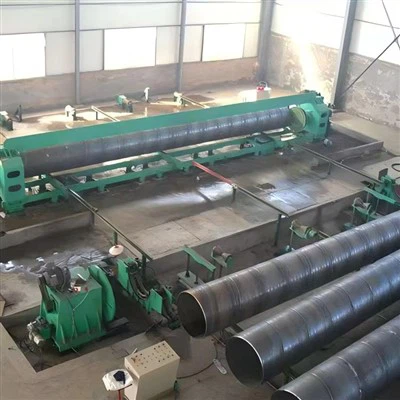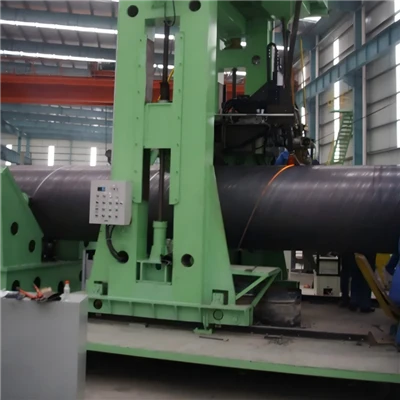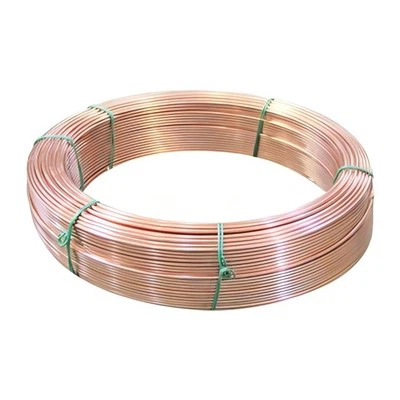
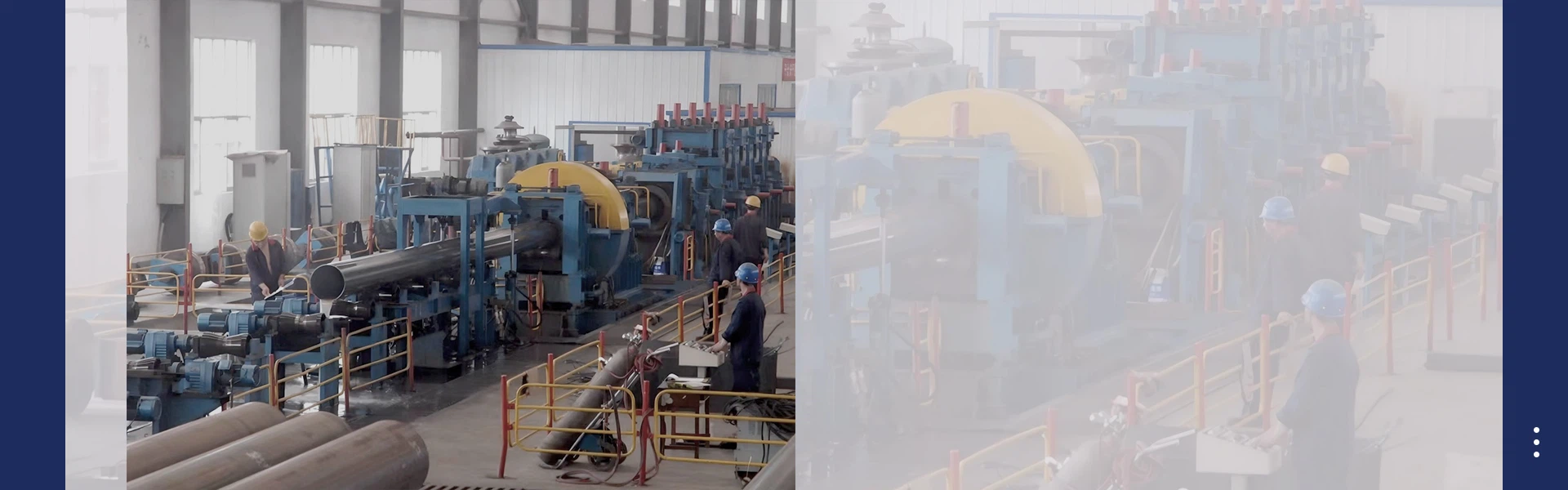
Welding is one of the most critical stages in SSAW Pipe Production because the quality of the spiral weld seam directly affects the strength, pressure resistance, durability, and service life of the finished pipe. SSAW pipes are produced by forming a steel strip into a spiral shape and continuously welding the edges using the submerged arc welding process. During this process, welding wire and welding flux work together to create a strong and reliable weld joint.
Although welding wire and flux perform different functions, they must be selected as a compatible combination. The welding wire provides the filler metal, while the flux protects the molten weld pool and influences arc stability, penetration, weld-metal chemistry, and slag formation. Choosing the wrong combination can lead to welding defects, unstable production, and inconsistent mechanical properties.
|
Welding Consumable |
Main Function |
Major Quality Influence |
|
Welding wire |
Provides filler metal |
Weld strength and chemistry |
|
Welding flux |
Protects and supports the weld pool |
Arc stability, penetration, slag formation |
|
Wire + flux combination |
Creates the complete welding system |
Overall weld quality |
What Is Welding Wire?
Welding wire is a continuously fed consumable electrode used in submerged arc welding. An electric arc is generated between the wire and the steel strip, producing sufficient heat to melt the wire and the edges of the steel. The molten material then solidifies and forms the weld seam.
The chemical composition, diameter, classification, and mechanical characteristics of the welding wire directly affect the finished weld. Different pipe grades and wall thicknesses may require different welding wires. Therefore, the wire should be selected according to the base steel, required weld properties, welding procedure, and applicable standard.
What Is Welding Flux?
Welding flux is a granular material placed over the welding zone during submerged arc welding. The arc operates beneath the flux layer, while the melted flux forms a protective slag over the weld pool.
Welding Flux for SSAW Pipes performs several functions. It protects the molten weld from atmospheric contamination, helps stabilize the arc, influences penetration and bead shape, and can affect the chemical composition and mechanical properties of the weld metal.
The flux grade should therefore be selected carefully rather than simply based on price or availability.
How Welding Wire and Flux Work Together
Welding wire and flux form a combined welding system. The wire supplies the filler metal, while the flux controls the environment surrounding the weld and contributes to the metallurgical behavior of the process.
The performance of this combination depends on several factors, including steel grade, pipe wall thickness, welding current, voltage, welding speed, wire diameter, and required mechanical properties.


|
Factor |
Effect on Welding |
|
Steel grade |
Determines required weld properties |
|
Welding wire |
Influences filler-metal chemistry and strength |
|
Flux |
Influences arc stability and weld-metal behavior |
|
Current |
Affects heat input and penetration |
|
Voltage |
Influences arc characteristics and bead shape |
|
Welding speed |
Affects heat input and weld size |
|
Wire diameter |
Influences deposition rate |
|
Flux feeding |
Helps maintain consistent arc protection |
Importance of Welding Wire Grade
The welding wire grade must be compatible with the steel being used for pipe production. Since the wire becomes part of the weld metal, its chemical composition and classification have a direct effect on the final weld.
An unsuitable wire may result in insufficient tensile strength, poor toughness, excessive hardness, or an inappropriate weld-metal composition. For pipeline and structural applications, the wire should therefore be selected according to the required performance of the finished pipe.
Higher-strength pipe grades may require carefully matched welding consumables to ensure that the weld does not become the weaker part of the joint.
Importance of Welding Flux Grade
The grade of flux is equally important. Different fluxes have different chemical compositions, basicity levels, melting characteristics, and particle sizes. These characteristics influence the welding arc, penetration, slag formation, weld appearance, and final weld properties.
The most expensive flux is not automatically the best flux. The correct Welding Flux for SSAW Pipes is the one that is properly matched with the welding wire, steel grade, welding parameters, and applicable pipe standard.
For this reason, manufacturers should evaluate the complete welding system rather than selecting flux independently.

Effect on Weld Strength
The spiral weld seam must withstand the mechanical and operational loads applied to the pipe. In pipeline applications, the weld may be exposed to internal pressure, external loads, vibration, temperature changes, and other service conditions.
The welding wire directly contributes to the weld-metal strength, while the flux can influence weld-metal chemistry and solidification. A properly selected wire and flux combination can help achieve the required tensile strength, yield strength, toughness, and ductility.
|
Weld Property |
Influence of Wire and Flux |
|
Tensile strength |
Strongly influenced by weld-metal composition |
|
Yield strength |
Depends on weld-metal characteristics |
|
Impact toughness |
Influenced by consumable combination and welding conditions |
|
Ductility |
Affected by weld-metal chemistry and microstructure |
|
Hardness |
Influenced by composition and heat input |
Influence on Weld Penetration
Proper penetration is essential for producing a reliable welded joint. During SSAW production, welding current, voltage, travel speed, wire diameter, wire position, and flux characteristics work together to determine the amount of heat delivered to the welding area.
Insufficient penetration can result in an incomplete joint, while excessive penetration can create undesirable weld geometry. Manufacturers should therefore establish appropriate welding parameters for each wire and flux combination and monitor them continuously during production.
 Role in Preventing Welding Defects
Correctly selected Submerged Arc Welding Consumables can help reduce the risk of several common welding defects. These include porosity, slag inclusions, incomplete fusion, incomplete penetration, cracks, undercutting, and irregular weld formation.
However, consumables are only one part of defect prevention. Steel cleanliness, edge preparation, forming accuracy, welding alignment, welding current, voltage, travel speed, and equipment condition can also have major effects on weld quality.
Therefore, factories should investigate the complete welding process when defects occur instead of automatically blaming the welding wire or flux.
Moisture Control of Welding Flux
Moisture is one of the most important factors to control when using welding flux. Flux that absorbs excessive moisture can negatively affect welding performance and may contribute to porosity or hydrogen-related problems under unfavorable conditions.
Factories should store flux in dry conditions and follow the manufacturer's requirements for drying, conditioning, and storage. Once flux has been dried, it should be protected from humidity during transportation and handling.
|
Flux Management Stage |
Important Precaution |
|
Storage |
Keep flux dry and protected |
|
Opening |
Avoid unnecessary exposure to humidity |
|
Drying |
Follow manufacturer's requirements |
|
Transfer |
Protect conditioned flux from moisture |
|
Production |
Maintain controlled flux feeding |
|
Recovery |
Screen and manage recovered flux properly |
Proper Storage of Welding Wire
Welding wire should also be stored in a clean and dry environment. Exposure to moisture, oil, dust, and corrosion can negatively affect wire feeding and welding stability.
Different wire grades and diameters should be clearly identified and stored separately. Proper inventory management also improves traceability and reduces the risk of using the wrong consumable during production.
Welding Wire Feeding Control
The welding wire must be continuously and accurately delivered to the welding zone. Problems with the wire feeding system can cause arc instability, irregular weld formation, inconsistent deposition, and production interruptions.
Operators should regularly inspect wire guides, feeding rollers, contact components, and alignment. Keeping these components in good condition helps maintain stable welding throughout the SSAW Pipe Production process.
Flux Particle Size and Feeding
Flux particle size can influence feeding stability, arc coverage, and slag formation. Consistent particle size helps maintain uniform flux coverage over the welding area.
Excessive dust, oversized particles, or inconsistent material can interfere with the flux feeding system. Factories should therefore maintain proper flux quality and regularly inspect the feeding equipment.
Recovered Flux Management
During continuous production, unused flux can often be collected and recovered. However, recovered flux may contain slag particles, metal particles, dust, and other contaminants.
Before reuse, recovered flux should be processed according to the manufacturer's recommendations. Screening and cleaning may be necessary to remove unwanted particles.
Recovered flux should never be reused without proper control because contaminated material can negatively affect welding stability and weld quality.
Welding Parameters and Consumables
Welding wire and flux must always be used with suitable welding parameters. Important parameters include welding current, voltage, welding speed, wire diameter, wire extension, and flux feeding rate.
When a factory changes the wire or flux grade, the welding procedure should be reviewed. A new consumable combination may behave differently and could require parameter adjustments or additional qualification testing.
Selection According to Steel Grade
Different steel grades have different welding requirements. A combination suitable for standard structural steel may not be appropriate for higher-strength pipeline steel.
For demanding applications, manufacturers should consider:
- Weld tensile strength
- Yield strength
- Impact toughness
- Weld-metal chemistry
- Hydrogen control
- Heat input
- Service conditions
The welding consumables should be selected according to the actual pipe specification rather than using the same combination for every product.
Welding Consumables and Pipe Thickness
Pipe wall thickness can also influence the selection of welding consumables and parameters. Thicker materials generally require greater heat input and carefully controlled welding conditions to achieve sufficient penetration and fusion.
|
Pipe Condition |
Main Consideration |
|
Thin-wall pipe |
Avoid excessive heat input |
|
Medium-wall pipe |
Maintain balanced penetration |
|
Thick-wall pipe |
Ensure sufficient penetration and fusion |
|
High-strength pipe |
Control heat input and toughness |
|
Pressure pipe |
Maintain strict weld quality requirements |
Quality Control of Welding Wire and Flux
A professional factory should establish a quality control system for welding consumables. Incoming materials should be checked for grade, classification, manufacturer, batch number, packaging condition, and relevant certificates.
During storage and production, the factory should control moisture, contamination, feeding conditions, and material identification. Batch records should also be maintained so that the factory can identify which consumables were used during a particular production period.
This traceability is particularly valuable when investigating welding defects or responding to customer quality requirements.
Common Mistakes in Consumable Management
Factories should avoid selecting welding wire and flux based only on price. The cheapest consumable may not provide the required performance, while an expensive consumable is not necessarily suitable for every application.
Another common mistake is mixing different grades of wire or flux. Materials should be clearly labeled and stored separately. Factories should also avoid changing consumables without reviewing the welding procedure because different combinations can produce different welding results.
Poor storage is another major problem. Moisture, dust, oil, and corrosion can negatively affect consumable performance.
How to Select the Right Welding Wire and Flux
The selection process should begin with the steel grade and pipe specification. Manufacturers should then consider pipe thickness, required weld strength, impact toughness, production speed, welding equipment, and applicable standards.
The wire and flux should be selected as a compatible combination and verified under the intended welding conditions.
|
Selection Factor |
Why It Matters |
|
Steel grade |
Determines required weld properties |
|
Pipe thickness |
Influences heat input and penetration |
|
Welding wire grade |
Determines filler-metal characteristics |
|
Flux grade |
Influences arc and weld-metal behavior |
|
Welding speed |
Affects heat input |
|
Pipe application |
Determines required performance |
|
Applicable standard |
Defines quality and testing requirements |
Importance for a Modern SSAW Production Line
For a high-capacity SSAW Pipe Production line, welding consumables influence both product quality and manufacturing efficiency. Stable wire feeding and consistent flux performance help maintain continuous welding and reduce unnecessary production interruptions.
Proper consumable selection can reduce rework, lower rejection rates, improve weld consistency, and increase overall productivity. This becomes particularly important when producing large quantities of pipes for oil and gas pipelines, water transmission systems, piling projects, and major infrastructure applications.
Welding Consumables and Overall Quality Control
Welding wire and flux are critical components of SSAW Pipe Welding, but they are not the only factors that determine pipe quality. The complete production process must also control steel coil quality, strip alignment, edge preparation, spiral forming, welding parameters, equipment condition, non-destructive testing, dimensional accuracy, hydrostatic testing, and final inspection.
Even the best welding consumables cannot compensate for poor raw material, incorrect forming, damaged equipment, or improper welding parameters. High-quality SSAW pipe production therefore requires all production stages to work together under controlled conditions.
Summary
Welding wire and welding flux are essential consumables in SSAW pipe production, and their quality and compatibility have a direct influence on weld performance. The welding wire provides the filler metal, while flux protects the weld pool and affects arc stability, penetration, slag formation, and weld-metal characteristics.
The correct Welding Wire for SSAW Pipes and Welding Flux for SSAW Pipes should be selected according to the steel grade, pipe thickness, required mechanical properties, welding parameters, and applicable standards. Proper storage, moisture control, feeding, handling, and traceability are equally important.
By treating Submerged Arc Welding Consumables as critical components of the production process, manufacturers can achieve more stable welding, reduce defects, improve production efficiency, and produce reliable SSAW pipes for demanding pipeline, structural, and industrial applications.