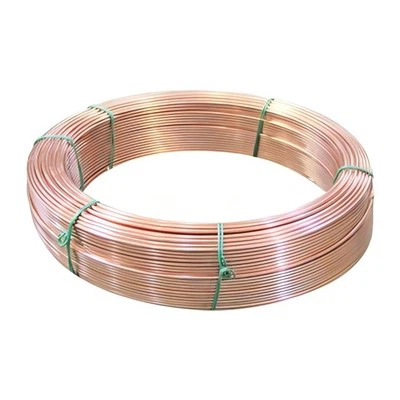
Rust prevention can be achieved by plating rust inhibitors, applying rust-preventive paint, or hot-dip galvanizing submerged arc welding wire.
Characteristics and Problems of Submerged Arc Welding Wire
Submerged arc welding wire is a commonly used electric arc welding material with advantages such as high strength and high toughness. However, because the surface of the welding wire is easily affected by oxidation and corrosion, its service life is shortened, affecting welding and usage performance. Therefore, how to perform rust prevention treatment on submerged arc welding wire has become an important issue for the welding industry.
Rust Prevention Treatment Methods for Submerged Arc Welding Wire
1. Applying Rust Inhibitors
By plating a special rust inhibitor onto the surface of the submerged arc welding wire, a certain degree of rust prevention can be achieved. The advantage of this method is that it does not affect the strength and toughness of the submerged arc welding wire. The disadvantage is that it requires specialized equipment and environment.
2. Spraying Rust-Preventive Paint
Spraying rust-preventive paint evenly onto the surface of the submerged arc welding wire can form a rust-preventive film, isolating it from direct contact with air and moisture, and preventing oxidation and corrosion. The advantage of this method is its simplicity and ease of implementation, but its disadvantage is that it can have a certain impact on the surface of the welding wire.
3. Hot-dip galvanizing
This method involves immersing the submerged arc welding wire in molten zinc, coating its surface with a layer of zinc to achieve rust prevention. The advantage of this method is that it ensures complete coverage of the welding wire's surface, but its disadvantage is that it requires specialized equipment and technology.