How Is Spiral Welded Pipe Manufactured?

Jun 16, 2026

Leave a message

The spiral welded pipe making process which creates large-diameter pipes from continuous steel coils. This highly efficient method bends the steel strip into a spiral helix angle and continuously welds the seam both inside and outside. 

 
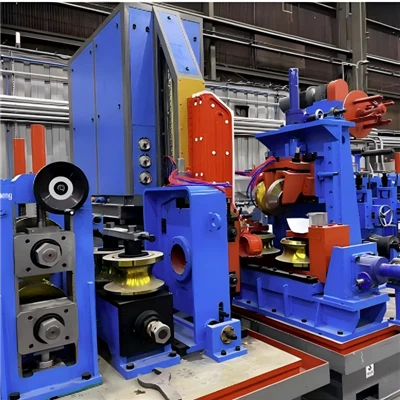
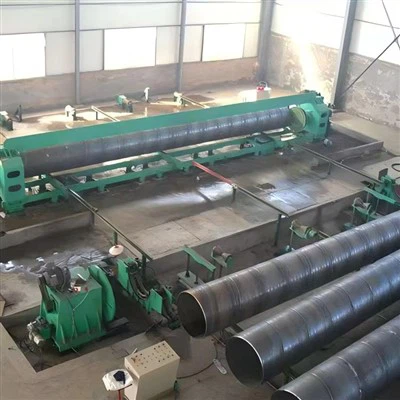
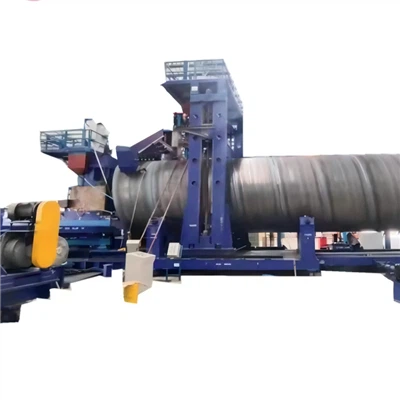
Spiral Welded Pipe Making Machine


1. Pre-Processing

  • Uncoiling and Leveling: A heavy-duty uncoiler feeds the steel coil into leveling rolls to eliminate any curling, bending, or unevenness.

  • Edge Milling: The edges of the steel strip are milled or ground to ensure precise width and to prepare the surface for welding. 


2. Forming and Rolling

  • Continuous Welding: When the tail of one roll of material reaches the end, it will be welded to the head of the next roll, thus forming a continuous and uninterrupted production line.


  • Spiral Forming: Place the flat steel strip into the forming machine (using rollers or mandrels), and bend it at an exact angle to cause the steel to curl into a spiral tube shape that matches the required pipe diameter.


3. Welding

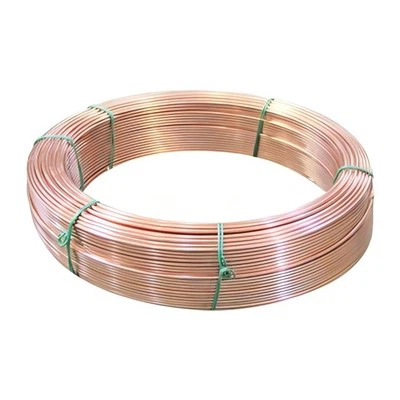
  • Submerged Arc Welding (SAW): The spiral seam is welded using electronically controlled inner and outer welding joints. Usually, the submerged arc welding process employs copper-coated steel wires and flux.

     
  • Double-Sided Seal: The seams are welded from the inside and then from the outside, ensuring a deep penetration, high strength and completely leak-proof sealing effect.


4. Cutting and Inspection

  • Cutting to Length: Use a plasma cutting gun or an automatic cutting machine to cut the continuous pipeline into the specified length (for example, 12 to 15 meters).

     
  • Ultrasonic and X-Ray Testing: Using X-ray and ultrasonic flaw detection equipment, a thorough scan is conducted over the entire weld seam and base material to identify any internal or external defects.

     
  • Hydrostatic Testing: Water is injected into the pipeline under extremely high pressure (usually up to 250 bars) to ensure the integrity and leak-proof performance of the structure.


5. Finishing and Coatings

  • End Beveling: The ends of the steel pipe are machined to form the specific chamfering dimensions required for installation.

     
  • Anti-Corrosion Treatment: Clean and treat the pipeline to extend its service life. This usually involves external sandblasting, applying liquid adhesives, and wrapping the outer surface with multiple layers of polyethylene (such as 3LPE) to enhance the anti-corrosion properties.

     
  • Lining (Optional): For water pipelines, cement mortar or epoxy resin is usually sprayed inside the pipes to prevent rusting and scaling.


Core Technical Advantages of Spiral Welded Pipe Process


The manufacturing process of spiral welded pipes has unique technical and industrial advantages compared to ERW straight seam pipes and seamless pipes.
1. First of all, the production flexibility is extremely high. By adjusting the helical forming angle, the same width of steel strip can be used to produce pipes of different diameters, thereby significantly reducing production costs and shortening the production cycle.
2. Secondly, the helical weld structure can optimize stress distribution. The helical weld can disperse local pressure stress and avoid the risk of concentrated fracture at the longitudinal straight seam weld points, thereby improving the compressive strength and fatigue resistance of the pipe body.
3. Thirdly, the submerged arc welding with flux protection ensures high welding quality, a dense internal structure, few defects, and excellent low-temperature toughness.
4. Fourthly, the helical forming is suitable for manufacturing large-diameter and thick-walled pipes, thus becoming the preferred process for ultra-large pipeline projects that cannot be achieved through traditional straight seam welding.
5. Additionally, the spiral process has high material utilization and less production waste, conforming to the standards of energy-saving and efficient industrial production.


Common Defects 

In the continuous mass production of spiral submerged arc welded pipes, the coordination deviation of spiral forming angle, fluctuating submerged arc welding parameters, inconsistent raw material properties and subtle equipment abrasion will induce various typical quality defects, which seriously affect the dimensional accuracy, structural compactness and service safety of finished pipes. 
 
1. The most common defects in industrial production include slag inclusions, incomplete welding fusion, welding cracks, pipe ellipticity deviation, and inconsistent weld reinforcement. Each defect has its specific formation mechanism and adversely affects the performance of the pipeline. Therefore, targeted and meticulous process control is required.
 
2.  Weld slag inclusions are one of the most common internal defects. They are mainly caused by unclean edges of the steel strip, residual oxide layers, rust and oil contamination, as well as improper matching of current and voltage during arc welding, and uneven coverage of flux. The un-melted weld slag remains inside the weld seam, disrupting the continuity of the weld metal structure and forming internal stress concentration points, significantly reducing the tensile strength and impact toughness of the weld seam.
 
3. Incomplete fusion refers to the situation where the base material and the solder fail to achieve a complete metallurgical bond at the interface of the spiral weld seam. The main reasons for this are insufficient welding heat input, excessive welding speed, and uneven assembly gaps of the spiral tube billet. This defect is prone to form hidden crack sources, leading to weld fracture and medium leakage of the pipeline when it is subjected to internal pressure and external loads over a long period of time.
 
4. During the welding process of low-alloy high-strength steel, welding cracks (including high-temperature hot cracks and low-temperature cold cracks) often occur. The hot cracks are caused by excessive sulfur and phosphorus impurities in the raw materials and the unbalanced welding thermal stress, while the cold cracks result from the rapid and uneven cooling after welding and excessive residual stress. These fatal defects can seriously affect the safety of high-pressure gas pipelines.
 
5. In addition, geometric defects such as elliptical deviation of the pipe material and inconsistency of the weld reinforcement layer mainly result from the long-term wear of the forming and sizing rollers, inaccurate calibration of the helical forming angle, and unstable extrusion pressure. Inadequate pipe roundness will affect the subsequent pipeline assembly and joint connections, while the uneven weld reinforcement layer will reduce the surface flatness of the pipe body and the uniformity of the anti-corrosion coating.


Process Control Measures


In order to effectively eliminate these defects and ensure the stability of the overall product quality, standardized and systematic control measures throughout the entire production process must be implemented.
 
1. First of all, strict incoming material inspection at the factory is the primary guarantee for quality control. Production technicians must carefully examine the chemical composition, mechanical properties, and surface quality of the steel coils to prevent unqualified raw materials with excessive impurities and surface defects from entering the production line. 
 
2. Secondly, the precise pre-treatment of the steel strip must be standardized. The edge milling process should be strictly followed to completely remove the burrs, oxides and stains from the edges of the steel strip, ensuring that the welding edges are clean, smooth and parallel, thereby forming a uniform and stable spiral assembly gap.
 
3. Thirdly, real-time dynamic matching of core welding parameters is of utmost importance. Depending on different pipe diameters, wall thicknesses, and steel grades, the welding current, voltage, arc speed, and the thickness of the flux coating need to be precisely adjusted to ensure adequate heat input, complete slag removal, and thorough weld fusion.
 
4. Fourth, after welding, a scientific graded cooling process is adopted to prevent a sudden drop in temperature, effectively eliminate welding residual stress, and prevent the occurrence of cold cracks and deformation.
 
5. Fifth, regular maintenance and calibration of equipment must be carried out. Worn forming rollers and size adjustment components should be promptly detected and replaced, and the helical forming angle should be calibrated to ensure the high precision of pipeline forming.
 
Through the implementation of standardized operations throughout the entire process, real-time parameter monitoring, and strict quality supervision, the occurrence rate of various welding and forming defects can be significantly reduced, effectively improving the qualification rate and structural stability of the spiral welded pipe products.


Industrial Applications


Due to its large diameter, high pressure resistance and low cost, spiral welded steel pipes are widely used in critical infrastructure fields.
 
1. In energy engineering, they serve for long‑distance transmission of crude oil, natural gas and coal slurry. 
 
2. In municipal engineering, they are used for urban water supply, drainage, sewage treatment and heating pipeline systems. 
 
3. In marine and hydraulic engineering, they are applied in seawater transmission, port piling and bridge foundation structures. 
 
In recent years, with the rapid development of wind power, new energy and cross‑regional pipeline projects, high‑strength, low‑temperature resistant and anti‑corrosion spiral welded pipes have achieved wider application. In the future, the spiral pipe manufacturing process will develop towards intelligent forming, automatic welding parameter adjustment, full‑line digital monitoring and green environmental protection, further improving production accuracy, efficiency and product reliability.
 
 
The making of spiral welded pipe is a systematic and precise industrial process integrating raw material pretreatment, spiral roll forming, double‑sided submerged arc welding, finishing calibration and multi‑dimensional quality detection. The unique spiral forming principle and submerged arc welding technology constitute the core competitiveness of SSAW pipes in the field of large‑diameter pipeline manufacturing. Every procedure from strip leveling and edge milling to welding cooling and flaw detection restricts and affects the final pipe quality. With flexible production specifications, uniform stress structure and reliable welding performance, spiral welded pipes have become indispensable basic materials for modern energy transmission, municipal construction and hydraulic engineering. A comprehensive grasp of its manufacturing process and quality control points is crucial for optimizing production technology, improving product qualification rate and ensuring the long‑term safe operation of pipeline engineering.
Send Inquiry