
What is Flying Saw Blade?
Be used in High-Speed Industrial Cutting
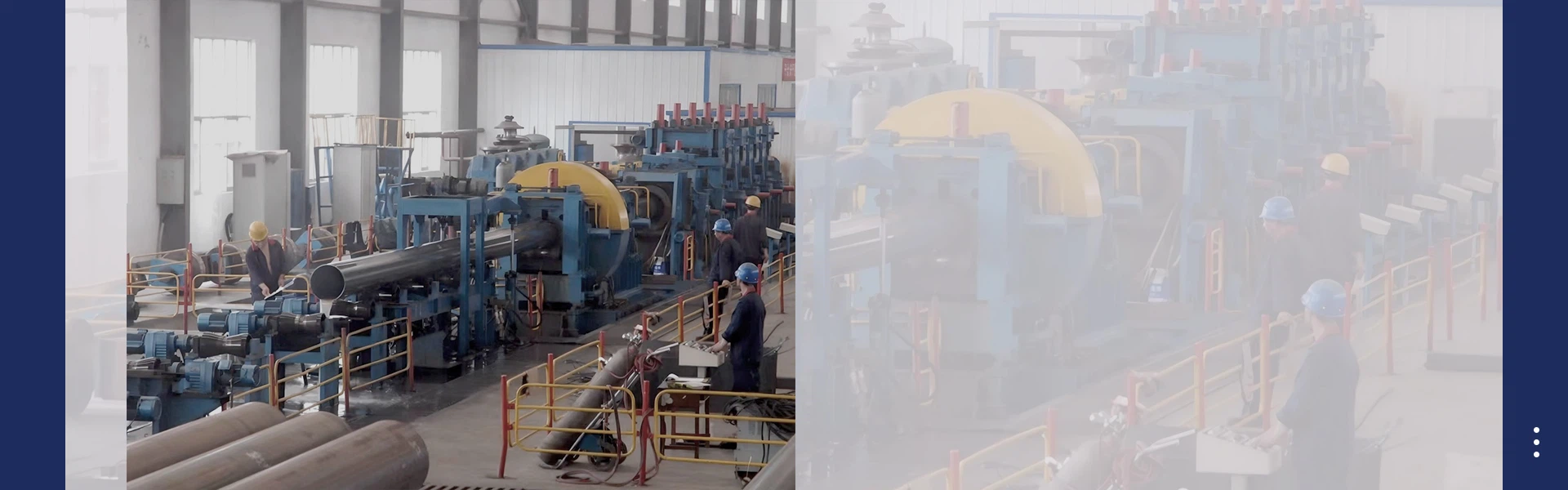
Currently in metal processing and pipe making production, efficiency and precision are must necessary. Especially flying saw blade. Unlike conventional saw blades that operate on stationary materials, this advanced cutting tool is engineered for on-the-fly cutting-seamlessly slicing moving workpieces without halting production lines. So flying saw blade becomes essential for anyone involved in metal fabrication, construction, or automated production.
Flying Saw Blade
A flying saw blade is a high-performance circular cutting tool designed exclusively for flying saw systems-machines that cut continuous, moving materials like steel pipes, aluminum profiles, and plastic tubes. At its core, it is a specialized circular saw blade, but its design, materials, and engineering are far more robust than standard blades. The name "flying" derives from its ability to move synchronously with the workpiece during cutting, then retract and return to its starting position-all while the production line runs uninterrupted.
In generally, flying saw blades range from 400mm to 2000mm in diameter, with custom sizes available for unique applications. They feature a thick, durable body (often made of SKS51 steel) and tungsten carbide tipped (TCT) teeth, ensuring exceptional hardness and wear resistanceMade-in-Ch.... Many modern blades also include PVD coatings (Physical Vapor Deposition), which boost surface hardness up to 3,500 HV, reduce friction, and prevent chip adhesion-critical for high-speed, high-temperature operations.
How flying saw blade Works:
Flying saw system relies on servo motors, encoders, and PLC controls to synchronize blade movement with the workpiece.
The process unfolds in five steps:
1.Idle: The blade waits at its home position as the continuous workpiece (e.g., a steel pipe) moves along the production line.
2.Sync: Sensors and encoders detect the workpiece's speed and position. The saw carriage (holding the blade) accelerates to match the workpiece's velocity, ensuring perfect synchronization.
3.Cut: Once synchronized, the blade descends and cuts through the moving material. The TCT teeth slice cleanly through metal, while the PVD coating dissipates heat to avoid thermal damage.
4.Retract: After cutting, the blade lifts away from the workpiece.
5.Return: The carriage speeds back to the home position, ready for the next cut-all in a fraction of a second.
The flying saw blade can enables continuous production, boosting efficiency by 30% or more in high-volume operations.

The characteristics of the flying saw blade
Not all circular saw blades are the same. The flying saw blades have been specially designed and possess a number of unique features that enable them to handle high-speed continuous cutting:
Sturdy knife body structure: Made of high-grade steel (SKS51 or equivalent material), the knife body is thick and pre-tightened, which can effectively reduce bending deformation during the cutting process and ensure straight and precise cutting at high speeds of 200–600 meters per minute.
Tungsten Carbide Tooth Tips (TCT): The cutting teeth are made of industrial-grade tungsten carbide, which is harder than steel and has extremely strong wear resistance. The blades can remain unresharpened after cutting 300-400 tons of steel.
Special tooth profile design: The cutting teeth have been optimized for specific application scenarios. For instance, the BW type teeth are suitable for pipes with welding protrusions, while the BS type teeth are best suited for smooth and free-of-burr cutting operations.
Excellent thermal stability: The advanced coating and heat treatment process enable the blade to operate continuously at temperatures exceeding 600°C, significantly reducing the risks of thermal cracks and edge chipping.
Vibration reduction performance: The precise leveling and pre-tightening design effectively minimize vibrations during high-speed rotation, ensuring smooth cutting and minimal edge burrs (≤ 0.05 millimeters).
Application of fly saw blades
Steel pipe production: The most common application scenario. Fly saw blades can continuously cut welded steel pipes (ERW, HFW), precisely cutting lengths of 6 meters, 12 meters, etc. The entire production line can be processed without stopping. It is suitable for small-diameter pipes (20mm) and large-diameter pipes (above 600mm), and the cutting ends have no burrs, making them easy for welding or coating.
Metal profile manufacturing: Used for cutting profiles of aluminum, steel, copper, etc., widely applied in the construction, automotive and furniture industries, such as window frames, door rails and structural supports.
Plastic and composite material extrusion: Suitable for cutting PVC, HDPE and fiberglass pipes. The low-temperature cutting characteristic of the blades can effectively prevent the plastic materials from melting or deforming.
Automobiles and aerospace: Used for cutting drive shafts, hydraulic tubes, and precision parts such as aluminum alloy chassis components. The blades have high precision (±1.5mm) and meet strict aerospace quality standards.
Architecture and infrastructure: At the construction site, the reinforcing bars, scaffold pipes and structural steel beams are cut to standard lengths.

Flying Saw Blade Specification
| Item | Details |
|---|---|
| Product Name | Flying Saw Blade |
| OD (Outer Diameter) | 110–1800 mm |
| ID (Inner Diameter) | 30–80 mm |
| Thickness | 1.6–6.0 mm |
| Number of Teeth | 12–40, subject to OD and thickness |
| Grade | TCT, HSS |
| Suitable Materials | Carbon steel, round pipe, hollow sections, round bar, light keel |
| Applicable Equipment | Pipe forming machines, flying saw machines, cold bending forming machines, steel pipe production lines, profile processing production lines, etc. - high-speed online cutting equipment |
Packing of Flying saw blade
This large fly-saw blade is individually wrapped with anti-rust film and soft protective paper, and then safely placed in a specially designed fumigation wooden box. The box clearly indicates the dimensions, is reinforced with wood boards, and is mounted on a pallet for easy handling by forklifts. The packaging effectively prevents moisture, scratches and impacts during transportation, ensuring that the precise cutting edges and the blade body remain in perfect condition.