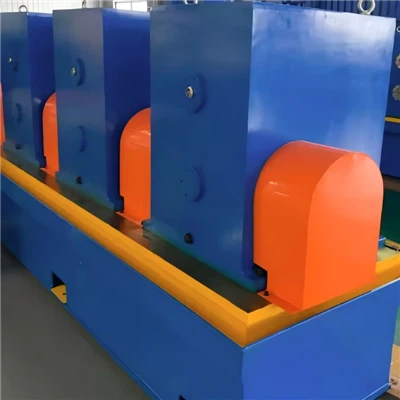
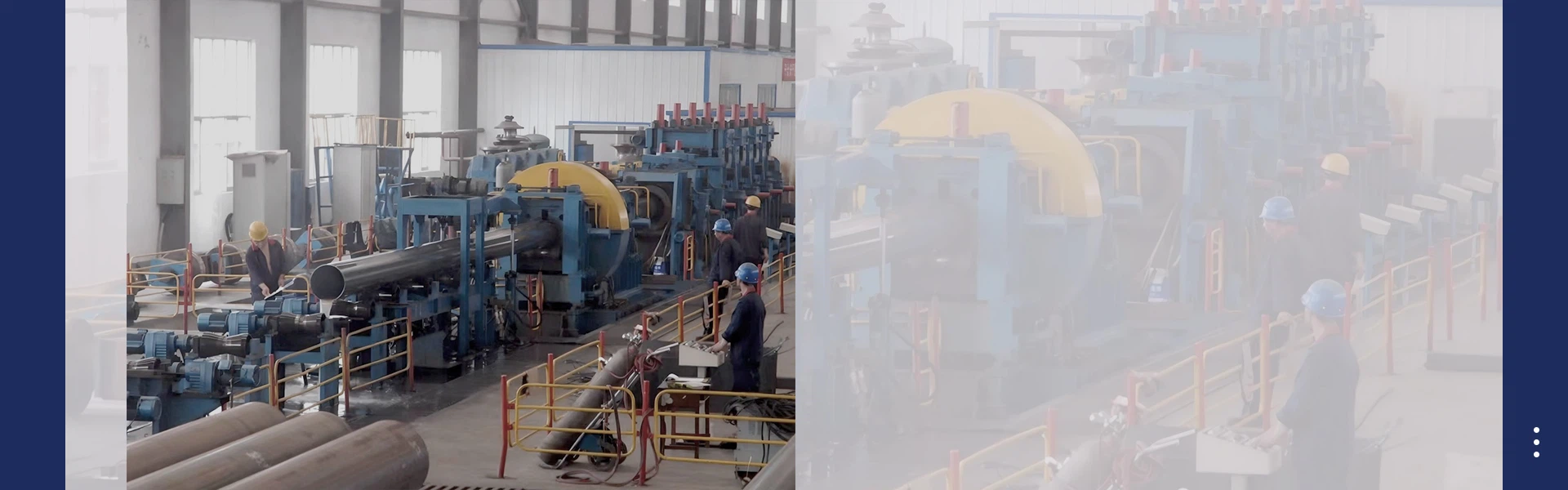

Tianjin Binhai Yashanway Import and Export Co., Ltd. is one of the leading manufacturers and suppliers of precision erw tube production equipment in China, specialized in providing high quality customized service. If you're going to wholesale the newest precision erw tube production equipment made in China, welcome to get free sample from our factory. For price consultation, contact us.
Product Overview
Continuous Coil-to-Tube Production
The ERW tube production line converts steel strip or coil into welded steel tubes through continuous forming, high-frequency welding, sizing, and cutting.
Multiple Tube Profiles
The line can be configured for round tubes and, depending on the mill design and tooling, square and rectangular hollow sections.
Industrial Production
Suitable for continuous production of structural, mechanical, furniture, scaffolding, and other steel tube products where defined tube dimensions and production requirements need to be maintained.
Technical Specifications
|
Parameter |
Standard ERW Tube Mill |
Heavy-Duty ERW Tube Mill |
|
Typical Tube OD |
33-114 mm |
114-219 mm |
|
Typical Wall Thickness |
1-4 mm |
4-8 mm |
|
Tube Profiles |
Round / Square / Rectangular |
Round / Square / Rectangular |
|
Welding Method |
HF ERW |
HF ERW |
|
Forming System |
Roll forming |
Roll forming |
|
Cutting |
Flying saw / cold saw |
Flying saw / cold saw |
|
Control System |
PLC + HMI |
PLC + HMI |
Complete Production Line Configuration
Coil Entry & Continuous Feeding
Hydraulic Uncoiler - Single- or double-mandrel configurations can be selected according to line requirements.
Strip Shear & Butt Welder - Connects successive coils for continuous strip feeding.
Strip Accumulator - Provides stored strip during coil joining and supports continuous production.
Forming & Welding
Roll Forming Mill - Progressive forming stands shape the flat strip into the required tubular profile.
Solid-State HF Welding System - Heats the strip edges and forms the longitudinal weld through squeeze rolls.
Sizing & Finishing
Cooling & Sizing - Cooling is followed by sizing stands to establish the required tube geometry and straightness.
Cutting & Handling - Flying or cold saw systems cut finished tubes to specified lengths before transfer to the run-out area.
Production Process
Steel Coil → Uncoiling → Strip Joining → Accumulation → Forming → HF Welding → Cooling → Sizing → Cutting → Tube Handling
Forming
Progressive roll stands gradually form the steel strip into an open tubular profile while maintaining controlled strip alignment.
HF Welding
High-frequency heating brings the strip edges to the required welding condition. Squeeze rolls then bring the heated edges together to form the longitudinal weld seam.
Sizing & Cutting
After cooling, sizing rolls establish the final tube geometry. The cutting system separates the continuous tube into specified lengths without requiring the production line to stop.
Materials & Tube Applications
Compatible Materials
Carbon Steel - Suitable grades may include Q195, Q235, Q355, S355JR, and ASTM A36, subject to mill configuration.
Hot-Rolled & Cold-Rolled Strip - Material selection depends on the required tube dimensions and forming process.
Galvanized or Pre-Galvanized Strip - Can be considered for suitable mill configurations and processing conditions.
Stainless Steel & Alloy Grades - Require technical review before equipment selection.
Typical Applications
Structural Tubes - Frames, scaffolding, racks, supports, and other hollow-section structures.
Mechanical Tubes - Machinery components, equipment frames, and fabricated steel assemblies.
Furniture & General Fabrication - Furniture tubing, fitness equipment, enclosures, and general-purpose fabricated products.
Welding, Control & Automation
HF Welding Control
The HF welding system regulates key welding parameters to maintain consistent process conditions during continuous tube production.
PLC & HMI Control
PLC-based control coordinates forming, welding, sizing, cutting, and auxiliary systems. An industrial HMI provides operating and parameter monitoring functions.
Line Synchronization
Digital drive control coordinates the main forming and finishing sections to support stable material feeding and synchronized production.
Quality Control & Testing
Mechanical & Assembly Inspection
Mechanical components and electrical assemblies are checked against approved technical specifications before and during machine assembly.
Roll Alignment
Forming and sizing stands are aligned according to specified mechanical and installation tolerances to support consistent strip tracking and tube forming.
Tube Inspection Options
Depending on the finished tube specification, the line can be configured to work with:
Dimensional and straightness inspection
Eddy Current Testing (ET)
Ultrasonic Testing (UT)
Hydrostatic testing
Testing requirements should be confirmed according to the applicable tube standard and end application.
Customization & Line Configuration
Tube Range & Tooling
The mill can be configured around the required tube diameter or section size, wall thickness, steel grade, and production range.
Automation Options
The production line can be configured with different levels of automation for coil handling, tube cutting, transfer, bundling, and production monitoring.
Downstream Testing
Inspection and NDT equipment can be specified according to product standards, customer requirements, and finished tube applications.
Quality & Compliance
Quality Management
Manufacturing can be managed under an ISO 9001 quality management system where applicable.
CE Compliance
CE conformity documentation can be provided for applicable machine configurations and target-market requirements.
Factory Testing
Pre-shipment inspection and factory testing can be arranged according to the agreed technical specification and project requirements.
FAQ
Q: What tube sizes can the ERW tube production line manufacture?
A: Typical configurations cover approximately 33-114 mm OD with 1-4 mm wall thickness and 114-219 mm OD with 4-8 mm wall thickness. The actual range depends on the selected mill, material, tooling, and production requirements.
Q: Can one ERW mill produce round, square, and rectangular tubes?
A: A suitable mill can be configured for multiple tube profiles. Production of square and rectangular sections requires the appropriate forming and sizing tooling, and the available profile range depends on the specific mill design.
Q: What materials can be processed?
A: Carbon steel and selected hot-rolled, cold-rolled, galvanized, or pre-galvanized strips can be considered depending on the line configuration. Stainless steel and special alloy grades require technical review.
Q: How is ERW weld quality controlled?
A: HF welding controls regulate key welding parameters and process conditions. Additional Eddy Current Testing, Ultrasonic Testing, or other inspection systems can be specified according to the finished tube requirements.
Q: What information is required to select the correct ERW tube mill?
A: The main selection data includes tube diameter or section size, wall thickness, steel grade, strip width and thickness, required production speed, finished tube length, production capacity, applicable standards, and testing requirements.
Q: Can the production line be customized?
A: Yes. The mill configuration can be developed around the required tube range, material, wall thickness, production speed, tooling, automation level, cutting method, testing requirements, and factory conditions.
Hot Tags: precision erw tube production equipment, China precision erw tube production equipment manufacturers, suppliers, factory, pipe strip forming welding line, steel pipe mill line, tube automatic forming system, tube production integrated line, tube production processing line, tube rolling line