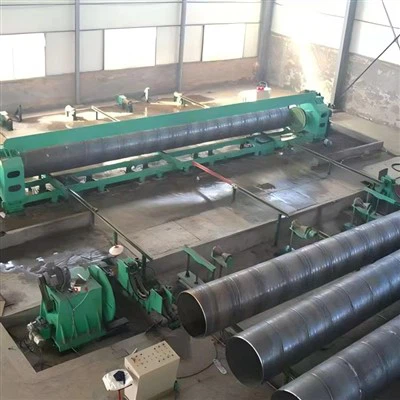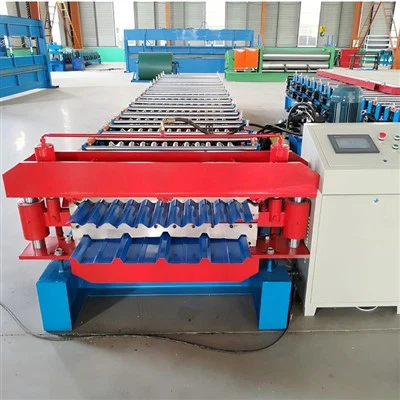

Tianjin Binhai Yashanway Import and Export Co., Ltd. is one of the leading manufacturers and suppliers of industrial erw pipe manufacturing plant in China, specialized in providing high quality customized service. If you're going to wholesale the newest industrial erw pipe manufacturing plant made in China, welcome to get free sample from our factory. For price consultation, contact us.
Turnkey ERW Pipe & Tube Manufacturing Plant Solutions
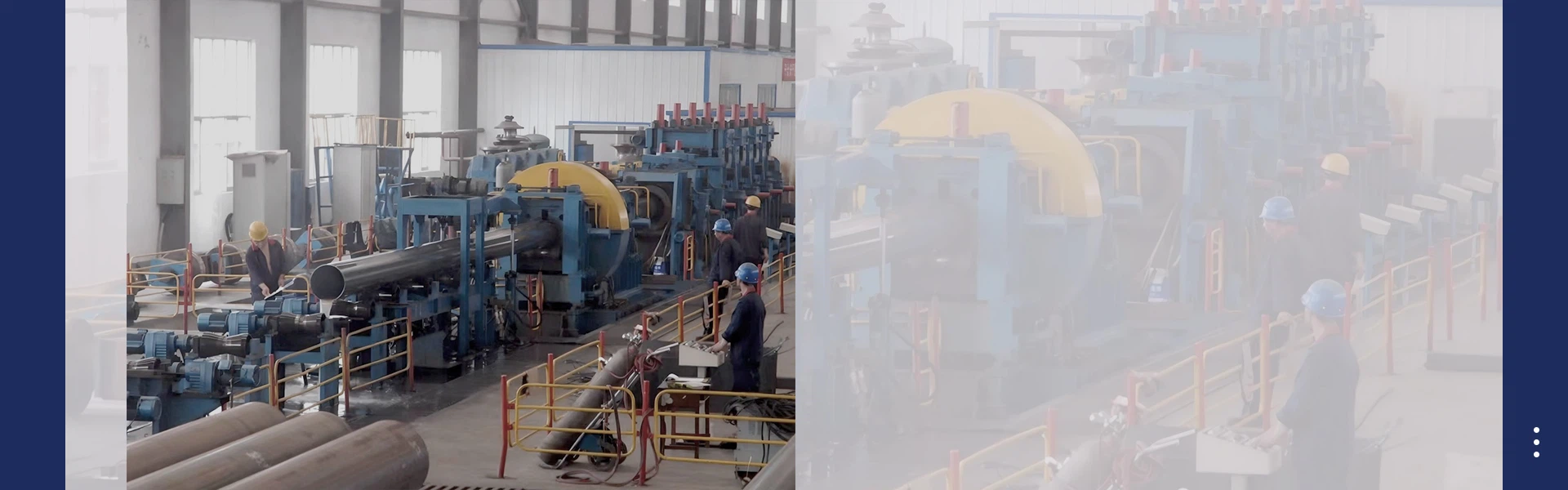
An Industrial ERW Pipe Manufacturing Plant is a continuous production system that converts steel strip coils into longitudinally welded round, square, and rectangular tubes. The complete line can integrate coil preparation, roll forming, high-frequency welding, sizing, cutting, inspection, and finished-tube handling according to the required product range and production capacity.
Complete ERW Production Process
Continuous Strip Processing
Steel coil is uncoiled, leveled, and prepared for continuous entry into the forming section. A shear and butt-welding unit can join coil ends to reduce interruptions during coil changes.
Tube Forming & HF Welding
Forming stands progressively shape the strip into a tubular profile. High-frequency electric resistance welding heats the strip edges before squeeze welding forms the longitudinal seam.
Sizing, Cutting & Handling
The welded tube passes through cooling and sizing sections before straightening and fixed-length cutting. Finished tubes can then be transferred to inspection, bundling, and packing systems.
Typical Process Flow
Steel Coil Loading → Uncoiling → Leveling → Shear & Butt Welding → Accumulation → Roll Forming → HF Welding → Weld Bead Scarfing → Cooling → Sizing → Straightening → Flying Cut-Off → Inspection → Bundling & Packing
Main Equipment Configuration
Coil Preparation
Coil Loading & Uncoiler - Supports and feeds steel strip into the production line.
Leveler & Shear-Welder - Flattens the strip and joins coil ends for continuous strip feeding.
Strip Accumulator - Provides stored strip length during coil-end preparation and changeover.
Forming & Welding
Forming Mill Stands - Progressively form the strip into round or section profiles.
HF Welding System - Provides high-frequency heating for longitudinal electric resistance welding.
Squeeze Rolls - Bring the heated strip edges together to form the weld seam.
Weld Bead Scarfing - Removes external and/or internal weld flash where required.
Finishing & Handling
Cooling & Sizing Section - Controls tube temperature and adjusts the finished profile.
Straightening Unit - Corrects tube straightness after forming and sizing.
Flying Cut-Off - Cuts continuous tube into programmed fixed lengths.
Inspection & Packing - Supports configured testing, bundling, and strapping operations.
Technical Specifications
|
Parameter |
Typical Configuration |
|
Tube Type |
Round, square, and rectangular |
|
Tube Size Range |
Project-specific according to mill configuration |
|
Wall Thickness |
Project-specific according to tube size, steel grade, and forming design |
|
Steel Material |
Carbon steel and selected low-alloy steel |
|
Welding Method |
High-frequency electric resistance welding |
|
Forming Method |
Multi-stand roll forming |
|
Cut-Off System |
Flying saw or configured cut-off system |
|
Control System |
PLC + HMI |
|
Drive System |
AC/DC drives according to line design |
|
Inspection Options |
Eddy Current, ultrasonic, dimensional, hydrostatic testing |
|
Finished Product Standards |
ASTM, API, EN, or other specified standards |
How to Select an ERW Pipe Mill
Tube Size & Profile
Define the minimum and maximum round outside diameter or square/rectangular section size. The required size range determines the forming and sizing configuration.
Wall Thickness & Steel Grade
Provide the complete wall thickness range together with the steel grade or required mechanical properties. These factors affect forming, welding, and line configuration.
Production Capacity
Specify the required output, target production speed, finished tube length, and expected production schedule. Maximum rated speed should be evaluated together with tube size, wall thickness, and material grade.
Product Standard
Identify the applicable finished-tube standard, such as ASTM, API, EN, or another project-specific specification. The required standard helps determine the inspection and testing configuration.
Typical Applications
Round ERW Tubes
Used for water and fluid service, structural applications, general industrial fabrication, scaffolding, and selected line-pipe applications subject to the applicable product specification.
Square & Rectangular Tubes
Used in building structures, architectural fabrication, machinery frames, solar mounting structures, furniture, and other structural applications.
Quality Control & Testing
Incoming Material Inspection
Steel strip can be checked for width, thickness, surface condition, and relevant mechanical properties before production.
In-Process Monitoring
Key production parameters may include HF welding conditions, V-angle, squeeze pressure, cooling-water conditions, forming settings, and dimensional control.
Finished Tube Inspection
Depending on the product specification, the line can be configured for dimensional inspection, weld-seam Eddy Current Testing, ultrasonic inspection, hydrostatic testing, and other required tests.
Standards Compliance
Finished-tube inspection requirements should be matched to the applicable product standard and customer specification. ASTM, API, EN, and other standards may require different testing and acceptance criteria.
Production Capability & Line Configuration
Size-Specific Tooling
Forming and sizing rolls are selected according to the required tube dimensions and product range. Multi-size production requires an appropriate tooling and changeover configuration.
Automation & Control
PLC and HMI systems coordinate line operation, drive control, process monitoring, and production settings. The automation level can be configured according to project requirements.
Auxiliary Equipment
The complete plant can incorporate accumulator systems, weld bead scarfing, cooling, straightening, cut-off, inspection, bundling, and packing equipment according to the required production process.
Project-Based Engineering
Line configuration should be developed from the required tube range, material grades, wall thickness, production capacity, finished length, applicable standards, and available plant conditions.
Information Required for an ERW Mill Quotation
Tube Specification - Round, square, or rectangular; minimum and maximum sizes.
Material - Steel grade, yield/tensile strength where available, strip thickness and width.
Production Target - Required output, target line speed, and finished tube length.
Quality Requirements - Applicable product standard, inspection method, testing requirements, and automation level.
FAQ
Q: Can one ERW line produce different tube sizes?
A: Yes. A suitably configured line can produce multiple tube sizes within its designed range. The actual range depends on the forming mill, sizing configuration, tooling, wall thickness, and steel grade.
Q: Can the same line produce round, square, and rectangular tubes?
A: Some ERW lines can produce both round and shaped sections, but the required tooling and forming configuration depend on the size range and section geometry. The production scope should be confirmed during line design.
Q: How should ERW line speed be evaluated?
A: Maximum line speed should be considered together with tube diameter or section size, wall thickness, steel grade, welding requirements, and cut length. The rated maximum speed does not necessarily represent the practical speed for every product specification.
Q: What testing equipment can be integrated?
A: Depending on the finished-tube specification, options may include dimensional inspection, weld-seam Eddy Current Testing, ultrasonic testing, hydrostatic testing, and other inspection equipment.
Q: What should be compared when evaluating ERW mill quotations?
A: Compare the complete technical scope rather than base machine price alone. Review the size range, wall thickness capability, steel grades, tooling, HF welding system, automation, inspection equipment, spare parts, installation scope, commissioning, and after-sales technical support.
Q: What information is needed before selecting an ERW pipe mill?
A: The key information includes tube size, profile, wall thickness, steel grade, production target, finished length, applicable product standard, required inspection, and desired automation level. These parameters determine the appropriate line configuration.
Hot Tags: industrial erw pipe manufacturing plant, China industrial erw pipe manufacturing plant manufacturers, suppliers, factory, pipe welding forming and cutting line, Spiral Pipe Machine, tube extrusion forming line, tube forming rolling line, tube forming welding line, tube roll forming welding line