In the highly competitive landscape of steel pipe production, the role of an efficient lubrication system cannot be overstated. As a seasoned supplier of steel pipe production lines, I have witnessed firsthand how a well - designed lubrication system can significantly impact the quality, productivity, and longevity of the equipment. In this blog, I will delve into the key requirements for a lubrication system in a steel pipe production line.
1. Lubrication Performance
Reducing Friction and Wear
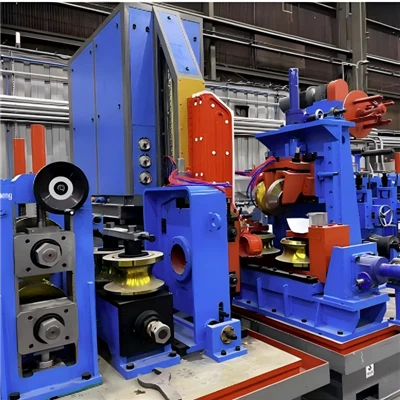
One of the primary functions of a lubrication system in a steel pipe production line is to reduce friction between moving parts. In machines like the High Frequency Welding Machine, numerous components such as gears, bearings, and sliders are in constant motion. Without proper lubrication, these parts will experience excessive friction, leading to rapid wear and tear. This not only shortens the lifespan of the equipment but also compromises the quality of the steel pipes produced.
A high - performance lubricant forms a thin film between the moving surfaces. This film acts as a barrier, preventing direct contact between the metal parts and reducing the coefficient of friction. For example, in the case of a Spiral Pipe Forming Machine, where the pipe is formed through a complex set of bending and shaping operations, the lubricant helps in smooth material flow and reduces the stress on the forming tools.
Cooling
During the production process, a significant amount of heat is generated due to friction and the high - speed operation of machinery. The lubrication system also plays a crucial role in cooling the components. For instance, in an ERW Tube Mill Machine, the electrical resistance welding process generates a large amount of heat. The lubricant absorbs and dissipates this heat, preventing overheating of the machine parts. Overheating can cause thermal expansion, which may lead to misalignment of components and ultimately affect the precision of the pipe production.
2. Contaminant Control
Filtration
The lubrication system must be equipped with an efficient filtration mechanism to remove contaminants such as metal particles, dust, and debris. In a steel pipe production line, these contaminants can be generated during the cutting, welding, and forming processes. If these particles are not removed from the lubricant, they can act as abrasives, accelerating wear on the components.
A multi - stage filtration system is often used in modern lubrication systems. The first stage may be a coarse filter that removes large particles, followed by a fine filter that captures smaller contaminants. This ensures that the lubricant remains clean and can continue to perform its functions effectively.
Sealing
Proper sealing is essential to prevent the entry of external contaminants into the lubrication system. In a harsh industrial environment, dust, moisture, and other pollutants can easily find their way into the system if there are no effective seals. For example, in an ERW Pipe Manufacturing Machine, where the production process may involve exposure to the open environment, the seals around the lubrication system components must be robust and reliable.
3. Compatibility
Lubricant - Material Compatibility
The lubricant used in the steel pipe production line must be compatible with the materials of the machine components. Different metals and alloys have different chemical properties, and using an incompatible lubricant can lead to corrosion, chemical reactions, or material degradation. For example, some lubricants may react with certain types of steel or non - ferrous metals, causing pitting or surface damage.
Compatibility with Production Processes
The lubricant should also be compatible with the various production processes in the steel pipe production line. For instance, in the welding process, the lubricant should not leave residues that can affect the quality of the weld. In an ERW Pipe Making Machine, the lubricant must be able to withstand the high - temperature and high - energy environment of the welding process without degrading or causing any adverse effects on the weld joint.
4. Monitoring and Maintenance
Real - Time Monitoring
A modern lubrication system in a steel pipe production line should be equipped with real - time monitoring devices. These devices can measure parameters such as lubricant level, temperature, pressure, and contamination level. By continuously monitoring these parameters, operators can detect any potential problems early and take corrective actions before they lead to serious equipment failures.


For example, if the temperature of the lubricant starts to rise abnormally, it may indicate a problem such as increased friction or a malfunction in the cooling system. Real - time monitoring allows for quick response and can prevent costly downtime.
Regular Maintenance
Regular maintenance of the lubrication system is crucial for its proper functioning. This includes changing the lubricant at recommended intervals, cleaning the filters, and inspecting the seals and other components. Over time, the lubricant will break down and lose its effectiveness, and contaminants will accumulate in the system. By performing regular maintenance, the lubrication system can be kept in optimal condition, ensuring the smooth operation of the steel pipe production line.
5. Environmental Considerations
Biodegradability
In today's environmentally conscious world, it is important to consider the biodegradability of the lubricant. A biodegradable lubricant will break down more easily in the environment, reducing the potential for pollution in case of any spills or leaks. In a steel pipe production facility, accidental spills can occur, and using a biodegradable lubricant can minimize the environmental impact.
Low Toxicity
The lubricant should also have low toxicity. This is not only important for the environment but also for the health and safety of the workers. Workers may come into contact with the lubricant during maintenance or operation of the equipment, and a low - toxicity lubricant reduces the risk of health problems such as skin irritation, respiratory issues, or long - term health effects.
In conclusion, a lubrication system in a steel pipe production line must meet a variety of requirements to ensure the efficient and reliable operation of the equipment. From lubrication performance and contaminant control to compatibility, monitoring, and environmental considerations, every aspect plays a crucial role. As a supplier of steel pipe production lines, we understand the importance of these requirements and are committed to providing our customers with high - quality lubrication systems that meet their specific needs.
If you are in the market for a steel pipe production line or need to upgrade your existing lubrication system, we invite you to contact us for further discussions. Our team of experts is ready to assist you in finding the most suitable solutions for your production requirements.