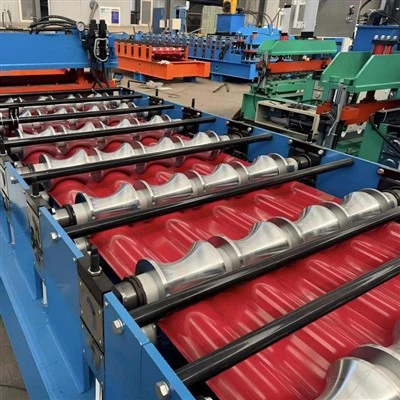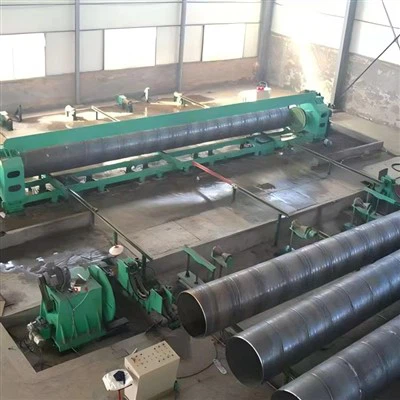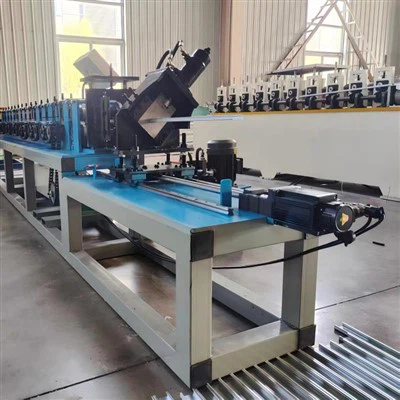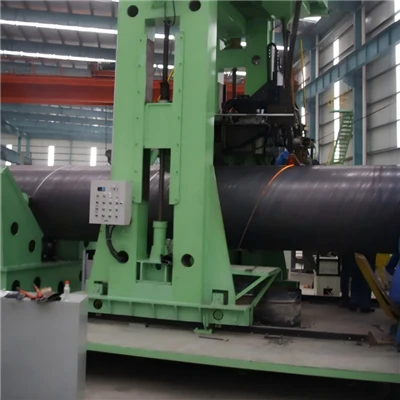
Welded steel pipes are manufactured by forming flat steel into a tubular shape and joining the edges through a controlled welding process. However, different welding technologies produce pipes with different characteristics, production requirements, dimensional capabilities, and applications.
Two important categories are ERW Steel Pipe and Submerged Arc Welded (SAW) pipe. ERW stands for Electric Resistance Welding, while SAW stands for Submerged Arc Welding. Although both are welded-pipe manufacturing technologies, their production principles and equipment configurations are significantly different.
ERW is widely used for continuous production of small- and medium-diameter pipes, particularly when high production speed and consistent dimensions are required. SAW technology is commonly used for large-diameter and thicker-walled pipes, including LSAW and SSAW products. Understanding the differences between these technologies is important when selecting pipe for a specific industrial or infrastructure application.
What Is ERW Steel Pipe?
ERW steel pipe is produced from steel strip or coil that is continuously formed into a cylindrical shape. The longitudinal edges of the strip are brought together and heated by electrical resistance. Pressure is then applied to forge the heated edges together, creating a continuous longitudinal weld seam.
Modern ERW pipe mills commonly use high-frequency electrical current to concentrate heat at the strip edges. The process is highly automated and can operate continuously, making it suitable for high-volume manufacturing.
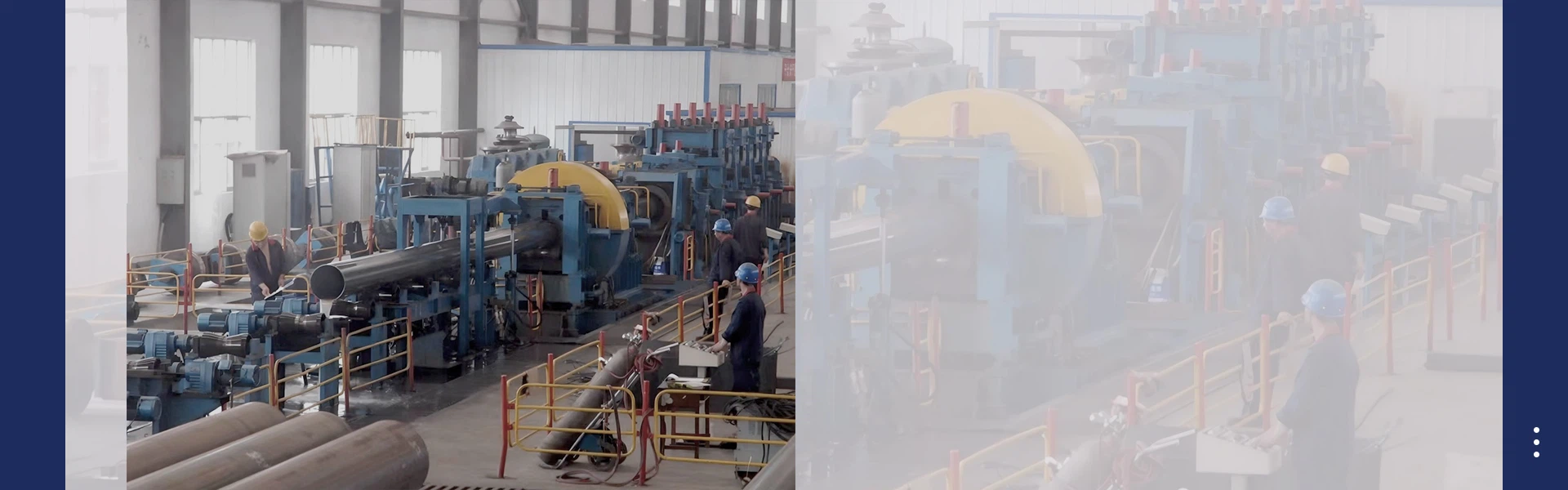
A typical ERW Steel Pipe production line includes an uncoiler, leveling machine, forming section, high-frequency welding unit, weld-bead removal system, sizing mill, cutting machine, and inspection equipment.
What Is Submerged Arc Welded Pipe?
Submerged Arc Welded pipe is manufactured using the SAW process, in which an electric arc is generated between a continuously fed welding wire and the steel. The welding zone is covered by granular flux, which protects the molten weld pool from atmospheric contamination.
SAW technology is commonly used to manufacture large-diameter and heavy-wall pipes. There are two major pipe-production configurations: LSAW and SSAW.
LSAW (Longitudinal Submerged Arc Welded) pipe has a longitudinal weld seam, while SSAW (Spiral Submerged Arc Welded) pipe has a helical or spiral weld seam.
The use of welding wire and flux gives SAW a fundamentally different welding arrangement from ERW.


Difference in Welding Technology
The most important difference between ERW and SAW pipes is the method used to create the weld.
In ERW production, electrical resistance generates heat directly at the edges of the steel strip. The heated edges are then pressed together under controlled pressure. No separate welding wire or granular flux is normally required.
In SAW production, an electric arc melts a continuously supplied welding wire and the adjacent steel. Granular flux covers the welding zone during the operation.
Therefore, ERW is primarily a resistance welding process, whereas SAW is an arc welding process.
Difference in Production Line Configuration
The production lines for ERW and SAW pipes have considerably different configurations.
A typical ERW production line follows:
Uncoiling → Leveling → Strip Guiding → Forming → HF Welding → Bead Removal → Sizing → Cutting → Inspection
The steel strip moves continuously through the forming and welding sections. This continuous arrangement allows high production efficiency.
A typical SAW pipe production line may follow:
Plate/Strip Preparation → Edge Milling → Forming → Tack Welding → Internal SAW → External SAW → Expansion/Sizing → End Beveling → Inspection → Hydrostatic Testing
The exact configuration depends on whether the pipe is manufactured using LSAW or SSAW technology.
Difference in Raw Materials
ERW pipes are primarily produced from steel coil. The coil is continuously uncoiled and fed into the forming mill.
LSAW pipes are commonly manufactured from steel plate. The plate is prepared, formed into a cylindrical shape, and welded along its longitudinal seam.
SSAW pipes are generally manufactured from steel strip or coil. The strip enters the forming section at a controlled angle and is gradually formed into a spiral pipe while the helical seam is welded.
This difference in raw-material configuration has a major influence on the pipe dimensions that each production technology can efficiently manufacture.
Difference in Pipe Diameter
Pipe diameter is one of the most significant factors when comparing ERW and SAW technology.
ERW production is particularly efficient for small- and medium-diameter pipe. Depending on the mill design, an ERW production line may cover approximately 20–600 mm outside diameter, although specialized mills can operate beyond this range.
SAW technology is generally associated with larger diameters. LSAW and SSAW lines can commonly produce pipes in ranges such as 400–2,000 mm OD or more, depending on the specific equipment.
These figures are indicative rather than fixed industry limits. Actual production capability depends on the pipe-forming method, steel grade, wall thickness, strip or plate width, and production-line design.
Difference in Wall Thickness
Wall thickness is another important distinction.
ERW mills are commonly designed for thin- and medium-wall products. Depending on the equipment and material, a particular ERW line may process approximately 1.5–16 mm wall thickness.
SAW production is particularly suitable for heavier-wall pipe. Depending on the line configuration, SAW pipes may be manufactured in thicknesses around 6–25 mm, with specialized systems capable of processing thicker material.
The appropriate range depends on the steel grade, pipe diameter, forming process, welding equipment, and applicable product standard.
Difference in Production Speed
ERW has a major advantage in continuous production speed. Because the steel strip is continuously formed and welded, modern ERW mills can achieve high output.
Depending on pipe dimensions and production-line design, ERW mills may operate at approximately 20–120 m/min, while high-speed systems can reach higher speeds for suitable products.
SAW production generally operates at lower line speeds because the process involves forming larger pipes and depositing welding material through arc welding. Depending on pipe diameter and wall thickness, SAW production speeds may be approximately 1–20 m/min.
However, production speed should always be evaluated together with pipe dimensions and production capacity rather than comparing maximum line speeds alone.


Welding Wire and Flux Requirements
ERW and SAW have fundamentally different consumable requirements.
ERW does not normally use separate welding wire or granular flux. The steel strip itself provides the material that is heated and forged together during resistance welding.
SAW uses submerged arc welding wire as the electrode and granular welding flux to cover the welding zone.
The grade and combination of welding wire and flux are important in SAW pipe manufacturing. They influence weld-metal chemistry, mechanical properties, penetration, deposition rate, and weld performance.
Therefore, SAW production requires careful control of welding current, voltage, wire-feed speed, travel speed, flux condition, and flux recovery.
Difference in Weld Seam Structure
ERW produces a continuous longitudinal weld seam along the pipe.
In the ERW process, the edges of the strip are heated and joined by pressure. The resulting weld zone has characteristics associated with resistance welding and subsequent heat treatment or weld-bead processing, depending on the production line.
SAW pipes can have either longitudinal or spiral weld seams. LSAW has a straight longitudinal seam, while SSAW has a helical seam.
The weld configuration therefore differs substantially between ERW, LSAW, and SSAW pipes.
Difference in Weld Quality
Both ERW and SAW can produce high-quality pipe when the production process is properly controlled.
However, weld quality depends on much more than the welding technology itself. Steel quality, welding parameters, forming accuracy, heat input, edge preparation, equipment condition, operator control, and inspection procedures all influence the finished pipe.
For SAW production, control of welding wire, flux, welding parameters, and seam alignment is particularly important.
For ERW production, edge preparation, electrical parameters, welding pressure, heat input, forming accuracy, and weld-bead removal require careful control.
Inspection Requirements
Both ERW and SAW pipes can require extensive inspection depending on their application and applicable standards.
Common inspection methods include:
- Visual inspection
- Dimensional inspection
- Ultrasonic testing
- Eddy current testing
- Radiographic inspection
- Hydrostatic testing
- Mechanical testing
- Weld inspection
- Surface inspection
The specific inspection requirements depend on the pipe standard, steel grade, service conditions, customer requirements, and intended application.
For pipeline applications, standards such as ISO 3183 specify requirements for steel pipe used in pipeline transportation systems and cover different welded manufacturing routes.
ERW Production Advantages
ERW technology offers several advantages for manufacturers.
The continuous production process supports high productivity and automation. A modern ERW mill can integrate forming, high-frequency welding, sizing, cutting, and inspection into a continuous production line.
Another advantage is efficient production of standardized pipe dimensions. Once the forming rolls and production parameters are properly set, large quantities of pipe can be produced continuously.
ERW is therefore particularly attractive for applications requiring high production volumes and consistent dimensions.

SAW Production Advantages
SAW technology offers important advantages for large-diameter and thick-walled pipe production.
The process uses welding wire and granular flux, allowing controlled arc welding with relatively high deposition rates. The technology can be used with both longitudinal and spiral pipe-forming methods.
LSAW production is particularly suitable for large-diameter pipes requiring controlled longitudinal welding. SSAW production provides flexibility in manufacturing large-diameter pipes from steel strip.
These characteristics make SAW technology widely relevant to large pipeline and infrastructure projects.
Difference in Equipment Requirements
The equipment required for ERW and SAW production is considerably different.
An ERW mill requires forming rolls, high-frequency welding equipment, weld-bead removal equipment, sizing stands, and high-speed cutting equipment.
A SAW production line requires equipment for plate or strip preparation, forming, tack welding, SAW welding, flux handling, and often expansion, end beveling, and extensive inspection.
SAW lines therefore tend to have a different equipment layout and production workflow compared with continuous ERW mills.
Difference in Typical Applications
ERW and SAW pipes serve different application areas, although there can be some overlap.
ERW pipes are widely used for:
- Water piping
- Structural applications
- Mechanical tubing
- Construction
- General industrial piping
- Utility pipelines
- Low- and medium-pressure services
- SAW pipes are commonly used for:
- Large-diameter water pipelines
- Oil and gas transmission
- Long-distance pipelines
- Steel piling
- Large infrastructure projects
- Structural applications
- Industrial transportation pipelines
- Submerged or buried pipeline applications
The final selection should be based on engineering requirements rather than assuming that one technology is universally superior.
ERW vs. LSAW vs. SSAW
It is important to distinguish the three technologies.
ERW uses electrical resistance to heat and join the edges of continuously formed steel strip.
LSAW uses submerged arc welding to join a longitudinal seam after forming steel plate into a pipe.
SSAW uses submerged arc welding to join a spiral seam while steel strip is helically formed into a pipe.
Therefore, SAW describes the welding process, while LSAW and SSAW describe specific pipe-manufacturing configurations using that welding process.
Comparative Specification Ranges
The following table provides general indicative ranges for understanding the typical differences:
|
Feature |
ERW Pipe |
LSAW Pipe |
SSAW Pipe |
|
Typical OD range |
20–600 mm |
400–2,000+ mm |
400–2,500+ mm |
|
Typical wall thickness |
1.5–16 mm |
6–25+ mm |
6–25+ mm |
|
Production speed |
20–120+ m/min |
1–10 m/min |
1–20 m/min |
|
Raw material |
Coil/strip |
Plate/strip |
Coil/strip |
|
Weld seam |
Longitudinal |
Longitudinal |
Spiral |
|
Welding method |
Resistance/HF |
SAW |
SAW |
|
Welding wire |
Normally no |
Yes |
Yes |
|
Granular flux |
No |
Yes |
Yes |
These ranges are only general examples. Actual equipment specifications can vary significantly according to the manufacturer, pipe dimensions, steel grade, and production requirements.
Cost Considerations
Cost comparison should consider the complete manufacturing process rather than only the welding operation.
ERW can be cost-effective for high-volume production because of its continuous process and high production speed. It can also reduce handling requirements when the production line is properly automated.
SAW may have higher process and equipment requirements, including welding wire and flux handling. However, it becomes highly practical when producing large-diameter or heavy-wall pipe that may not be suitable for conventional ERW production.
Consequently, the most economical process depends on the required pipe dimensions, production quantity, material, testing requirements, and final application.
Which Technology Should Be Selected?
There is no single welding technology that is best for every pipe.
For a manufacturer producing high volumes of small- and medium-diameter pipe, ERW can provide an efficient and highly automated solution.
For large-diameter or heavy-wall pipe, SAW may be the more appropriate technology. Within SAW production, the manufacturer can select LSAW or SSAW according to the required dimensions, material availability, project requirements, and production strategy.
Pipe buyers should therefore evaluate the manufacturing route together with the applicable standard and required performance.
Final Comparison
The fundamental difference between ERW Pipe vs SAW Pipe is the welding principle and the production-line configuration.
ERW uses electrical resistance heating and pressure to join the edges of continuously formed steel strip. It is particularly suitable for high-speed, continuous production of small- and medium-diameter pipe.
SAW uses an electric arc, welding wire, and granular flux to produce the weld. It is particularly suitable for large-diameter and thick-walled pipe and can be used to manufacture both LSAW and SSAW pipes.
The choice between ERW and SAW should therefore be based on pipe diameter, wall thickness, steel grade, production volume, welding requirements, inspection level, operating conditions, and applicable standards.
Neither ERW nor SAW is universally superior. Each technology has its own strengths, and the correct choice is the one that matches the required product specifications and manufacturing conditions.