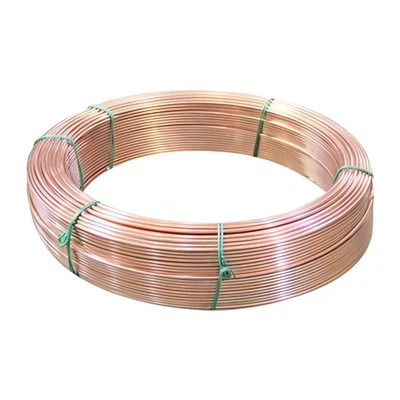
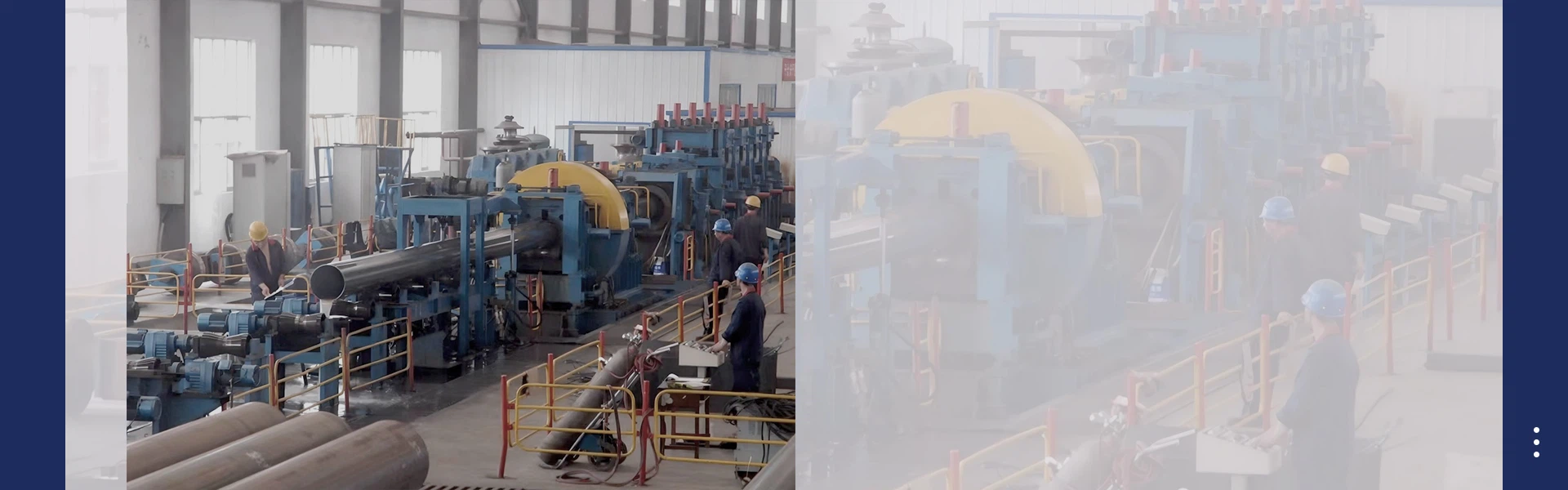

A Coil Slitting Machine is an industrial machine used to cut a wide metal coil into multiple narrower coils, known as strips or slit coils. Unlike a cut-to-length machine, which converts a coil into flat sheets of predetermined length, a slitting machine cuts the coil longitudinally along its length.
This process is widely used in steel service centers, pipe and tube manufacturing, construction-material production, automotive industries, electrical equipment manufacturing, and general metal fabrication.
A modern Coil Slitting Line combines several operations, including coil loading, uncoiling, strip guiding, slitting, tension control, and recoiling. The machine must maintain accurate strip width and stable tension throughout the process to produce clean and consistent slit coils.
What Is Coil Slitting?
Coil slitting is the process of dividing one wide master coil into several narrower strips. For example, a 1,250 mm-wide steel coil could be slit into five strips of approximately 250 mm each, depending on the required edge trim and machine setup.
The basic process is:
Master Coil → Uncoiling → Leveling/Feeding → Slitting → Tension Control → Recoiling → Finished Slit Coils
The slitting knives are positioned according to the required strip widths. As the steel moves continuously through the machine, the knives cut the material longitudinally.
 Main Components of a Coil Slitting Machine
A complete Steel Coil Slitting Machine consists of several sections that work together. The exact configuration depends on the material, coil dimensions, thickness, required slit widths, and production speed.
The main components generally include:
|
Component |
Main Function |
|
Coil loading car |
Transfers the master coil to the uncoiler |
|
Uncoiler |
Holds and unwinds the master coil |
|
Entry guide |
Centers and guides the strip |
|
Slitting head |
Cuts the wide coil into narrower strips |
|
Slitting knives |
Perform the longitudinal cutting |
|
Separator discs |
Keep slit strips separated |
|
Tension unit |
Maintains stable strip tension |
|
Recoiler |
Rewinds the slit strips |
|
Scrap winder |
Collects edge trim |
|
Electrical control system |
Controls machine operation |
|
PLC/HMI |
Provides automatic control and monitoring |
How Does a Coil Slitting Machine Work?
The process begins when the master coil is placed on the loading car. The loading car moves the coil toward the uncoiler, where it is centered and secured.
The coil is then unwound and the leading edge is introduced into the entry section. The strip is guided accurately toward the slitting head.
The slitting knives are arranged according to the required strip width. As the material passes through the knives, it is divided into multiple narrower strips.
After slitting, separator discs keep the strips properly separated. A tension-control system maintains the required strip tension before the individual strips are rewound onto the recoiler.
The finished slit coils are then removed from the recoiler for storage, transportation, or further processing.

Slitting Knife Arrangement
The slitting head is one of the most important parts of the machine. Circular knives are installed on upper and lower shafts, with spacers and separator components used to establish the required cutting arrangement.
The knife position determines the width of the finished strips. Therefore, accurate setup is essential when customers require specific strip widths.
The knives must also be properly sharpened and positioned. Incorrect knife clearance can result in excessive burrs, poor edges, deformation, or accelerated knife wear.
Typical Thickness Range
The thickness capacity of a Coil Slitting Machine depends on the machine design and the material being processed.
Common machine configurations can be found in ranges such as:
0.2–1.5 mm for thin-gauge materials
0.3–3.0 mm for standard thin and medium-gauge coils
0.5–6.0 mm for heavier steel-processing applications
2–10 mm for heavy-gauge materials
These are general ranges rather than fixed industry limits. The actual capacity depends on material grade, tensile strength, coil width, coil weight, minimum strip width, and required production speed.
Typical Coil Width Range
Machine width is normally selected according to the maximum master-coil width.
Common configurations include approximately:
|
Machine Category |
Typical Maximum Coil Width |
|
Compact slitting line |
600–1,250 mm |
|
Standard slitting line |
1,250–1,600 mm |
|
Medium industrial line |
1,600–2,000 mm |
|
Wide coil slitting line |
2,000–2,500 mm |
For a customer processing 1,250 mm-wide master coils, for example, a line with a maximum width significantly above 1,250 mm may provide useful flexibility for future production.
Typical Coil Weight Capacity
The uncoiler and recoiler must be designed to safely handle the master coil and finished slit coils.
Typical machine configurations may handle:
5–10 tons for smaller lines
10–20 tons for standard industrial lines
20–30 tons for heavy-duty systems
30+ tons for specialized high-capacity equipment
The maximum coil weight should be considered together with the coil outside diameter, inside diameter, width, and material thickness.
Typical Slitting Speed
Production speed varies according to material thickness, width, number of strips, knife configuration, and machine design.
Typical operating ranges may include approximately:
|
Application |
Approximate Speed |
|
Heavy-gauge slitting |
20–60 m/min |
|
Standard steel slitting |
60–120 m/min |
|
Medium/high-speed slitting |
100–180 m/min |
|
High-speed thin-gauge slitting |
150–300+ m/min |
Maximum line speed does not necessarily represent the practical production speed. Thicker or higher-strength steel generally requires more controlled operating conditions.
Slitting Width and Minimum Strip Width
The minimum strip width is an important specification when purchasing a Coil Slitting Machine. A machine designed for wide strips may not be suitable for producing very narrow strips.
For example, a particular machine may be designed to produce slit strips of approximately 20–50 mm minimum width, while another specialized machine may be designed for narrower products.
The minimum width depends on the knife diameter, shaft dimensions, spacer configuration, material thickness, strip tension, and machine design.
Therefore, both the maximum coil width and minimum finished strip width should be specified before selecting the machine.
Edge Trim and Scrap Handling
During slitting, the customer may require removal of a small amount of material from the coil edges. This creates scrap edge trim.
A scrap winder collects this material continuously so that it does not interfere with the production process.
Effective scrap handling is especially important when the machine operates at high speed. Poorly controlled edge trim can create tangling, safety risks, or interruptions.
Tension Control
Tension control is essential for producing properly wound slit coils.
After the master coil is divided, the individual strips may have different widths and therefore different winding behavior. The recoiling section must maintain appropriate tension across the strips.
Too little tension can result in loose or unstable coils. Excessive tension can deform the strips, damage edges, or create other winding problems.
Modern machines may use tension-control systems, differential shafts, brakes, and other mechanisms to maintain consistent winding conditions.
Differential Recoiler
A differential recoiler is commonly used in coil slitting applications because multiple strips with different widths need to be rewound onto the same recoiler shaft.
The differential system allows individual strip coils to maintain appropriate winding conditions despite differences in width and circumference.
This helps produce tighter and more uniform finished slit coils.
Importance of Slitting Knife Quality
Knife quality directly affects the finished strip edge. Poor-quality or improperly maintained knives can produce burrs, rough edges, edge deformation, and inconsistent cutting.
The knife material should be selected according to the material being processed. Steel, stainless steel, aluminum, and high-strength materials can have different requirements.
Knife sharpness and correct clearance between the upper and lower knives are also important.
Common Slitting Knife Problems
Several problems can occur if the slitting head is incorrectly adjusted.
Excessive Burrs: Often related to improper knife clearance, worn knives, or unsuitable cutting conditions.
Uneven Edges: Can result from incorrect knife alignment or uneven mechanical pressure.
Knife Chipping: May occur when the cutting load is too high or the knife encounters unsuitable material conditions.
Strip Width Variation: May result from inaccurate knife positioning or problems with the spacer arrangement.
Regular inspection and correct setup help reduce these problems.
 Materials Processed by Coil Slitting Machines
A Steel Coil Slitting Machine can be configured for many different metal materials.
Common materials include:
- Hot-rolled steel
- Cold-rolled steel
- Galvanized steel
- Stainless steel
- Pre-painted steel
- Electrical steel
- Aluminum
- Other compatible metal coils
The machine configuration should always match the material characteristics.
For example, stainless steel and high-strength steel may require different knife materials and cutting conditions compared with mild cold-rolled steel.
Coil Slitting for Pipe Production
Coil slitting is particularly important for welded pipe production. Many pipe mills require steel strip or narrow coils with specific widths before the material enters the pipe-forming line.
For ERW pipe production, the slit coil width must be matched to the required pipe circumference and forming process. Therefore, accurate slitting is an important upstream process for maintaining stable pipe production.
The general sequence can be:
Master Coil → Slitting Line → Slit Coil → Pipe Mill → Forming → Welding → Sizing → Cutting
The quality of the slit strip can influence the stability of subsequent pipe-forming operations.
Slitting for Construction Materials
Slit coils are also widely used in construction-material manufacturing. Narrow strips can be supplied to manufacturers producing roofing components, structural profiles, framing products, and other formed steel products.
The required strip width depends on the final product and forming-machine design.
Accurate width control helps reduce unnecessary material waste and supports consistent downstream forming.
Automation and PLC Control
Modern Coil Slitting Lines can incorporate PLC and HMI control systems to coordinate the different machine sections.
Automation can control and monitor:
- Uncoiler operation
- Strip feeding
- Knife positioning
- Line speed
- Tension
- Recoiler operation
- Scrap winding
- Emergency systems
- Production parameters
An HMI allows operators to monitor machine status and adjust production parameters.
More advanced lines can incorporate automatic knife positioning and other automated setup functions, reducing setup time between different orders.
Advantages of a Coil Slitting Machine
A properly designed slitting line offers several advantages for steel-processing operations.
Multiple Strip Production: One master coil can be divided into several narrower coils in a single continuous operation.
Improved Material Utilization: Accurate slitting can help reduce unnecessary material waste.
Consistent Width: Proper knife positioning provides repeatable strip dimensions.
Higher Productivity: Continuous processing allows large quantities of coil to be slit efficiently.
Reduced Manual Work: Automated feeding, tension control, and recoiling reduce operator intervention.
Flexible Production: The same machine can often process different widths and materials within its designed range.
Factors to Consider When Selecting a Slitting Machine
The machine should be selected according to the actual production requirements.
Important factors include:
- Material type
- Material grade
- Thickness range
- Maximum coil width
- Minimum strip width
- Maximum coil weight
- Coil ID and OD
- Required number of strips
- Production speed
- Required edge quality
- Knife material
- Tension-control method
- Recoiler capacity
- Automation level
- Available factory space
For example, a machine intended for 0.3–3 mm galvanized and cold-rolled coils will have different requirements from a heavy-duty line designed for 2–10 mm hot-rolled steel.

Quality Control After Slitting
Finished slit coils should be inspected before they are sent to the next production stage.
Important checks include strip width, edge condition, coil winding quality, burr height, surface condition, and coil weight.
|
Quality Check |
Purpose |
|
Strip width |
Verify dimensional accuracy |
|
Edge condition |
Check for burrs and deformation |
|
Coil winding |
Ensure stable and tight recoiling |
|
Surface condition |
Detect scratches or damage |
|
Coil weight |
Verify production requirements |
|
Strip separation |
Confirm proper recoiling |
For applications such as pipe manufacturing, additional dimensional or material inspections may also be required according to the customer's specifications.
Maintenance of a Coil Slitting Line
Regular maintenance helps maintain stable production and extend equipment life.
Slitting knives should be inspected and sharpened or replaced when necessary. Shafts, bearings, gears, hydraulic systems, tension-control components, and recoiler mechanisms should also be checked regularly.
Electrical components, sensors, PLC systems, and safety devices require periodic inspection.
The machine should also be kept clean because accumulated steel particles, oil, and debris can interfere with moving components and affect cutting performance.
Safety During Coil Slitting
Coil slitting involves heavy steel coils, rotating shafts, sharp knives, and high-speed moving material. Safety is therefore a critical consideration.
Operators should follow established safety procedures when loading coils, installing knives, threading material, removing finished coils, and performing maintenance.
Machine guards, emergency-stop systems, interlocks, and protective devices should be maintained and tested regularly.
Special attention is required around the slitting head because the knives can cause serious injury if accessed while the machine is operating.
Conclusion
A Coil Slitting Machine is an essential piece of equipment for converting wide master coils into narrower steel strips with controlled widths and consistent winding quality. Its applications extend across steel service centers, pipe manufacturing, construction materials, automotive production, and many other metal-processing industries.
Typical machine configurations may process approximately 0.2–10 mm material, coil widths from around 600–2,500 mm, coil weights from 5–30+ tons, and line speeds from approximately 20 to 300+ m/min, depending on the specific machine and material.
The most important considerations when selecting a Coil Slitting Line are material type, thickness, coil dimensions, minimum strip width, production speed, knife system, tension control, recoiling capacity, automation, and required edge quality.
When properly selected, installed, and maintained, a Steel Coil Slitting Machine can provide accurate strip widths, efficient material utilization, reliable production, and consistent slit coils for downstream manufacturing processes.