As global demand for steel roofing products continues to grow, manufacturers are increasingly investing in efficient and versatile roll forming machines capable of producing multiple profile types. Among the most widely used systems in the roofing industry are single-layer, double-layer, and triple-layer machines.
While all three machine types perform the same basic function-transforming steel coils into finished roofing sheets-their structures, production flexibility, space requirements, and investment costs differ significantly. Understanding these differences helps manufacturers select the most suitable equipment for their production goals.
This article explores the design, components, working principles, material requirements, and applications of modern roofing sheet machines.
What Is a Roofing Sheet Roll Forming Machine?
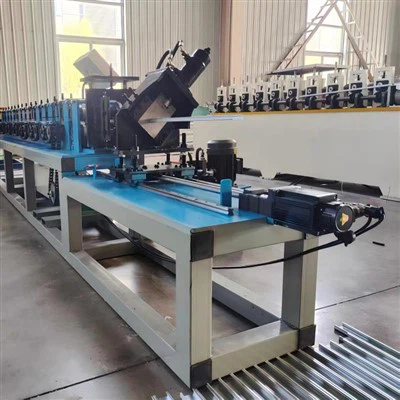
A roofing sheet roll forming machine is a continuous production system that converts metal coils into roofing sheets through a series of forming rollers. Instead of shaping the material in a single operation, the machine gradually bends the steel through multiple forming stations until the final profile is achieved.
The process is highly automated, allowing manufacturers to produce roofing sheets with consistent dimensions, excellent surface quality, and high production efficiency.
Common products include:
- Corrugated roofing sheets
- IBR roofing sheets
- Trapezoidal roofing sheets
- Wall cladding panels
- Ceiling panels
Modern roll forming machine manufacturers design machines to accommodate different production capacities and profile combinations, leading to the development of single-layer, double-layer, and triple-layer systems.
Main Components of a Roll Forming Machine
Regardless of the number of layers, most roofing sheet production lines contain similar core components.
Decoiler
The decoiler holds and unwinds the steel coil before it enters the machine.
Common options include:
- Manual decoiler
- Hydraulic decoiler
- Motorized decoiler
Typical loading capacities range from 5 tons to 15 tons depending on machine specifications.
Feeding System
The feeding unit guides the coil smoothly into the forming section while maintaining proper alignment. Accurate feeding is essential for maintaining profile quality.
Roll Forming Stations
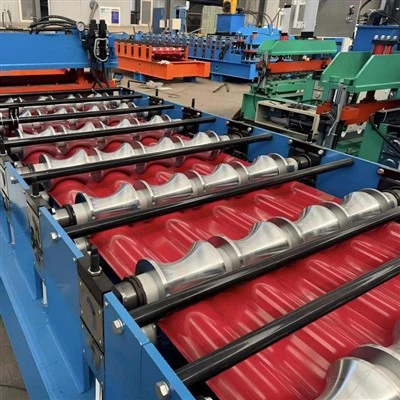
The forming stations are the heart of the machine. Each station contains upper and lower rollers that gradually shape the material.
Typical station quantities include:
- IBR sheet machines: 16–22 stations
- Trapezoidal sheet machines: 14–20 stations
- Corrugated sheet machines: 12–18 stations

Drive System
The drive system powers the rollers and moves material through the machine.
Common drive options include:
- Chain transmission
- Gearbox transmission
- Gear-driven systems
Hydraulic Cutting Unit
The cutting system automatically cuts roofing sheets to the programmed length without damaging the profile shape.
PLC Control System
The PLC control system manages:
- Sheet length
- Production quantity
- Machine speed
- Cutting operations
- Production monitoring
Modern touchscreen interfaces allow operators to control the entire production line from a single panel.
Output Table
After cutting, finished sheets are transferred to the output table for collection and stacking.
Coil Materials and Thickness Range
Modern roofing sheet roll forming machines are designed to process a wide range of metal coils, making them suitable for various construction and industrial applications. The ability to handle different materials allows manufacturers to produce roofing sheets, wall panels, and cladding products that meet diverse market requirements.
The most commonly processed materials include:
- PPGI (Pre-Painted Galvanized Iron)
- PPGL (Pre-Painted Galvalume Steel)
- GI (Galvanized Steel)
- GL (Galvalume Steel)
- Aluminum Coil
Among these, PPGI and PPGL are widely used for color roofing sheets due to their attractive appearance and corrosion resistance, while GI and GL are preferred for applications requiring long-term durability and weather protection.
Most roofing sheet machines are designed to process coil thicknesses ranging from 0.20 mm to 0.80 mm, covering the majority of residential, commercial, and industrial roofing requirements. Machines can also be customized for specific thickness ranges depending on project demands.
Common coil widths include:
- 914 mm
- 1000 mm
- 1200 mm
- 1220 mm
- 1250 mm
In terms of material strength, modern machines typically handle steel grades such as G250, G300, G350, and G550, allowing manufacturers to produce both standard and high-strength roofing products.
The exact material specifications, thickness capacity, and strength range depend on the machine's design, roller configuration, and technical parameters provided by the roll forming machine manufacturer. Choosing the correct machine configuration ensures stable production, accurate forming, and consistent product quality.
Single-Layer Roll Forming Machine
The single-layer roll forming machine is the most common and simplest type of roofing sheet machine.
As the name suggests, the machine produces only one profile design.
Working Principle
The coil enters the feeding system and passes through a dedicated set of rollers designed for a specific roofing profile. The material gradually takes shape as it moves through each forming station before being cut to the required length.
Because the entire machine is dedicated to a single profile, production remains highly stable and efficient.
Advantages
- Highest profile accuracy
- Simple operation
- Easy maintenance
- Faster production speed
- Lower risk of mechanical issues
Suitable For
- Large-volume manufacturers
- Dedicated roofing sheet production
- Export-oriented factories
Typical Production Capacity
Production speed generally ranges from:
15–25 meters per minute
depending on sheet design and machine configuration.
Double-Layer Roll Forming Machine
The double-layer roll forming machine is one of the most popular forms of multi-layer roll forming machine available today.
It combines two independent roofing sheet profiles within a single machine frame.
Typical Profile Combinations
Upper layer: Corrugated sheet
Lower layer: IBR sheet
or
Upper layer: Trapezoidal sheet
Lower layer: Wall panel
Working Principle
Each layer contains its own roller stations. The operator selects the desired profile through the PLC control system.
Only one layer operates at a time. Material passes through either the upper or lower forming section depending on the selected profile.
The machine then cuts and outputs the finished sheets as normal.
Double-Layer Roll Forming Machine Overview
|
Feature |
Advantages |
Limitations |
Suitable For |
|
Space Utilization |
One machine performs the work of two separate production lines, saving valuable workshop space. |
The machine structure is heavier and more complex than a single-layer machine. |
Medium-sized factories with limited floor space. |
|
Investment Cost |
Lower equipment investment compared to purchasing two standalone machines. |
Initial cost is higher than a standard single-layer machine. |
Building material suppliers seeking cost-effective production solutions. |
|
Product Flexibility |
Allows manufacturers to produce two different profiles using one machine. |
Only one profile can be produced at a time. |
Roofing sheet manufacturers serving different customer requirements. |
|
Production Planning |
Makes it easier to switch between products according to market demand. |
Product changeovers may require additional setup time. |
Export businesses with diverse product requirements. |
|
Equipment Utilization |
Improves machine usage by combining two production capabilities into a single system. |
Maintenance and troubleshooting are slightly more complex due to additional roller sets and components. |
Companies aiming to maximize production efficiency without adding extra equipment. |
|
Operational Efficiency |
Reduces the need for multiple machines, operators, and installation space. |
Production speed may be slightly lower than dedicated single-profile production lines. |
Manufacturers producing moderate volumes of multiple roofing and wall panel profiles. |
Triple-Layer Roll Forming Machine
The triple-layer roll forming machine is the most versatile roofing sheet machine design commonly available.
It integrates three independent profile systems into a single machine structure.
Typical Product Combinations
- Corrugated roofing sheet
- IBR roofing sheet
- Wall cladding panel
or
- Roofing sheet
- Ceiling panel
- Wall panel
Working Principle
The machine contains three separate forming layers stacked vertically.
Using the PLC system, operators select the desired profile. The feeding system directs the coil through the corresponding roller section while the other two remain idle.
Once forming is complete, the sheet proceeds through the cutting system and output section just like a standard machine.
Triple-Layer Roll Forming Machine Overview
|
Feature |
Advantages |
Limitations |
Suitable For |
|
Space Utilization |
Three products can be manufactured using a single machine footprint, maximizing workshop space. |
The machine structure is larger and heavier than single- or double-layer machines. |
Factories with limited workshop space. |
|
Product Variety |
Allows production of three different roofing or wall panel profiles, increasing market flexibility. |
Roller setup and profile switching can be more complicated. |
Building material trading companies serving diverse customer needs. |
|
Investment Cost |
Lower overall investment compared to purchasing three separate production lines. |
Initial machine cost is higher than a single-layer machine. |
Start-up manufacturers looking to expand product offerings economically. |
|
Production Flexibility |
Quickly responds to changing customer and market requirements. |
Only one profile can be produced at a time. |
Developing markets with varying profile demands. |
|
Machine Operation |
Improves equipment utilization by combining multiple profiles in one machine. |
Maintenance and troubleshooting are more complex due to additional components. |
Manufacturers seeking a balance between product diversity and equipment efficiency. |
|
Production Efficiency |
Reduces the need for multiple machines and operators. |
Production speed is slightly lower than dedicated single-profile machines. |
Companies producing moderate volumes of several profile types. |
Comparison Among Different Layered Roll Forming Machines
|
Feature |
Single Layer |
Double Layer |
Triple Layer |
|
Profiles Produced |
1 |
2 |
3 |
|
Production Speed |
Highest |
High |
Moderate |
|
Maintenance |
Simplest |
Moderate |
Most Complex |
|
Investment Cost |
Lowest |
Moderate |
Highest |
|
Space Utilization |
Low |
Good |
Excellent |
|
Product Flexibility |
Limited |
Good |
Excellent |
Different Roofing and Wall Panel Designs
Besides machine configurations such as single-layer, double-layer, and triple-layer systems, roll forming machines are also classified according to the profile design they produce. Modern roofing and wall cladding markets use dozens of profile patterns, each developed for specific structural, aesthetic, and installation requirements.
Common profile designs include:
- Corrugated roofing sheets
- Trapezoidal roofing sheets
- IBR (Inverted Box Rib) sheets
- Tile-effect roofing sheets
- Wall cladding panels
- Concealed-fix roofing panels
- Standing seam panels
- Deep-rib roofing sheets
- Wave-type profiles
- Architectural façade panels
- Industrial wall panels
- Custom-designed profiles
Each profile requires a dedicated roller design and forming sequence. As the complexity and depth of the profile increase, the machine may require additional forming stations and a longer production line.
The effective sheet width after forming typically ranges from 600 mm to 1100 mm, depending on the profile design. Some profiles prioritize water drainage and load-bearing strength, while others focus on appearance and architectural aesthetics.
Manufacturers can also customize roll forming machines according to customer drawings, local market preferences, and national construction standards. This flexibility allows roofing sheet producers to offer unique products and better serve residential, commercial, and industrial construction sectors.
In many export markets, especially Africa, the Middle East, and South America, factories often select profile designs based on local customer preferences, making profile selection just as important as choosing the machine itself.
Which Roll Forming Machine Should You Choose?
Selecting the right roll forming machine depends on your production goals, product range, available workshop space, and budget. Each machine type offers unique advantages for different manufacturing needs.
| Feature / Comparison Item | Single-Layer Roll Forming Machine | Double-Layer Roll Forming Machine | Triple-Layer Roll Forming Machine |
|---|---|---|---|
| Number of Profiles Produced | 1 profile | 2 profiles | 3 profiles |
| Production Efficiency | Highest efficiency for a single product | High efficiency with profile switching | Moderate to high efficiency with multiple profile options |
| Machine Structure | Single forming layer | Two forming layers in one frame | Three forming layers in one frame |
| Factory Space Requirement | Requires more space if multiple profiles are needed | Saves space compared to two separate machines | Maximizes space utilization |
| Initial Investment Cost | Lowest for one profile | Lower than buying two separate machines | Lower than purchasing three separate machines |
| Product Flexibility | Limited to one profile | Can produce two different profiles | Can produce three different profiles |
| Profile Change Capability | Not applicable | Easy switching between two profiles | Easy switching among three profiles |
| Maintenance Complexity | Simplest maintenance | Moderate maintenance | More complex than single and double-layer machines |
| Operational Simplicity | Easiest to operate | Easy operation with profile selection | Requires more setup management |
| Forming Accuracy | Highest accuracy and consistency | High accuracy | High accuracy with proper adjustment |
| Production Stability | Most stable operation | Stable operation | Stable but involves more mechanical components |
| Suitable Production Volume | High-volume continuous production | Medium to high production volume | Medium production volume with multiple products |
| Best for Product Variety | Low | Medium | High |
| Workshop Expansion Needs | Additional machines required for new profiles | Can handle two product lines in one machine | Can handle three product lines in one machine |
| Target Customer Type | Specialized roofing sheet manufacturers | Building material suppliers and medium-sized factories | Export-oriented manufacturers and diversified producers |
| Typical Applications | Corrugated sheets, IBR sheets, single-profile roofing products | Corrugated + IBR sheets, multiple roofing profiles | Corrugated, IBR, tile, and other roofing profiles |
| Return on Investment (ROI) | Best for large-volume single-product demand | Good balance of cost and flexibility | Best for businesses offering multiple product types |
| Recommended For | Factories focused on one product | Businesses needing two popular profiles | Companies serving diverse market demands and export markets |
Making the Right Choice
- Choose a Single-Layer Machine if you manufacture one profile in large volumes and prioritize maximum productivity.
- Choose a Double-Layer Machine if you need two roofing sheet designs while reducing equipment costs and saving space.
- Choose a Triple-Layer Machine if you serve diverse markets and require maximum flexibility in production.
Working with an experienced roll forming machine manufacturer or trusted roll forming machine supplier can help you determine the most suitable configuration based on your production requirements, budget, and long-term business objectives.
Conclusion
Single-layer, double-layer, and triple-layer roll forming machines each offer unique advantages for roofing sheet production. While single-layer systems provide the highest efficiency and simplicity, double-layer and triple-layer machines deliver greater product flexibility and improved space utilization.
By understanding the working principles, machine components, material capabilities, and production characteristics of each design, manufacturers can make informed investment decisions that improve productivity, reduce costs, and support long-term business growth in the competitive steel roofing industry.