Introduction
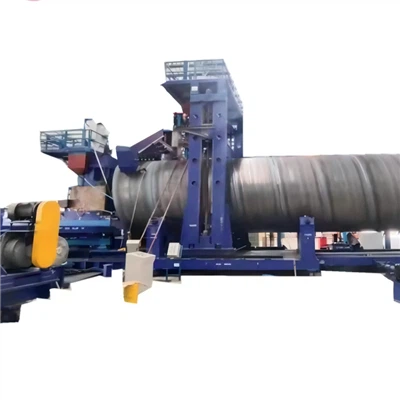
A seamless steel tube mill is the core heavy metallurgical equipment for manufacturing seamless steel pipes. It processes solid round billets into hollow, high-precision seamless pipes through hot rolling, cold rolling, cold drawing and other plastic forming processes. Widely used in oil and gas transmission, nuclear power, high-pressure boilers, marine engineering, new energy and other industrial fields, it serves as the key foundational equipment for high-end pressure pipeline manufacturing. In 2026, the global seamless steel tube market is expected to reach 105 million tons, with high-end special pipes accounting for 18%, a year-on-year increase of 3 percentage points. Driven by the rapid development of green energy, deep-sea exploration and nuclear power construction, the demand for high-precision, high-performance seamless pipes has surged, promoting the iterative upgrading of tube mill technology.
In 2026, against the backdrop of global intelligent manufacturing and low-carbon transformation, seamless tube mill technology has been comprehensively upgraded. Traditional mechanical equipment has evolved into intelligent production systems integrated with digital twin, AI precise control and energy-saving rolling technology. This guide systematically explains the definition, classification, working principle, core structure, key technologies, application scenarios and industry development trends of seamless tube mills, providing comprehensive and professional reference for metallurgical practitioners, equipment purchasers and technical researchers.
Basic Definition and Core Advantages of Seamless Tube Mill
1. Core Definition
A seamless steel tube mill refers to a complete set of continuous rolling equipment that completes piercing, elongation, sizing and finishing through the cooperation of rolls and mandrels. Different from welded pipe mills, it adopts integral metal forming without welding seams. The whole production process realizes one-piece forming of steel, which fundamentally eliminates hidden dangers such as weld cracking and corrosion. Unlike traditional single-machine production, modern seamless tube mills in 2026 are highly integrated production lines, covering from billet heating to finished product inspection, with an automation rate of over 90%, which greatly reduces manual intervention and improves production stability.
2. Core Product Advantages
Seamless pipes produced by tube mills feature high pressure resistance, high temperature resistance, uniform internal structure and excellent mechanical properties. They can adapt to extreme working conditions such as high pressure, strong corrosion and low temperature, and meet international standards including API 5L, GB/T 8163 and ASTM A106. Compared with welded pipes, seamless pipes have 30% higher tensile strength and 40% better fatigue resistance, making them the first choice for key projects such as deep-sea oil and gas pipelines and nuclear power main pipelines. In addition, the surface roughness of seamless pipes processed by 2026 upgraded tube mills can reach Ra≤0.8μm, which is suitable for high-precision application scenarios such as hydraulic systems and aerospace components.
Main Classification & Parameter Comparison of Tube Mills
According to rolling structure and process layout, mainstream seamless tube mills in 2026 are divided into four categories, with clear differentiation in production range, precision and application positioning. The detailed comparison is shown in the table below:
|
Equipment Type |
Structural Feature |
Production Specification |
Machining Accuracy |
Main Application |
|
PQF Three-Roll Continuous Mill |
Three-roll 120° symmetrical layout, limited mandrel |
Φ114–Φ610 mm, wall thickness 7–65 mm |
High wall thickness tolerance |
High-end oil casing, nuclear power pipes |
|
MPM Two-Roll Continuous Mill |
Double-roll opposite arrangement, floating mandrel |
Φ89–Φ426 mm, wall thickness 4–30 mm |
Cost-effective and stable |
Civil industrial conventional seamless pipes |
|
Assel Rotary Rolling Mill |
Three-roll inclined rolling structure |
Φ219–Φ508 mm, thick wall |
Excellent thick-wall forming |
Special alloy and heavy-wall steel pipes |
|
Plug Mill |
Reciprocating single-stand rolling |
Large diameter super thick wall |
Super large specification customization |
Engineering heavy-duty pipeline |
Overall Composition of Seamless Tube Mill Production Line
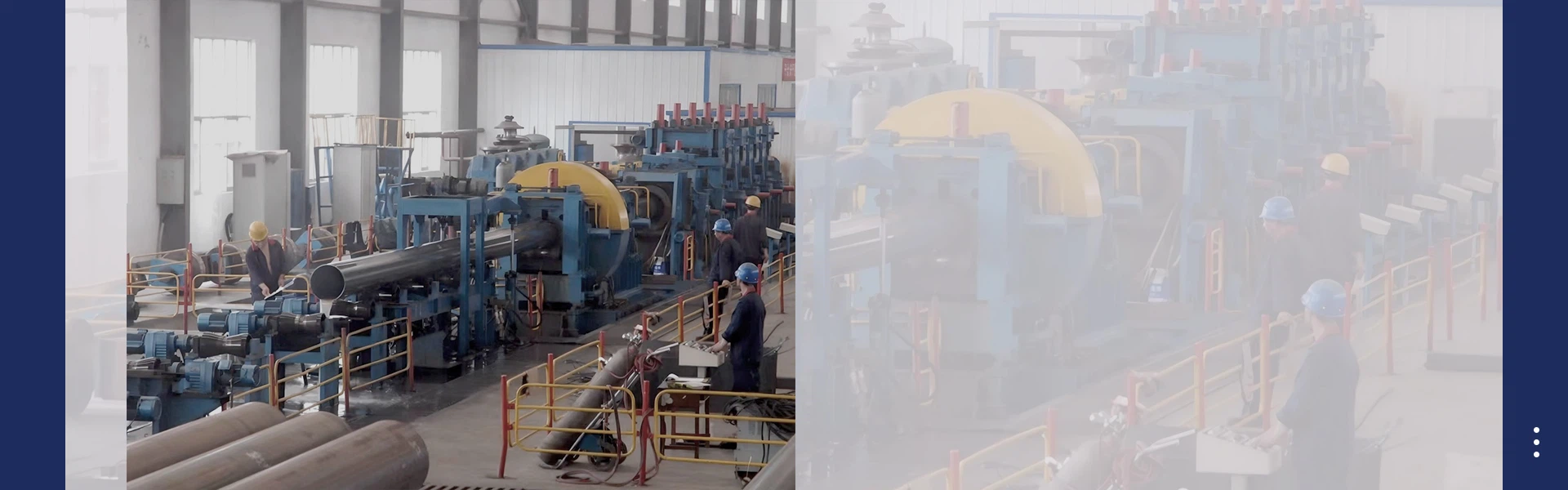
The complete seamless tube mill production line adopts modular combined design, divided into five core functional units with independent operation and interlocking control.

Heating Unit
Adopt walking-beam furnace or annular heating furnace to heat solid round steel billets to 1100–1300 ℃, ensure uniform metal plasticity, and reduce oxide skin generation through precise temperature control.

Piercing Unit
The core equipment is two-roll or three-roll piercing machine. The solid billet is spirally advanced and compressed to form hollow pierced shell, which is the primary forming process of seamless pipes.

Rolling & Elongation Unit
The core working section of the tube mill. Through multi-stand continuous rolling, the wall thickness of the pierced shell is thinned and the length is extended, stabilizing the outer circle size and wall thickness uniformity of the steel pipe.

Sizing & Reducing Unit
Finish outer diameter shaping through tension reducing mill and sizing mill, eliminate ovality, and realize precise control of finished pipe size.
Finishing & Inspection Unit
Including straightening, fixed-length cutting, nondestructive testing, heat treatment and surface treatment processes to ensure finished pipe quality meets delivery standards.
Working Principle of Seamless Tube Mill
1. Hot Rolling Forming Principle (Main Process)
Hot rolling is the mainstream process of modern tube mills. The high-temperature round billet is driven by inclined rolls to produce spiral motion. Under the combined action of radial compression and axial stretching, the metal center forms a cavity, and then completes continuous wall reduction and diameter fixing through the continuous mill.
The whole process follows the metal plastic forming law, realizing the transformation from solid billet → hollow pierced shell → rolled tube → finished seamless pipe.
2. Cold Rolling & Cold Drawing Process
For high-precision thin-walled pipes and bright surface pipes, secondary cold working is carried out by cold rolling mills. Forming at room temperature effectively improves surface finish and dimensional accuracy, suitable for hydraulic pipes, instrument precision pipes and other products.
2026 New Core Technologies of Tube Mill
1. Intelligent Thickness Control Technology
Equipped with online AGC hydraulic thickness control system, real-time dynamic adjustment of roll gap, wall thickness control accuracy is improved by 15%, effectively reducing dimensional deviation. The 2026 upgraded AGC system adopts a 10ms fast response control cycle, which can realize real-time feedback and adjustment of wall thickness data, and the rolling force fluctuation is controlled within 5%, ensuring the uniformity of the pipe wall thickness. At the same time, it is integrated with machine learning algorithm, which can automatically optimize control parameters according to the production data of different batches, further improving the processing precision.
2. Digital Twin Intelligent Operation
2026 upgraded tube mill adds digital twin simulation system, which can simulate rolling parameters in advance, optimize production logic, reduce commissioning time and equipment failure rate.
3. Low-Carbon Energy-Saving Rolling Technology
Popularize regenerative heating furnace and waste heat recovery system, reduce unit energy consumption and carbon emission, and meet global carbon neutrality and industrial environmental protection standards.
4. Special Alloy Adaptation Technology
New wear-resistant mandrel coating and high-strength roll materials are adopted to realize stable rolling of duplex stainless steel, nickel-based alloy and other difficult-to-process materials.
Main Application Fields of Tube Mill Products
With the upgrading of industrial demand, the application scope of seamless pipes produced by tube mills continues to expand:
- Energy Industry: Oil and gas transmission pipelines, deep-well casings, thermal power high-pressure boiler tubes;
- New Energy & Chemical Industry: Hydrogen storage and transportation pipes, anti-corrosion chemical pipeline containers;
- Marine Engineering: Offshore platform structural pipes, seawater corrosion-resistant seamless pipes;
- Mechanical Manufacturing: Automobile precision pipes, engineering hydraulic supports, bearing steel pipes;
- National Defense & High-End Equipment: High-strength structural pipes for aerospace and special equipment.
2026 Industry Development Trends & Equipment Selection Tips
1. Industry Development Trends
In 2026, the global seamless tube industry presents four major directions: intelligent production, low-carbon environmental protection, special material customization and large-diameter thick-wall upgrading. Domestic independent tube mill equipment has gradually replaced imported equipment, with significant cost advantages.
2. Equipment Selection Key Points
Enterprises should select matching tube mill models according to product positioning: conventional mass production chooses MPM two-roll mill, high-end special pipes chooses PQF three-roll mill, and super thick-wall large-diameter products selects customized plug mill equipment. Priority shall be given to intelligent and energy-saving configurations to meet long-term production and environmental protection requirements.
When selecting equipment, enterprises should also focus on the supplier's after-sales service and technical support capabilities, especially the localization service level, to ensure timely maintenance and technical upgrading of equipment, and reduce long-term operation and maintenance costs. In addition, the compatibility of the equipment with future technological upgrades should be considered to avoid the risk of equipment obsolescence.
Conclusion
As the core metallurgical equipment of the pipe industry, the seamless tube mill determines the production capacity and quality level of seamless steel pipes. With the continuous innovation of intelligent control, low-carbon technology and special rolling technology in 2026, modern tube mills are moving towards high efficiency, high precision and green production. The iterative upgrading of tube mill technology not only promotes the high-quality development of the seamless pipe industry, but also provides strong support for the upgrading of global high-end manufacturing, energy security and infrastructure construction.
A full understanding of the structural composition, working principle and technical iteration of tube mills helps enterprises optimize production processes, improve product competitiveness, and adapt to the changing market demand in the global industrial chain. In the future, with the deep integration of industrial automation and new material technology, seamless tube mill equipment will continue to iterate and upgrade, injecting lasting power into the high-quality development of the global steel pipe industry.