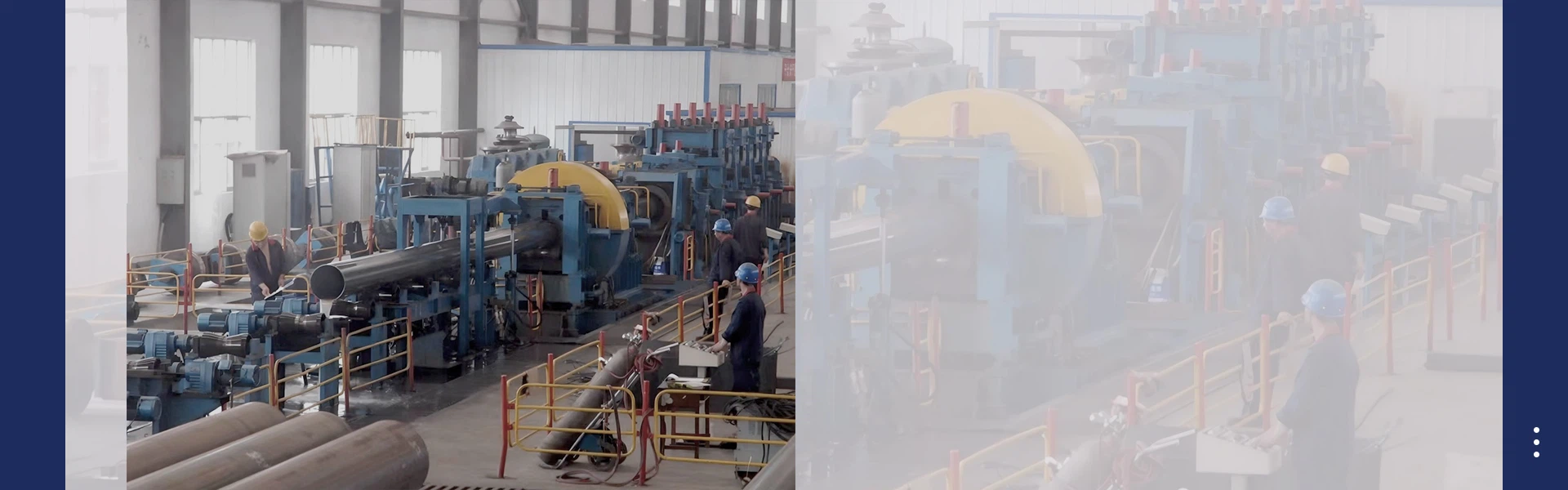

Roll forming is an efficient and continuous cold processing technique that can transform flat metal sheets and coils into complex and uniformly cross-sectional profiles. As a core equipment in the modern metal processing industry, the roll forming machine has replaced the traditional intermittent processing methods such as stamping, bending, and forging, achieving progressive plastic deformation of metals at room temperature and supporting large-scale, high-precision, and low-cost production of various metal profiles.
Basic Working Principle of Roll Forming Machines
The core working principle of the rolling forming machine is progressive cold deformation. Unlike one-time stamping forming and high-temperature hot rolling, the rolling forming process achieves metal shaping through multiple fine and continuous extrusion and bending. The entire processing is carried out at room temperature, without heating the metal raw materials, thus effectively protecting the physical and chemical properties of the metal substrate.
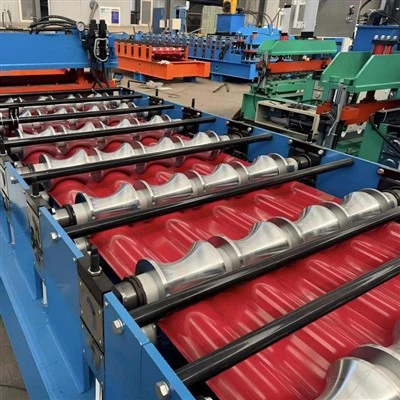
Flat metal strips are continuously fed into the production line. Through the linear arrangement of paired upper and lower forming rollers, each pair of rollers applies a small and precise bending force to the metal strip. Each processing station only completes a small part of the overall deformation. As the material progresses, the bending angle and forming radius are successively superimposed. After passing through all the forming stations, the flat metal strip is smoothly shaped into the preset stable contour. This progressive forming method avoids stress concentration, surface cracks and structural deformation caused by a single intense compression, ensuring the dimensional stability and mechanical integrity of the finished product.
Core Structural Components and Their Functions
The fully automatic roller pressing forming production line is composed of multiple functional modules, each with clear responsibilities. The various components operate in coordination to ensure the continuity, stability and accuracy of the entire production process.
2.1 Decoiling and Leveling Device
The decoiler is the starting unit of the production line, responsible for fixing and automatically unfolding coiled metal raw materials such as carbon steel, galvanized steel and aluminum alloy. Equipped with an automatic tension control system, it effectively avoids material loosening, excessive stretching and deviation during the uncoiling process. Since coiled metal often has inherent bending deformation and residual stress, a leveling device is usually matched behind the decoiler. Multiple groups of flat pressure rollers flatten the warped metal strip thoroughly to ensure the flatness and straightness of the raw materials, eliminating preliminary forming defects caused by uneven materials.
2.2 Forming Roller Station Group
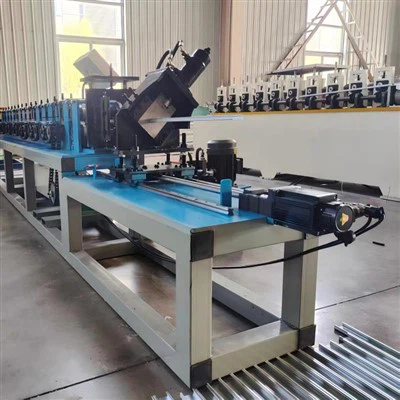
The roll group is the core working component of the roll forming machine and is crucial for the formation of profiles. It is composed of multiple precision alloy roll molds arranged in an orderly manner. The number of roll groups depends on the complexity of the product: simple wave-shaped plates and flat plates only require 8 to 12 roll groups, while complex and special-shaped profiles such as C-shaped steel and U-shaped steel require more than 20 groups of roll groups. Each pair of upper and lower rolls has customized gaps and contour angles. Through synchronous servo motor drive, the roll group continuously clamps and pushes the metal material forward, simultaneously completing direction bending and compression, and gradually shaping the metal according to the designed profile trajectory.
2.3 Calibration and Detection System
After the initial shaping of the metal profiles, due to the elasticity of the metal and mechanical tolerances, minor issues such as edge warping, slight twisting and angle deviations may occur. The calibration roller group after the forming station corrects through micro-extrusion, and finely adjusts the flatness, verticality and dimensions of the profiles. Combined with the online high-precision detection device, the system can monitor the product size data in real time, automatically feed back the errors to the PLC control system, and dynamically adjust the parameters of the roller group. This ensures that the size tolerance of the products is controlled within a high-precision range, meeting industrial production standards.
2.4 Cutting and Discharging Device
The fixed-length cutting system is the final shaping stage of the production line. Modern roll-forming machines adopt continuous cutting technology with flying shears, and high-precision encoders can automatically identify the feeding length of the profiles. When the material reaches the predetermined size, hydraulic or servo cutting tools can complete the cutting immediately without stopping. The cut products will be automatically transported to the discharge platform, achieving continuous production from raw material feeding to product output. Some integrated equipment also comes with stamping, trimming and embossing functions, enabling one-time multi-process processing.
Complete Working Process of Roll Forming
The operation of the roll forming machine is a fully automated and closed-loop continuous process, which can be divided into six standardized links. Firstly, workers fix the metal coil on the decoiler and set parameters such as production speed, product size and cutting length through the PLC touch screen. Secondly, the decoiler unfolds the coil, and the leveling device flattens and calibrates the metal strip to ensure uniform feeding. Thirdly, the flat metal strip enters the roller station group and completes progressive bending and forming step by step through multiple groups of rollers. Fourthly, the initially formed profile enters the calibration area to eliminate micro-deformation and optimize the overall flatness and accuracy. Fifthly, the qualified profile passes through the cutting system to complete fixed-length cutting. Finally, the finished product is discharged and stacked, waiting for packaging and storage.
The whole process requires almost no manual intervention. The equipment can run stably for a long time, and the production speed can be adjusted freely according to production demands, which greatly improves production efficiency compared with traditional processing methods.
Unique Technical Advantages of Roll Forming Machines
The special working principle and structural design make roll forming machines possess prominent industrial advantages. First of all, the cold incremental forming process will not destroy the internal fiber structure of the metal. The finished products have uniform internal stress, good toughness and stable mechanical properties, and are not easy to crack or deform in subsequent use. Secondly, the continuous feeding and forming mode realizes ultra-high material utilization, with almost no raw material waste, effectively reducing production costs.
In addition, the unified die calibration design ensures consistent batch product size and stable quality, avoiding individual differences in manual processing. Meanwhile, the high degree of automation reduces labor costs and production errors, and the adjustable production parameters can meet the processing needs of various specifications of profiles, with strong production flexibility.
Industrial Application Scenarios
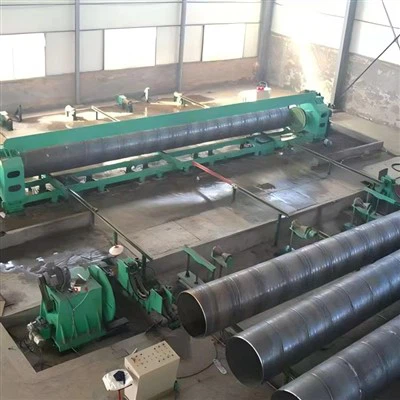
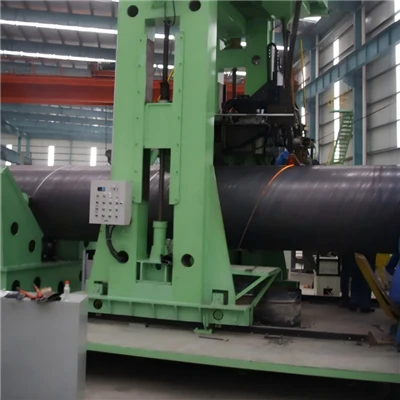
Relying on high efficiency and high precision, roll forming machines are widely used in various manufacturing fields. In the construction industry, they process roof corrugated sheets, wall panels, floor bearing plates and steel structure purlins, which are the core equipment of building metal material production. In the mechanical and automobile manufacturing industry, they produce automobile structural profiles, equipment guide rails and support parts. In addition, they are also widely used in pipeline manufacturing, electrical appliance shell processing and municipal engineering accessory production, covering most scenarios of thin and medium-thickness metal profile processing.

In short, the roll forming machine realizes continuous and standardized forming of metal profiles through the coordinated operation of decoiling, leveling, progressive rolling forming, precision calibration and fixed-length cutting. Its core working principle of room-temperature incremental deformation enables it to balance high production efficiency, high product quality and low production cost. Compared with traditional processing technology, it has obvious advantages in material utilization, product consistency and automation level. With the continuous upgrading of intelligent manufacturing technology, roll forming machines are developing towards higher precision and stronger integration, and will continue to occupy an irreplaceable core position in the field of metal profile processing.