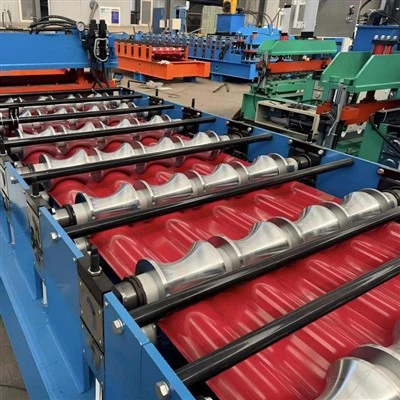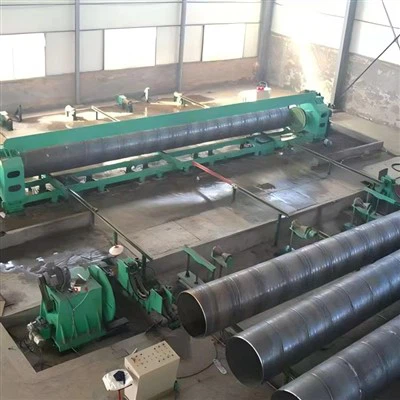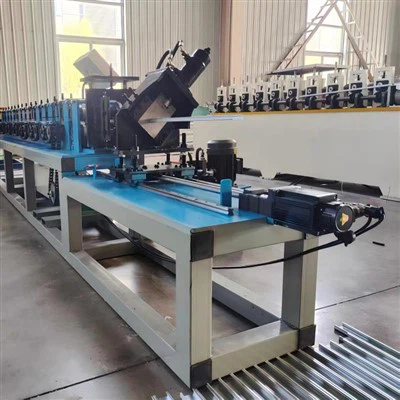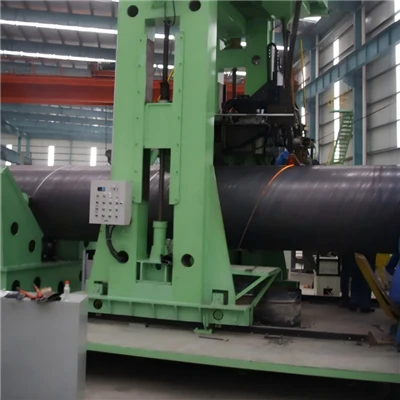

Spiral welded pipe, also widely known as spiral submerged arc welded pipe (SSAW pipe), is a critical tubular product extensively adopted in long-distance oil and gas transmission, municipal water supply and drainage, chemical engineering, and large-scale infrastructure projects. Different from ERW straight seam welded pipes and seamless steel pipes, spiral welded pipes feature a continuous spiral weld seam formed by rolling steel strips at a specific inclined angle. This unique manufacturing method enables flexible production of large-diameter and thick-walled steel pipes with low production costs and high structural stability.
Raw Material Selection and Pre-Production Inspection
The primary raw material for manufacturing spiral welded pipes is hot-rolled steel coil, paired with matched welding wires and submerged arc flux. The quality of raw materials directly determines the mechanical performance and welding stability of finished pipes. Therefore, strict pre-production inspection is the first and indispensable step in the entire manufacturing process. Before being put into production, all steel coils must undergo comprehensive physical and chemical component detection, including tensile strength, yield strength, elongation, and carbon and manganese element content. Unqualified raw materials with unstable composition or substandard mechanical properties are strictly prohibited from entering the production line.
After passing the inspection, the steel coil is fixed on the automatic decoiler for uncoiling treatment. Long-term stored steel coils usually have bending deformation and residual internal stress, which will affect subsequent forming accuracy. For this reason, the uncoiled steel strip is sent to the leveling unit, where multiple groups of precision leveling rollers eliminate strip warpage and stress, ensuring the flatness and straightness of the base material. Meanwhile, workers clean surface oil stains, oxide scales, and rust on the steel strip to avoid welding defects such as pores and slag inclusions caused by surface impurities during the welding process.
Strip Edge Trimming and Pre-Bending Pretreatment
Uniform strip width and regular edge morphology are the prerequisites for tight welding and smooth spiral forming. After leveling, the steel strip enters the edge trimming process. Professional shearing and planing equipment trims the two edges of the strip to a consistent width and processes standard V-shaped or X-shaped welding bevels. This step ensures that the strip edges can fit tightly during spiral rolling, avoiding uneven weld gaps and incomplete fusion problems. The bevel angle is precisely adjusted according to the pipe wall thickness, providing optimal conditions for subsequent submerged arc welding.
Following edge trimming, the strip undergoes edge pre-bending treatment. The two sides of the steel strip are pre-bent to a specific radian matching the pipe curvature. Without pre-bending, the strip edges will rebound during forming, resulting in uneven weld seams, edge gaps, or local bulges. Pre-bending effectively eliminates molding defects, guarantees the continuity and compactness of the spiral weld seam, and lays a foundation for stable welding quality in the later stage.
Precision Spiral Forming Process
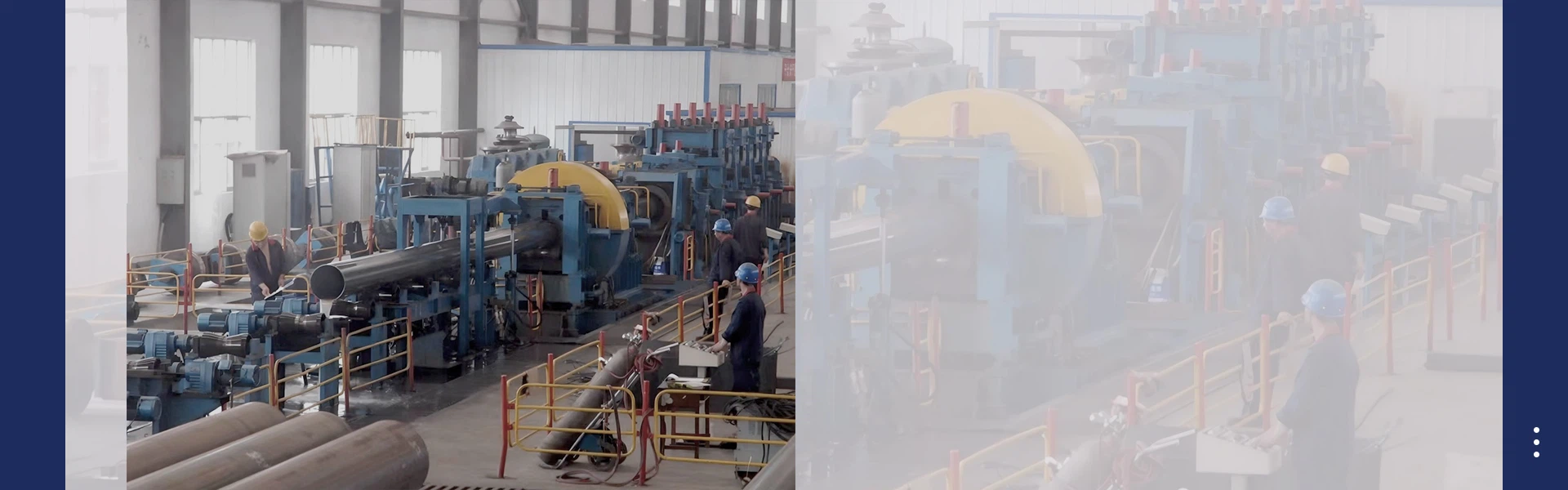
Spiral forming is the most distinctive core link of SSAW pipe manufacturing, which fundamentally differentiates it from straight seam welded pipes. The processed flat steel strip is fed into the spiral forming unit at a preset fixed inclined angle relative to the pipe axis. The forming angle can be flexibly adjusted according to the target pipe diameter and strip width, which is the key advantage of spiral pipe production-the same specification steel coil can produce pipes of multiple diameters, realizing highly flexible production.
Under the continuous extrusion and traction of the forming roller group, the flat steel strip is gradually bent and curled into a cylindrical pipe blank. The entire forming process is carried out stably and continuously. The PLC intelligent system precisely controls the feeding speed and forming pressure to ensure uniform spiral pitch and regular pipe roundness. Different from one-time forming processes, spiral rolling realizes seamless connection of strip head and tail, enabling uninterrupted production of ultra-long pipe blanks. The formed pipe blank has a continuous spiral lap joint, which forms the welding groove for subsequent submerged arc welding.
Double-Sided Submerged Arc Welding
Welding is the core process that determines the structural strength and sealing performance of spiral welded pipes. Modern formal production adopts full-automatic double-sided submerged arc welding technology, including internal welding and external welding, which greatly improves welding quality compared with single-sided welding. Submerged arc welding uses granular flux to cover the welding arc, isolating air to prevent weld oxidation, and effectively avoiding common defects such as air holes, cracks, and slag inclusions.
The internal welding is completed first to ensure the tight fusion of the weld root and eliminate internal welding gaps. Then the external welding is carried out to fill the welding groove completely. Most production lines adopt double-wire synchronous welding technology, which improves welding efficiency while ensuring uniform weld texture and stable mechanical properties. The welding current, voltage, and walking speed are intelligently controlled in real time to avoid over-burning or incomplete welding. After welding, the weld seam forms a compact metallurgical structure, and the strength and toughness of the welded joint can reach or even exceed the performance of the steel base material, ensuring the overall structural safety of the steel pipe.
Sizing, Straightening and Fixed-Length Cutting
After welding and cooling, the steel pipe blank enters the sizing and straightening process. Although the pipe blank is initially formed, there are slight deviations in roundness, straightness, and diameter due to steel elasticity and mechanical tolerance. The sizing roller group calibrates the pipe body in all directions through micro-extrusion to correct local deformation, ensuring that the pipe diameter, roundness, and straightness fully meet industry standards.
After precise calibration, the continuous long steel pipe is cut to a fixed length. According to engineering application requirements, the conventional fixed length is 12 meters, and special lengths can be customized. The flying shear cutting device realizes non-stop cutting, ensuring continuous production without interruption. The cutting section is flat and smooth without burrs. Finally, the pipe end is chamfered at 30 to 35 degrees to form a standard welding bevel, facilitating butt welding and installation in on-site engineering projects.
Strict Non-Destructive Testing and Quality Inspection
To ensure that each finished pipe meets industrial safety standards, all spiral welded pipes must undergo comprehensive quality testing before leaving the factory, mainly including non-destructive testing and hydrostatic pressure testing. First, ultrasonic testing (UT) and radiographic testing (RT) are used to inspect the spiral weld seam in full length, detecting tiny internal defects such as micro-cracks, incomplete fusion, and slag inclusions that cannot be identified by naked eyes.
Second, the steel pipe undergoes hydrostatic testing. The pipe is filled with high-pressure water and maintained at a preset pressure for a certain period to check for water seepage, deformation, or leakage. This test verifies the pressure resistance and sealing performance of the pipe body and weld seam, ensuring that the pipe can adapt to long-term high-pressure fluid transportation. In addition, sampling tensile tests and bending tests are carried out regularly to confirm that the mechanical properties of the finished pipe meet national and international standards such as API 5L and GB/T 9711.
Surface Finishing and Factory Marking
Qualified spiral welded pipes enter the final surface treatment process. According to application scenarios, the pipes are treated with anti-corrosion processes such as outer wall epoxy coating, inner wall anti-rust coating, or 3PE anti-corrosion wrapping to improve corrosion resistance and extend service life. After surface treatment, the pipes are cleaned and dried, and marked with specifications, steel grade, production date, inspection number, and executive standards for product traceability. Finally, the finished products are stacked and packaged, waiting for delivery and engineering application.
The manufacturing of spiral welded pipes is a precise, continuous, and standardized industrial process integrating raw material pretreatment, spiral rolling forming, double-sided submerged arc welding, precision calibration, multi-dimensional testing, and anti-corrosion finishing. Its unique spiral forming technology enables flexible production of large-diameter steel pipes with high material utilization and low comprehensive cost, making up for the limitations of seamless pipes and straight seam welded pipes in large-scale pipeline engineering. Strict multi-process quality control ensures that spiral welded pipes have stable mechanical properties, good pressure resistance, and excellent structural consistency. With mature manufacturing technology and reliable product performance, spiral welded pipes have become the most economical and practical choice for long-distance fluid transmission and large steel structure engineering, occupying an irreplaceable important position in the global pipeline manufacturing industry.