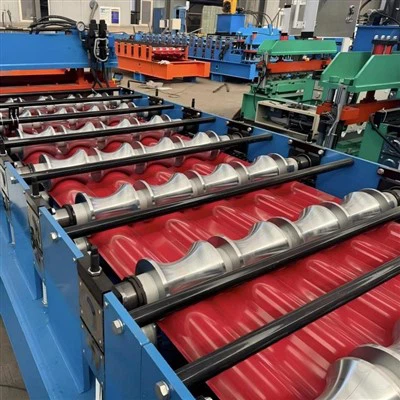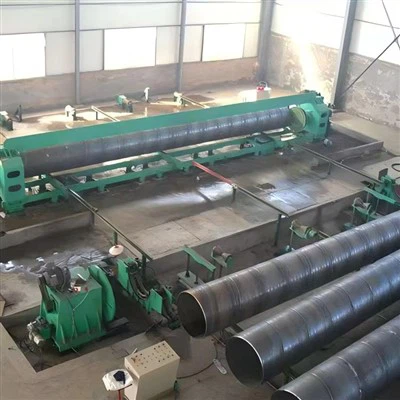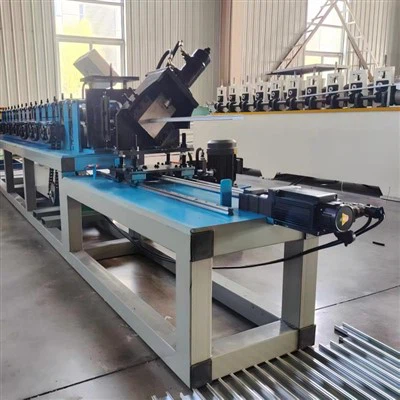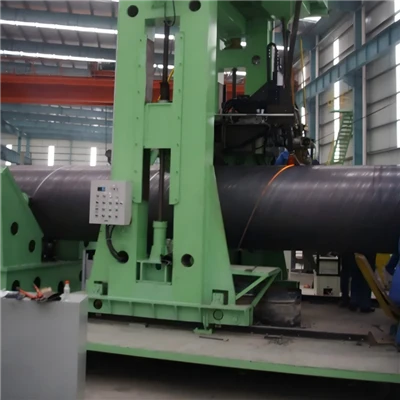
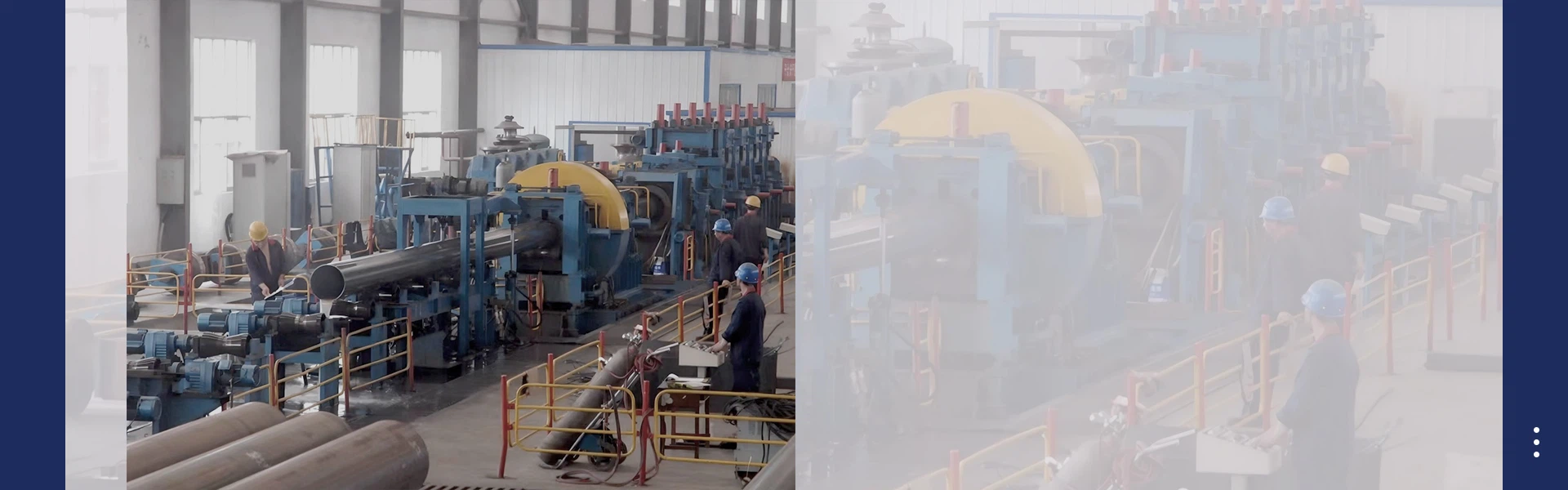
Roll forming is a continuous metal shaping process that gradually bends flat metal strips through a series of rotating roller stations to produce uniform, long-length sectional profiles. As one of the most efficient cold-working manufacturing technologies, it is widely adopted in construction, electrical engineering, automotive production, metal structure fabrication and infrastructure industries. Unlike stamping, bending or forging, roll forming delivers stable precision, low material loss, unlimited workpiece length and high automation, making it ideal for mass production of thin-walled and complex metal profiles. With the diversification of industrial requirements, roll forming has evolved into multiple categorized types based on forming temperature, process principle, structural purpose and equipment configuration. Understanding the classification and characteristics of different roll forming methods is essential for process selection, product design and industrial application. This essay systematically introduces the main types of roll forming, analyzes their working principles, advantages, limitations and typical application scenarios.
Classification by Forming Temperature: Cold Roll Forming and Hot Roll Forming
The most fundamental classification of roll forming is based on processing temperature, which divides the technology into cold roll forming and hot roll forming. These two types determine material mechanical performance, surface quality and applicable product thickness.

Cold roll forming refers to a profile shaping process that is entirely carried out at room temperature without heating the metal raw material. During processing, flat metal coils gradually undergo elastic-plastic deformation through multiple sets of rollers. Since there is no high-temperature oxidation, cold-formed products feature smooth surfaces, precise dimensions, uniform thickness, and no oxide scale. Additionally, the cold forming process induces work hardening on the metal surface, thereby enhancing the tensile strength and surface hardness of the final profile. Cold forming offers advantages such as energy efficiency, environmental friendliness, and high automation, making it the mainstream technology in modern profile manufacturing. Typical products include electrical conduits, steel studs, C-shaped and U-shaped purlins, automotive thin-walled components, and electrical rails. The only limitation lies in the fact that for very thick or high-strength alloy materials, the forming resistance is significant; improper pass design may lead to cracking.
Hot roll forming heats metal materials above recrystallization temperature before rolling. High temperature significantly reduces metal yield strength and improves plasticity, allowing thick plates, heavy-section steel and high-hardness alloys to be formed smoothly without structural cracking. Hot roll forming is mainly used for producing large industrial raw materials such as H-beams, I-beams, thick steel plates and large seamless ring blanks. Nevertheless, hot roll forming has obvious drawbacks. High-temperature processing causes surface oxidation, resulting in rough surface quality and low dimensional accuracy. Subsequent pickling, polishing and straightening procedures are usually required. Moreover, hot rolling consumes large amounts of energy and requires high-temperature-resistant equipment, leading to higher production costs. In modern industrial chains, hot rolling is generally used for primary rough shaping, while cold roll forming is applied for precision finishing and final profile molding.
Classification by Process Function: Flat Rolling, Shape Rolling and Ring Rolling
According to final product morphology and functional purposes, roll forming can be divided into flat rolling, shape rolling and ring rolling. These three categories cover almost all mainstream roll forming applications in the metal processing industry.
Flat rolling is the simplest and most basic roll forming process. It uses parallel flat rollers to squeeze metal plates and strips, reducing material thickness and extending horizontal length. The purpose of flat rolling is not to create complex shapes but to produce standardized flat steel sheets, aluminum strips and galvanized plates. It serves as the primary processing procedure for almost all metal materials, providing qualified raw materials for stamping, bending and profile manufacturing. Flat rolling features stable deformation, uniform thickness and extremely high production efficiency, and it is the foundation of the entire metal rolling industry.
Shape rolling, also known as profile roll forming, is the most widely used type in industrial manufacturing. Different from flat rolling, shape rolling adopts specially customized roller contours. Through multi-pass progressive bending, extrusion and shaping, flat strips are transformed into various irregular cross-section profiles, including channel steel, angle steel, corrugated sheets, guardrails, cable tray profiles and building decorative steel parts. Shape rolling has strong flexibility and customization. Manufacturers can adjust roller structures according to customer drawings to produce asymmetric, porous and ultra-long special-shaped profiles. With high dimensional consistency and good batch stability, shape rolling is the core process for construction, electrical and light steel manufacturing industries.
Ring rolling is a specialized precision roll forming technology designed for seamless annular workpieces. The equipment consists of driving rollers, supporting rollers and axial rollers. It gradually reduces the wall thickness of small-diameter ring blanks and expands the outer diameter through continuous local rolling, finally forming large-diameter, uniform-thickness seamless rings. Compared with welded rings, roll-formed rings have integrated metal structures, no welding seams, higher mechanical strength and better fatigue resistance. They are widely used for bearing rings, mechanical rotating parts, wind power flange rings and aerospace structural components. Ring rolling is a typical local continuous forming method with extremely high material utilization rate and precise roundness.
Classification by Forming Stations: Single-Pass and Multi-Pass Roll Forming
Based on the number of rolling stations required for completing profiles, roll forming is divided into single-pass and multi-pass forming, which directly determines product complexity and forming accuracy.
Single-pass roll forming finishes the target shape through only one pair of rollers. The process is simple, fast and low-cost, suitable for simple bending parts, flat steel and small arc plates. However, one-time extrusion causes concentrated stress and severe elastic rebound, resulting in low precision and poor surface flatness. It cannot process complex multi-angle profiles and is only applicable for low-precision, high-volume simple products.
Multi-pass roll forming is the mainstream precision forming technology in modern industry. It arranges 5 to 20 groups of roller stations in sequence. Each station completes a tiny bending deformation, and the final complex profile is formed through gradual accumulation of micro-deformations. This progressive forming method effectively disperses internal stress, avoids cracking and greatly reduces material rebound. Multi-pass roll forming can produce highly complex profiles with stable size tolerance, smooth surfaces and good overall straightness. Although the equipment investment and debugging costs are higher, it is suitable for long-term mass production of high-quality industrial profiles and structural parts.
Advanced Specialized Roll Forming Types
With the upgrading of intelligent manufacturing, many advanced roll forming technologies have been developed to meet high-end industrial demands, including flexible roll forming, inline composite roll forming and duplex roll forming.
Flexible roll forming adopts CNC adjustable roller structures. Without replacing molds, the machine can automatically adjust roller positions and rolling gaps to produce variable cross-section profiles. This technology is widely used in automotive lightweight parts and building facade profiles, realizing multi-variety and flexible production.
Inline composite roll forming integrates punching, cutting, embossing and welding into one continuous production line. It completes forming and auxiliary processing in one procedure, eliminating secondary handling and greatly improving production efficiency. Cable trays with mounting holes and perforated keel profiles are typical products of inline roll forming.
Application and Selection Principles
Different roll forming types have distinct application boundaries. Hot rolling is suitable for thick and high-strength raw materials; cold multi-pass shape rolling dominates precision profile production; flat rolling is used for plate raw material processing; ring rolling serves high-precision annular parts. In actual production, manufacturers need to select processes according to product thickness, structural complexity, precision requirements and production batch. Reasonable matching of roll forming types can effectively reduce costs, improve surface quality and ensure structural stability of metal profiles.
Roll forming includes a complete system of process types covering temperature differences, functional differences and structural differences. Each type has unique technical characteristics and irreplaceable application value. Traditional cold and hot rolling, flat and shape rolling constitute the basic roll forming system, while flexible and composite roll forming represent the future development direction of intelligent and efficient manufacturing. Mastering the classification and advantages of different roll forming technologies helps enterprises optimize production processes, improve product quality and adapt to increasingly diversified industrial manufacturing needs.