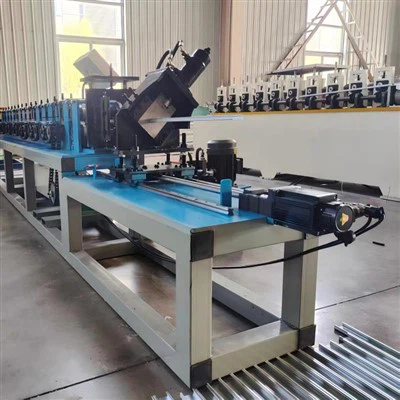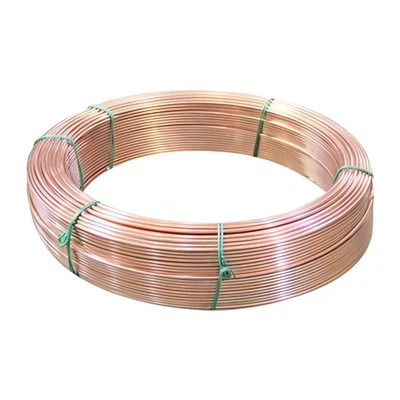
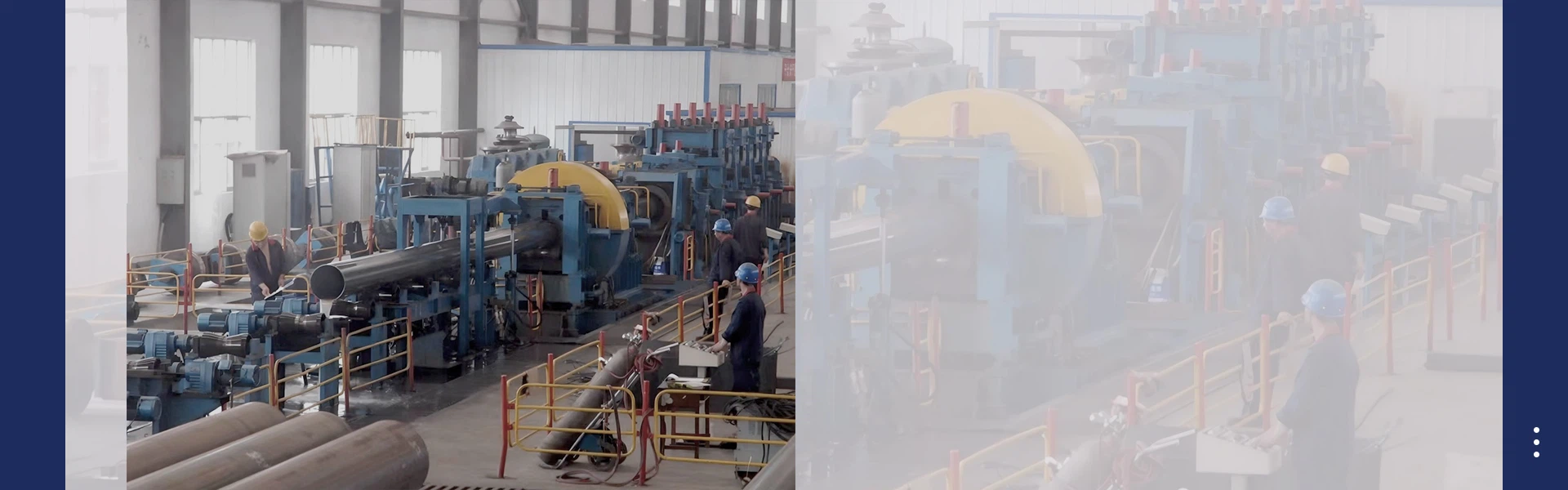

Electric Resistance Welded (ERW) pipe is one of the most widely produced and universally applied steel pipe products in the global metal manufacturing industry. Manufactured by cold-forming flat steel strip into a cylindrical shape and joining the abutting edges through high-frequency resistance heating and mechanical squeezing, ERW pipe stands out for its tight dimensional tolerances, smooth inner and outer surfaces, high production efficiency and competitive unit cost. For decades, it has served as the mainstream solution for small and medium-diameter steel pipe applications across construction, energy, machinery, agriculture and municipal engineering.

Unlike seamless pipe produced through hot piercing, ERW pipe is formed and welded at high speed in a fully continuous production line, delivering excellent consistency at significantly lower cost. Unlike large-diameter submerged arc welded pipes, ERW excels in diameters from roughly 12 mm up to 610 mm, covering the most commonly required specifications for civil and industrial use. Advances in online heat treatment, weld seam flattening and full-coverage non-destructive testing have greatly improved the mechanical performance of modern ERW pipe, expanding its application from simple structural uses into pressure-bearing fluid service.
Core Properties That Make ERW Widely Used
Before reviewing specific applications, it is necessary to understand the inherent characteristics that make ERW pipe the preferred choice in so many industries.
High Dimensional Accuracy and Smooth Surface
ERW pipe is formed from precisely gauged steel strip and calibrated through multi-stand sizing rolls, resulting in very tight tolerances on outer diameter, wall thickness and roundness. Outer diameter tolerance is typically controlled within ±0.5%, and wall thickness uniformity is far better than that of hot-rolled seamless pipe. After weld seam flattening, both internal and external surfaces remain smooth and free of protruding weld beads, which reduces fluid friction loss and facilitates subsequent surface treatments such as galvanizing and coating.
Cost-Effectiveness and High Production Efficiency
ERW production operates as a fully continuous high-speed process, with line speeds commonly reaching 30 to 60 meters per minute. Raw material utilization exceeds 98%, and energy consumption per ton of finished pipe is significantly lower than for seamless pipe. As a result, ERW pipe is typically 20% to 40% cheaper per ton than seamless pipe of equivalent specification, making it the most economical option for most conventional applications.
Reliable Weld Performance with Modern Technology
Early low-frequency ERW products had inconsistent weld quality, but modern high-frequency ERW lines with online normalizing heat treatment produce weld joints whose tensile strength, toughness and ductility reach 90% to 100% of the base metal. Combined with 100% ultrasonic or eddy-current inspection of every weld seam, modern ERW pipe is sufficiently reliable for medium-pressure fluid service and most structural applications.
Excellent Secondary Processability
Thanks to uniform wall thickness, consistent dimensions and smooth surfaces, ERW pipe performs very well in secondary processing such as bending, flaring, threading, stamping and galvanizing. It can be easily cut, drilled and connected on construction sites, which greatly improves assembly efficiency and reduces on-site labour cost.
Major Industrial Applications of ERW Pipe
Construction and Infrastructure Engineering
Construction and infrastructure represent the single largest consumption sector for ERW pipe, where it is valued for its structural strength, easy installation and low cost.
First, scaffolding and temporary support systems rely almost universally on ERW steel pipe. Scaffold tubes require consistent outer diameter, good straightness and sufficient bending strength to support workers, tools and materials during building construction. ERW pipe meets all these requirements at the lowest material cost, and its uniform dimensions ensure compatibility with standard scaffold clamps and connectors. Galvanized ERW scaffold pipe also offers good corrosion resistance for repeated outdoor use.
Second, building structural components such as fence posts, guardrails, handrails, light steel roof trusses and wall studs are commonly made from ERW pipe. In commercial and residential buildings, ERW tubular sections are used for balcony railings, stair handrails, carport frames and gate structures. For industrial plants and warehouses, it serves as bracing members, roof purlin supports and equipment support frames. Its neat appearance, easy cutting and welding capability make it ideal for architectural steelwork.
Third, municipal water supply and fire-fighting systems are classic ERW applications. Galvanized ERW pipe has long been the standard product for indoor plumbing and fire sprinkler systems, as the zinc coating provides long-term corrosion resistance and safe drinking-water compatibility. For urban secondary water supply networks and building standpipes, ERW pipe delivers reliable pressure performance, leak-tight threaded or grooved connections and fast installation speed.
Fourth, electrical conduit and cable protection represents another large-volume use. ERW pipe is widely used as protective casing for power cables, communication lines and signal cables in buildings, roads and industrial plants. It shields cables from mechanical damage, rodents and fire hazards, and its smooth internal surface makes cable pulling easy. Both black and galvanized ERW conduits are standard products in electrical engineering.
Oil, Gas and Municipal Energy Distribution
In the energy sector, ERW pipe plays an important role in medium and low-pressure oil and gas transmission and distribution systems.
Urban natural gas distribution networks are one of the most important applications of high-grade ERW pipe. After the high-pressure trunk line reduces pressure through gate stations, medium-pressure distribution mains and service lines into residential and commercial buildings mostly use ERW steel pipe complying with API 5L or equivalent standards. Modern heat-treated ERW pipe provides sufficient strength and toughness for operating pressures typically below 10 MPa, and its uniform dimensions ensure reliable welded or threaded joints. Compared with seamless pipe, ERW offers very significant cost savings for large-scale city gas networks.
Oilfield gathering and surface flowlines also consume large quantities of ERW pipe. Within oil and gas fields, numerous small-diameter lines carry produced fluids from wellheads to processing stations. These gathering lines operate at moderate pressures and are installed in large quantities, so ERW pipe is the most cost-effective solution. For corrosive well fluids, ERW pipe can be supplied with internal plastic linings or corrosion-resistant coatings to extend service life.
It should be noted that for high-pressure, high-grade long-distance transmission mainlines, seamless or LSAW pipe remains the conventional choice. But for distribution and gathering systems where pressures are moderate and volumes are large, ERW is the technically acceptable and economically preferred option.
Machinery Manufacturing and Industrial Fabrication
ERW pipe is an essential semi-finished material in the machinery manufacturing industry, used both as structural components and as fluid conveying tubing.
In the automotive and transportation sector, ERW precision tubes are widely used for exhaust pipes, seat frames, chassis structural parts, bumper reinforcements and trailer frames. The high dimensional accuracy of ERW tube ensures stable fit in automated assembly lines, and its good formability allows complex bending and hydroforming operations. High-strength low-alloy ERW tube also supports vehicle lightweighting initiatives by delivering required strength at lower weight.
In general industrial machinery, ERW pipe is used for conveyor rollers, equipment support frames, worktable legs, guard rails and machine housings. For material handling systems such as belt conveyors and roller conveyors, precisely sized ERW tubes make ideal idler rollers with smooth running performance. It is also the base material for many hydraulic cylinder barrels and pneumatic cylinder tubes at lower pressure ratings.
For industrial process piping, ERW pipe carries compressed air, cooling water, steam at low pressure, lubrication oil and non-hazardous process fluids inside factories. It is easy to install with threaded, flanged or welded connections, and it offers a long service life with appropriate corrosion protection.
Agriculture, Light Industry and Daily Facilities
ERW pipe also supports a broad range of agricultural, light industrial and civilian applications thanks to its low cost and good versatility.
In agricultural irrigation and greenhouse construction, galvanized ERW pipe is the standard material for sprinkler irrigation systems, drip irrigation mains and greenhouse support frames. Its corrosion resistance suits outdoor humid and soil-contact environments, and it can be easily assembled with clamps and fittings without welding. For large-scale farm irrigation networks, ERW pipe provides a much more durable alternative to plastic pipe at moderate cost.
Fencing, security barriers and municipal street furniture are another large application area. Road guardrails, pedestrian safety barriers, perimeter fences, sports facility railings and street lamp posts are all commonly manufactured from ERW pipe. It can be bent and welded into various shapes, then powder-coated or painted for an attractive and durable finish.
In furniture and household hardware, ERW tube is the primary material for steel desks, chairs, shelves, bed frames and kitchen racks. Thin-walled precision ERW tube enables lightweight, strong and aesthetically pleasing furniture designs at mass-market prices. The smooth surface is ideal for powder coating in different colours, supporting diverse product styling.

ERW pipe is an extremely versatile steel product whose applications span almost every sector of modern industry and civil construction. Its principal uses include structural and scaffolding tubes in building engineering, water supply and fire-fighting pipelines in municipal construction, medium-pressure gas distribution and oilfield gathering lines in the energy sector, structural and fluid components in machinery manufacturing, and irrigation, fencing and furniture tubes in agriculture and light industry.
The popularity of ERW pipe rests on four pillars: excellent dimensional accuracy and surface quality, reliable weld performance achievable with modern high-frequency technology, high production efficiency and competitive cost, and good adaptability to secondary processing and surface treatment. For the vast majority of small and medium-diameter, medium and low-pressure applications, it offers the best balance of performance, price and availability.
As welding technology, heat treatment and non-destructive inspection continue to advance, the performance grade and application range of ERW pipe will continue to expand. It will remain the most widely used and most economical steel pipe solution for general engineering and industrial purposes, supporting global infrastructure development and manufacturing activity for many years to come.