Steel slitting is one of the most fundamental and widely used processes in the metal processing industry. It is a continuous cold shearing process that cuts wide steel coils into multiple narrow steel coils of specified widths, preparing materials for subsequent forming, welding, stamping, and rolling processes. As an important intermediate link connecting steel mills and end manufacturers, steel strip longitudinal shearing transforms large wide hot-rolled or cold-rolled steel coils into custom-width steel strips that meet the requirements of production lines. Without longitudinal shearing, downstream industries such as pipe welding, cold-formed steel frame bending, automotive stamping, and home appliance production would not be able to operate efficiently.

Equipment of a Steel Slitting Line
A complete steel slitting line consists of several sequentially arranged functional units that work together to transform a heavy master coil into neatly recoiled slit coils.
2.1 Decoiling and Entry Section
The line starts with a heavy-duty decoiler, also called an uncoiler, which supports the master coil and feeds the strip into the process at controlled tension. Modern decoilers are usually hydraulically expanded mandrel type, capable of handling coils weighing from 5 to 40 tons. A coil car loads the master coil onto the mandrel automatically. After the strip head is peeled and fed, a pinch roll assembly pulls the strip forward and controls entry speed. For coils with significant coil set or waviness, a leveler with multiple staggered rollers is installed to flatten the strip before slitting, ensuring uniform feed and consistent slit quality.
2.2 Slitting Head – the Heart of the Line
The slitting head is the core unit where actual cutting takes place. It contains two parallel horizontal arbors - upper and lower - onto which circular slitting knives and spacer rings are mounted. By changing the number and width of the spacers, operators can set any combination of slit widths within the machine's capacity. Precision-ground spacers ensure accurate width distribution and uniform knife clearance across the full width of the strip. High-performance slitting heads use tool steel or carbide blades and are designed for rigid, vibration-free operation at line speeds up to 200 m/min or higher.
2.3 Scrap Edge Handling System
The two outermost strips trimmed from the master coil edges are usually narrow waste strips called scrap edges or trims. These are either wound onto separate scrap winders or fed into a scrap chopper that cuts them into short pieces for easy collection and recycling. Efficient scrap handling is important for uninterrupted production, because broken scrap edges can cause line stoppages or damage the finished strips.
2.4 Tension Stand and Recoiling Section
After slitting, the multiple narrow strips pass through a tension stand, also known as a drag brake or tension brake stand. This unit applies controlled back tension to each individual strip, ensuring that all strips run at equal tension and are wound tightly and squarely onto the recoiler mandrel. Without proper tension, the slit coils would be loose, telescoped or misaligned, making them unusable for downstream processing. The recoiler, usually a single-mandrel or double-mandrel type, rewinds all slit strips together into a compact finished coil. A separator disc assembly between strips prevents interleaving and edge damage during recoiling.
2.5 Discharge and Packaging
Once a full coil is recoiled, a coil car removes it from the mandrel. The finished slit coils are then strapped, weighed, identified and either sent to warehouse storage or directly loaded for delivery. Many modern lines also include automatic wrapping and packaging stations for corrosion protection during transport and storage.
Complete Slitting Process Flow
The steel slitting process follows a well-defined sequence of operations designed for continuous, efficient production.
First is coil loading and preparation. The master coil is lifted onto the decoiler mandrel, the outer wrapping is removed, and the strip head is flattened and fed into the pinch rolls. The line runs at jog speed until the strip head passes through the slitting head and is threaded into the recoiler.
Second is tooling setup. While the line is stopped, the slitting arbors are fitted with knives and spacers according to the required slit width scheme. Knife clearance and overlap are adjusted based on material thickness and grade. This setup step is one of the main determinants of changeover time and production efficiency, especially for small-batch, multi-width orders.
Third is trial cut and parameter adjustment. The line runs at low speed for a short trial length, then stops so that operators can inspect slit width, edge quality and burr height. Adjustments are made as necessary before full-speed production begins.
Fourth is continuous slitting and recoiling. Once quality is confirmed, the line accelerates to production speed. The strip is unwound, leveled, slit, tensioned and recoiled in one uninterrupted flow. The operator monitors line speed, tension and edge condition from the main control console.
Fifth is tail-out and coil discharge. When the tail end of the master coil approaches, the line decelerates. After the full coil is processed, the finished slit coil is discharged, and the line is prepared for the next coil.
Key Quality Requirements and Control Points
The value of a steel slitting line is measured not only by speed but also by the consistent quality of the slit product. Several quality criteria are critical for downstream users.
4.1 Width Accuracy
Slit width tolerance is the most basic quality indicator. Precision slitting lines can maintain width tolerances within ±0.05 mm to ±0.2 mm, depending on material thickness and line class. Accurate width is essential for downstream processes such as ERW pipe forming, roll-forming and stamping dies, where even small width deviations can cause forming defects, welding problems or tooling damage.
4.2 Edge Quality and Burr Height
A good slit edge has a smooth burnished shear zone and a clean fracture zone with minimal burr. Excessive burr is the most common slitting defect and can cause problems in subsequent operations - for example, burr on strip edges can damage forming rolls, cause weld defects in pipe manufacturing, and create safety hazards during handling. High-quality slitting lines typically control burr height to less than 5% of material thickness, or below 0.05 mm for thin-gauge material. Dull knives or incorrect clearance are the most frequent causes of heavy burr.
4.3 Strip Flatness and Camber
After slitting, each narrow strip should remain flat and straight. Camber - lengthwise curvature or side bow - is a common defect caused by uneven residual stress in the original coil or uneven slitting tension. Excessive camber makes feeding difficult in roll-forming and pipe mills and can cause dimensional drift in finished products. Good entry leveling and balanced tension across all strips are essential for minimizing camber.
4.4 Recoil Quality
Finished slit coils must be tightly wound, square-edged and free of telescoping, interleaf damage or edge nicks. A neatly recoiled coil feeds smoothly into downstream production lines, reduces scrap from damaged edges, and ensures consistent material length. Tension control is the primary factor governing recoil quality.
Major Industrial Applications
Steel slitting is an upstream enabling process whose output feeds almost every sector of the metal manufacturing industry.
5.1 Welded Pipe Manufacturing
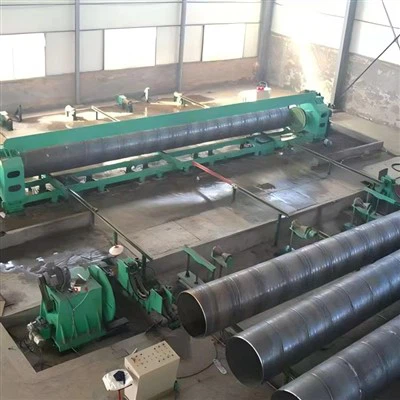
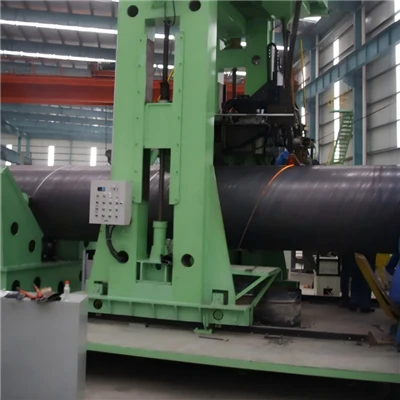
The single largest consumer of slit steel strip is the welded pipe industry. Both electric resistance welded (ERW) pipe and spiral submerged arc welded (SSAW) pipe are produced from precisely slit steel strip. For ERW pipe, the strip width directly determines pipe diameter, so accurate slit width is essential for proper forming and consistent weld quality. For spiral pipe, slit coil of appropriate width is fed continuously into the forming and welding line. Without high-precision slitting, modern high-speed pipe mills could not operate reliably.
5.2 Cold-Formed Steel and Construction Profiles
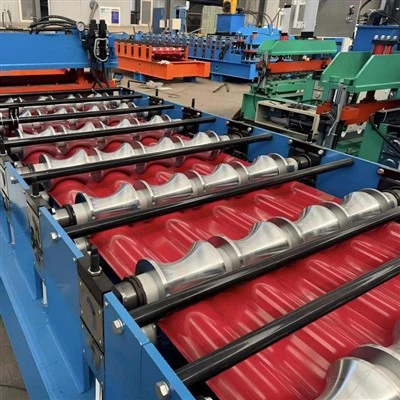
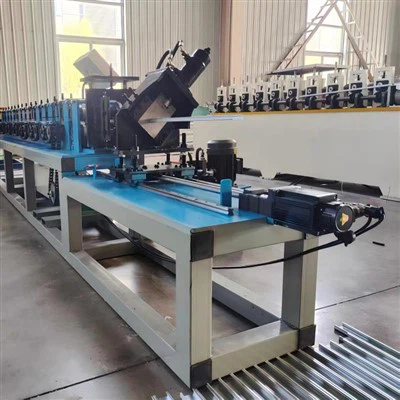
Cold-formed structural sections such as C channels, Z purlins, U channels and wall studs are all roll-formed from slit steel strip. The construction industry consumes enormous quantities of galvanized and black steel slit coil for roofing, wall cladding, floor decks and structural framing. Slitting allows steel service centers to supply strip widths exactly matched to each profile size, minimizing scrap during roll-forming.
5.3 Automotive and Transportation Industry
Automotive manufacturers use large volumes of slit cold-rolled and galvanized steel strip for stamping body panels, structural reinforcements, chassis components and seat parts. Precision slitting ensures that each coil matches the width of the stamping press feed line, optimizing material utilization and reducing offal. High-strength low-alloy (HSLA) and advanced high-strength steels for lightweight vehicle design also require careful slitting to avoid edge cracking and excessive work hardening.
5.4 General Metal Fabrication and Hardware
A very wide range of general manufacturing industries rely on slit strip, including furniture tubing, bicycle frames, electric appliance housings, steel drums and packaging, shelving systems, guardrails and solar mounting structures. In each case, slitting provides an economical way to convert large mill coils into application-specific strip widths without the waste and higher cost of cut-to-length sheet.
From welded pipe production and cold-formed construction profiles to automotive stamping and general metal fabrication, slit steel strip is the essential feedstock that enables modern high-volume manufacturing. Although it has limitations in terms of material thickness range and edge finish for the most demanding applications, for the vast majority of industrial strip requirements steel slitting remains the most economical, efficient and reliable processing method. As downstream industries continue to demand tighter tolerances, higher strength materials and faster delivery, slitting technology will continue to advance in automation, precision and speed, maintaining its indispensable role in the global steel supply chain.