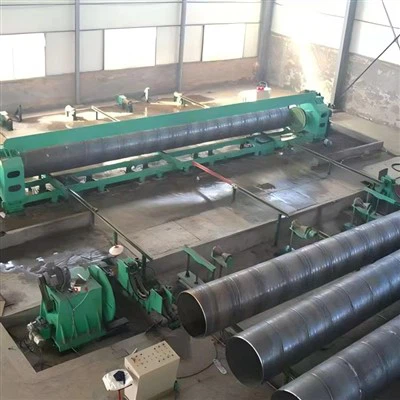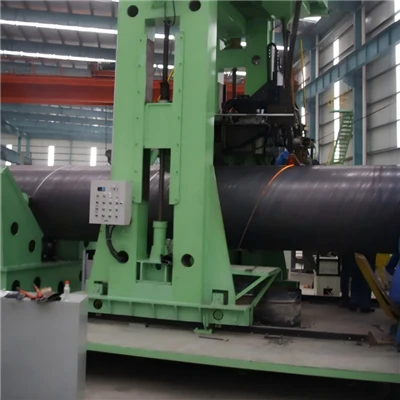
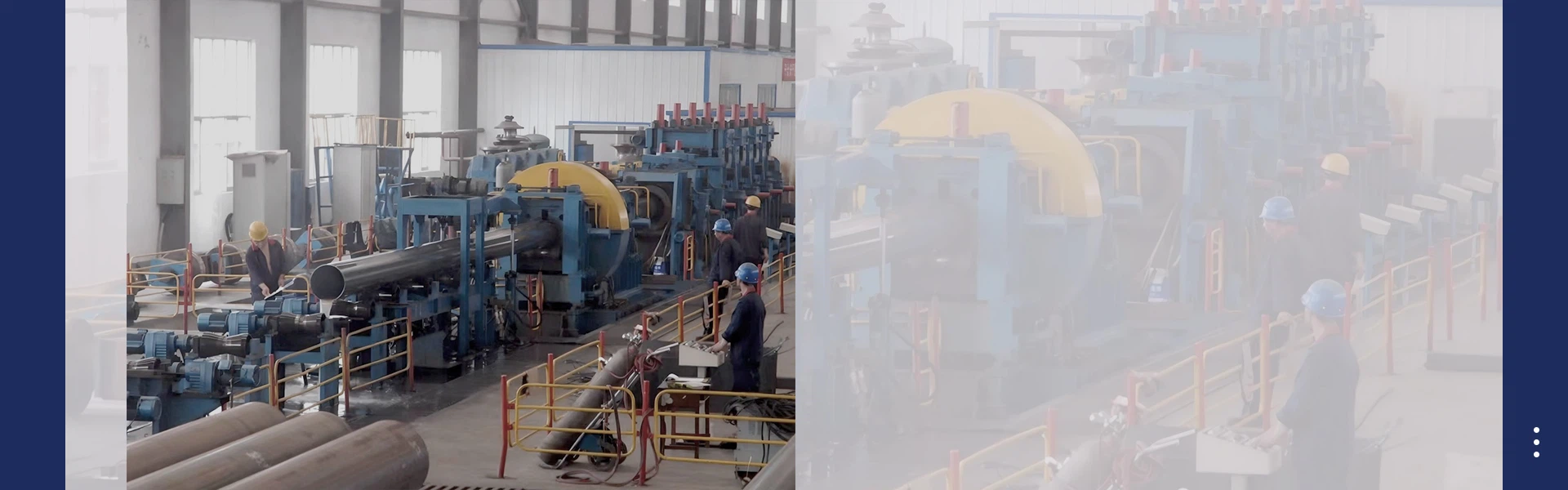
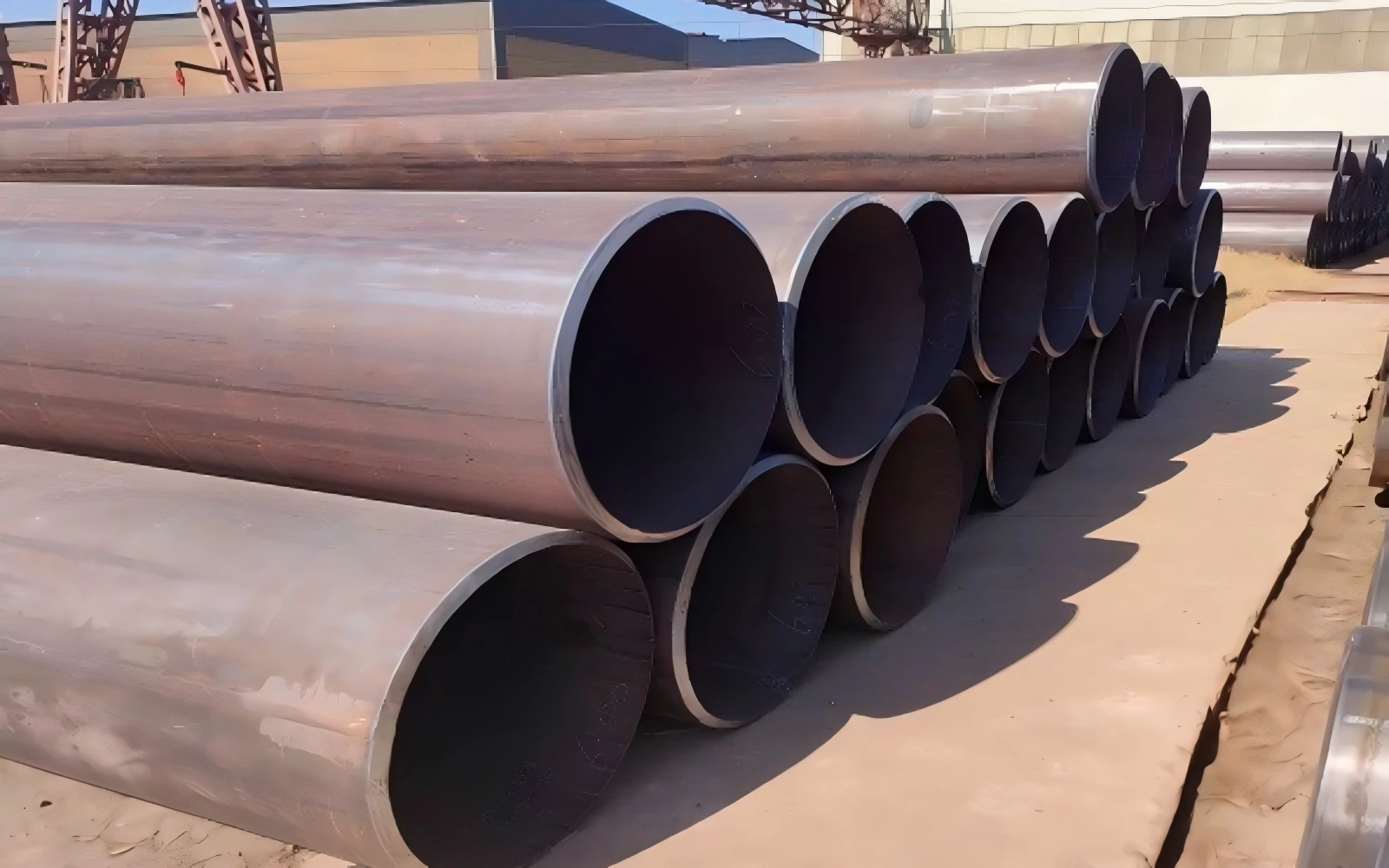
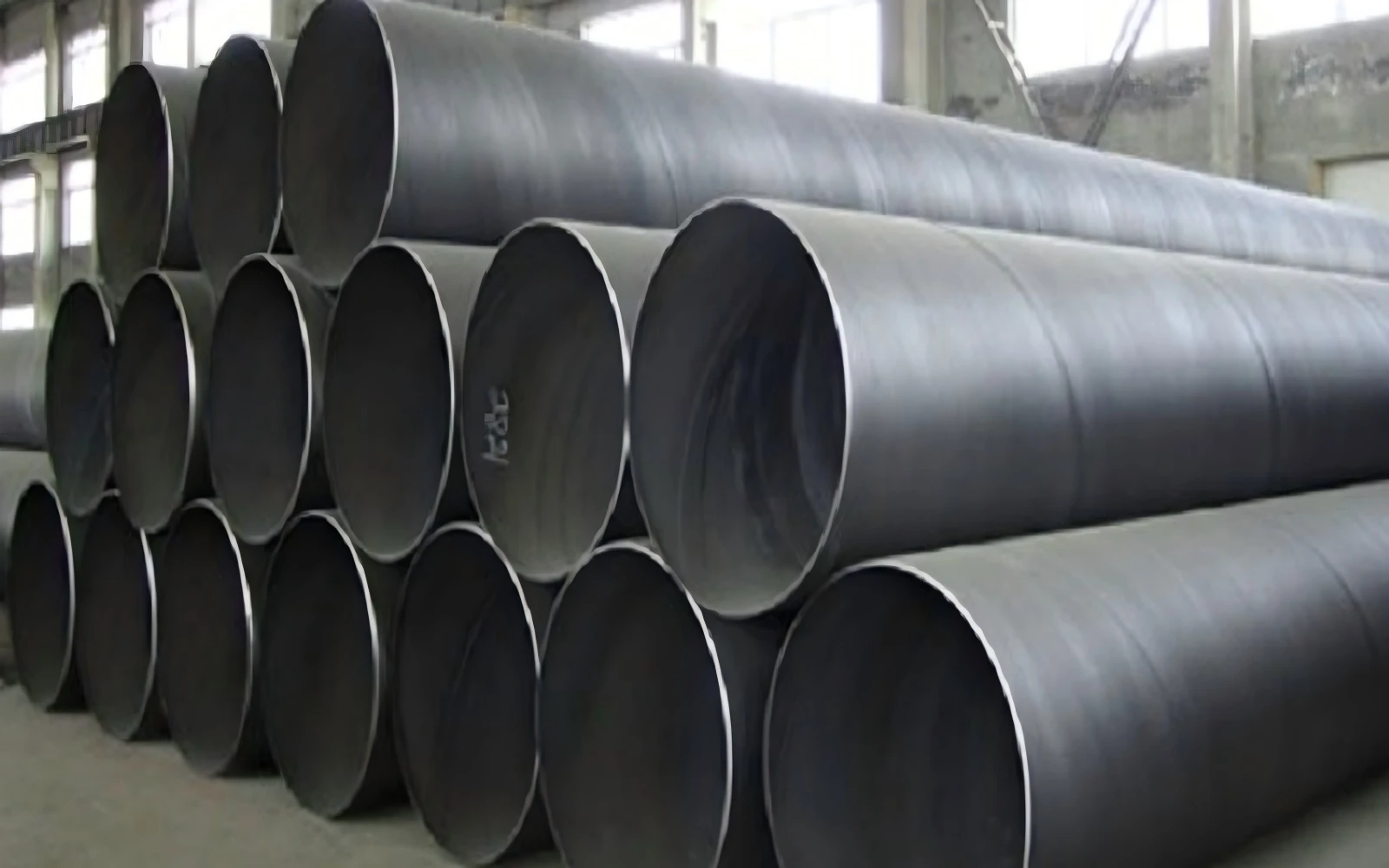
Spiral welded pipe, formally known as spiral submerged arc welded (SSAW) pipe, is a core tubular product manufactured by forming hot-rolled steel coil into a cylindrical shape at a helical angle and welding the continuous spiral seam with double-sided submerged arc welding technology. For decades, it has been one of the most widely specified steel pipe categories in long-distance fluid transmission, municipal engineering, piling foundations and structural steelwork. Unlike seamless steel pipes limited by piercing capacity, or longitudinal submerged arc welded (LSAW) pipes restricted by steel plate width, spiral welded pipe achieves a unique balance of structural performance, production flexibility, manufacturing efficiency and total cost.
Its popularity across global infrastructure and energy projects is not accidental. From urban water supply mains and natural gas distribution networks to offshore piling foundations and mine slurry pipelines, spiral welded pipe consistently proves to be the most cost-effective and technically viable solution for medium-pressure, large-diameter applications.
Outstanding Cost-Efficiency and High Material Utilization
The most direct reason for choosing spiral welded pipe is its significant economic advantage, which originates from its unique forming principle and production mode.
1.1 Optimized Raw Material Utilization
Spiral welded pipe uses hot-rolled steel coil as raw material for continuous forming and welding. Unlike LSAW production which requires wide and thick steel plates cut to exact pipe-developed width, spiral forming allows the same width of steel coil to produce pipes of different diameters by adjusting the forming angle. This means steel mills can produce standardized medium-width coils at lower cost, and pipe manufacturers do not need to stock a large variety of wide-plate specifications.
In addition, the continuous production process generates almost no head and tail scrap, with comprehensive material utilization exceeding 98%. By comparison, seamless pipe production produces considerable material loss during piercing, sizing and trimming, and LSAW production generates edge-trimming scrap from each steel plate. Higher material utilization directly reduces raw material cost per ton of finished pipe, which is the core driver of spiral pipe's price advantage.
1.2 Continuous High-Speed Production
The entire spiral pipe manufacturing line operates in a fully continuous mode: uncoiling, leveling, edge milling, spiral forming, internal and external welding, sizing, and fixed-length cutting are completed in one uninterrupted flow. There is no need for frequent plate loading and positioning as in LSAW production, nor does it require intermittent piercing and reheating as in seamless pipe production.
High production efficiency shortens delivery cycles and reduces labor and energy consumption per unit of product. For bulk supply projects requiring thousands of tons of steel pipes, the delivery and cost benefits brought by continuous production are extremely considerable.
1.3 Lower Overall Project Cost
For most medium-pressure large-diameter pipeline projects, spiral welded pipe is typically 15% to 30% cheaper per ton than LSAW pipe of the same specification, and far more economical than seamless pipe in diameters above 400mm.
Beyond material cost, its longer available single pipe length also reduces the number of field girth welds. Fewer field joints mean lower welding cost, shorter construction period and fewer potential leakage points. From the perspective of full life cycle project cost, spiral welded pipe achieves the best comprehensive economy among all large-diameter welded pipe solutions.
2. Flexible Production Capacity for Large-Diameter Specifications
Another core advantage of spiral welded pipe is its extremely strong specification flexibility, which allows one production line to cover a wide range of pipe diameters.
2.1 Adjustable Forming Angle for Variable Diameters
The core principle of spiral forming is that the steel strip is fed into the forming station at a certain helical angle. By changing the feeding angle, the same width of steel strip can produce pipes of different diameters. For example, a 1500mm wide steel coil can produce pipe diameters from 600mm to 1800mm simply by adjusting the forming angle.
This flexibility is very valuable for engineering projects. When a project requires multiple diameter specifications, the same production line can switch production without replacing tooling or raw material specifications, greatly shortening the production preparation cycle. For customized small-batch orders, spiral pipe also has a much lower minimum order quantity threshold than LSAW pipe.
2.2 Narrow Coil for Large Pipe Diameters
For ultra-large diameter pipes above 1000mm, LSAW production requires extra-wide steel plates, which have limited supply, high transportation cost and long delivery time. Spiral welded pipe, by contrast, can produce super-large diameter pipes of 2000mm, 3000mm or even larger using conventional-width steel coils.
This feature makes spiral welded pipe almost the only economical choice for ultra-large diameter municipal drainage, water diversion and piling projects. It breaks the diameter limit of traditional pipe-making processes and supports the design of large-flow, high-load pipeline systems at acceptable cost.
Superior Structural and Mechanical Performance
In addition to economic advantages, the unique helical weld structure also gives spiral welded pipe excellent mechanical properties in practical service.
3.1 Optimized Weld Stress Distribution
Under internal pressure, a steel pipe bears two principal stresses: hoop stress in the circumferential direction and axial stress along the pipe axis. In longitudinal welded pipes, the weld runs parallel to the axial direction, so it mainly bears hoop stress - the larger of the two stresses. In spiral welded pipes, the weld forms a helical angle with the pipe axis, so the hoop stress and axial stress are distributed obliquely on the weld surface.
This distributed stress state reduces the peak stress borne by the unit length of the weld, and avoids the risk of continuous long weld failure along the weakest direction. Under internal pressure and external bending loads, the helical weld structure shows more uniform force transmission and better anti-crack propagation performance, which helps improve the overall safety of the pipeline.
3.2 Excellent Rigidity and Deformation Resistance
Spiral welded pipe has good overall circular rigidity and ovality resistance. The continuous helical weld is equivalent to a spiral stiffener distributed along the pipe body, which enhances the pipe's resistance to external pressure, oval deformation and geological settlement.
In underground buried pipelines, pile foundations and river-crossing sections, pipes often face uneven soil pressure, lateral extrusion and foundation settlement. The better structural rigidity of spiral welded pipe reduces the risk of pipe deformation and weld cracking, and maintains stable structural performance during long-term buried service.
Stable Weld Quality and Reliable Pressure Bearing
Modern spiral welded pipe production relies on mature double-sided submerged arc welding technology, and its weld quality has reached the level of meeting mainstream international pipeline standards.
4.1 Double-Sided Submerged Arc Welding Integrity
Formal spiral pipe production lines adopt internal welding first and then external welding, with full-automatic double-sided submerged arc welding. The granular flux completely covers the welding arc, isolating air and avoiding oxidation, pores and slag inclusions. The weld forms a complete metallurgical bond, and the tensile strength and toughness of the weld joint can reach more than 90% of the base metal.
Compared with high-frequency ERW welds, submerged arc welds have deeper fusion, thicker effective weld thickness and better fatigue resistance. For long-term pressure-bearing pipelines, this reliable weld quality is the basic guarantee for safe operation.
4.2 Full-Coverage In-Line Quality Inspection
Modern spiral pipe production lines are equipped with online ultrasonic testing (UT) and off-line radiographic testing (RT) for 100% full-length inspection of spiral welds. Defects such as incomplete fusion, slag inclusion and micro-cracks can be identified and located in real time.
In addition, each batch of pipes undergoes hydrostatic testing according to standards such as API 5L and GB/T 9711 to verify the overall pressure resistance and sealing performance. Strict multi-level quality control ensures that the delivered spiral welded pipes have stable and reliable quality and can meet the acceptance requirements of various industrial and municipal projects.
Wide Adaptability Across Engineering Scenarios
The combination of performance and cost advantages makes spiral welded pipe widely applicable to multiple core engineering fields.
5.1 Oil and Gas Gathering and Transmission Pipelines
In the petroleum and natural gas industry, spiral welded pipe is the preferred pipe type for medium-pressure long-distance transmission trunk lines, gas distribution networks and oilfield gathering pipelines. For onshore natural gas pipelines with operating pressure below 10MPa, spiral welded pipe fully meets the strength and sealing requirements, and has obvious cost advantages over LSAW pipe. A large number of regional natural gas transmission projects and urban gas main networks at home and abroad adopt spiral submerged arc welded pipes as the core pipe material.
5.2 Municipal Water Supply and Drainage Networks
Urban water supply mains, rainwater and sewage drainage pipelines and reclaimed water transmission pipelines are the largest application fields of spiral welded pipe. Large-diameter spiral pipes have large flow capacity and low unit cost, and can replace expensive cast iron pipes and concrete pipes.
Buried spiral pipes with anti-corrosion treatment such as 3PE or cement mortar lining have a service life of more than 50 years. Their good rigidity can adapt to various soil conditions, and the construction speed is fast, which is very suitable for the construction demand of large-scale municipal pipe network renovation and new urban infrastructure.
5.3 Pile Foundations and Structural Steel Applications
Spiral welded pipe is also widely used as pipe piles for industrial plants, bridges, ports and offshore wind power foundations. Large-diameter thick-walled spiral pipe has strong vertical bearing capacity and good lateral bending resistance. As a driven pile or bored cast-in-place pile casing, it has high construction efficiency and reliable bearing performance.
Compared with cast-in-place concrete piles, steel pipe piles have shorter construction period, smaller site occupation and more controllable quality. Spiral welded pipe piles with appropriate wall thickness can meet most building foundation and bridge pile foundation requirements at lower cost.
Supply Chain and Sustainability Advantages
From the perspective of industrial chain and green development, spiral welded pipe also has obvious long-term value.
The raw material hot-rolled steel coil has a mature global supply chain, with sufficient production capacity and stable price. It is easier for pipe manufacturers to organize production and control raw material inventory than relying on wide and thick steel plates. For international trade projects, coil supply is more stable and the delivery cycle is more controllable.
In terms of low-carbon manufacturing, the cold forming + submerged arc welding process of spiral pipe has lower energy consumption per ton than the piercing and hot rolling process of seamless pipe. High material utilization also reduces resource waste, which is in line with the development direction of energy saving and emission reduction in the steel industry.