Welding flux is one of the most important materials in welding, yet it is rarely known. It is a granular, powdered or coated substance that is placed inside or around the weld area. During the welding process, it melts and plays a series of crucial roles, thereby determining the quality, strength and reliability of the final weld. Without welding flux, many widely used arc welding processes - including the flux-coated electrode arc welding used by every manufacturing plant and the submerged arc welding used for manufacturing steel pipes - would be unable to form qualified welds. This article will explain what welding flux is in welding, describe its composition, elaborate on the mechanism of its role in the welding process, analyze its main functions, and explore the application of welding flux in major welding processes, with particular attention to its role in steel pipe welding.
Defining Welding Flux

In welding, flux is a material that melts during the welding operation and chemically and physically assists in producing a sound weld. It is distinguished from shielding gas, which also protects the weld but is a gas rather than a solid; flux is a solid material that is consumed as the weld is made. Flux can be supplied in several forms: as a coating on a welding electrode, as a granular powder fed into the joint ahead of the arc, or as a powder packed inside a tubular welding wire.
The essential idea is that flux acts as a chemical and physical agent around the weld. Chemically, it cleans the metal surface and controls the composition of the weld metal. Physically, it melts to cover the molten weld pool, protecting it from the air and controlling how the weld cools and solidifies. Flux is therefore more than a simple additive: it is an active participant in the welding reaction, and its composition is carefully formulated for the metal being welded and the process being used.
How Flux Works During Welding
As the welding arc strikes, the heat melts the flux along with the base metal and the filler. The flux undergoes a series of reactions that happen in a precise sequence.
First, the flux melts and becomes active, and its fluxing agents react with the oxides on the surfaces of the joint, dissolving them so that a clean, bare metal surface is exposed.
Second, the gas-forming ingredients decompose and release shielding gases that surround the arc, excluding oxygen and nitrogen from the air. Third, the slag-forming materials rise to the surface of the molten weld pool and form a liquid layer of slag that covers the weld.
Fourth, the deoxidising and alloying elements enter the molten metal, where they react with dissolved oxygen and adjust the composition of the weld.
Finally, as the weld cools, the slag solidifies over the bead, protecting the metal while it is still hot and shaping the surface of the finished weld.
This process explains why the flux is so effective: it does not function in a single instant, but rather continuously throughout the welding process, starting from the moment the arc breaks through and continuing until the weld solidifies. The timing of these reactions is jointly controlled by the flux formula and welding parameters, so choosing the appropriate flux and correctly setting the welding equipment is crucial for achieving a good weld. The amount of flux consumed, the depth of the molten pool, and the behavior of the slag layer all depend on achieving the correct balance: too little flux will leave the weld unprotected, while too much may cause slag inclusion or create weak areas. Therefore, welders must understand the properties of the flux and adjust the welding conditions according to the type of flux used.
The Functions of Welding Flux
Cleaning the Metal Surface
The first function of flux is to clean the joint by removing oxides and other contaminants. When steel is heated it oxidises quickly, and the oxide film that forms is a barrier between the filler metal and the base metal. The fluxing agents in the flux react with this oxide and dissolve it, exposing a clean surface so that the molten filler metal can wet the joint and fuse with the base metal. Without this cleaning action, the weld metal cannot bond properly and the joint will be weak.
Protecting the Weld from the Air
The second function is to protect the molten weld metal from the air. Oxygen and nitrogen in the atmosphere react with molten steel to form oxides and nitrides, which weaken the weld and cause porosity. Flux protects the weld in two ways: it generates shielding gas that displaces the air around the arc, and it forms a layer of slag that covers the molten pool and excludes air from the cooling metal. This protection is essential to producing a dense, sound weld free of pores.
Controlling the Weld Chemistry
The third function is to control the composition of the weld metal. The deoxidising elements in the flux react with oxygen dissolved in the molten pool, removing it before the metal solidifies and preventing the porosity that would otherwise result. The alloying elements build up the weld metal and give it the required strength, toughness and corrosion resistance. Because the flux determines the chemistry of the weld, the same base metal can be welded with different fluxes to produce welds with different mechanical properties.
Forming Slag and Shaping the Weld
The fourth function is the formation of slag, which controls the solidification and the shape of the weld. The slag layer slows the cooling of the weld metal, allowing dissolved gases to escape and the metal to solidify in a clean, dense structure. It holds the molten metal in place and prevents it from running away, and it shapes the weld bead. After cooling, the slag is chipped away, and in some processes the slag is retained to provide the required profile. The slag also provides a second level of protection, keeping the hot weld from the air even after the arc has been withdrawn.
Flux in the Main Welding Processes
Shielded Metal Arc Welding
In shielded metal arc welding, the most common manual welding process, flux is applied as a coating on the consumable electrode. As the electrode burns, the coating melts to release shielding gas and to form slag over the weld. The coating also adds alloying elements to the weld metal. This single coated electrode therefore carries the flux, the shielding gas source and the filler metal together, which is why the process is so portable and widely used despite its manual nature.
Submerged Arc Welding
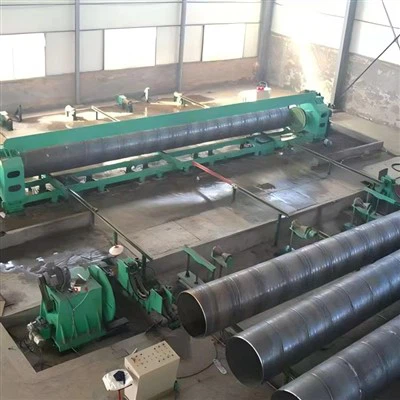
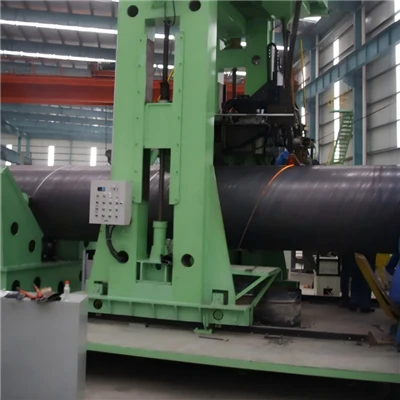
In submerged arc welding, the flux is a granular powder that is fed onto the joint ahead of the arc from a hopper. The arc burns completely beneath a blanket of flux, so the process produces no visible arc flash and no spatter, and the deep penetration and clean, slag-covered weld make it ideal for thick sections and for high-volume production. The flux blanket also performs an important physical function: it concentrates the heat of the arc into the joint, giving the deep penetration that is needed to weld the full wall thickness of heavy pipe in a single pass. Submerged arc welding with granular flux is the process most widely used to weld the longitudinal and spiral seams of steel pipe, and the quality of the pipe weld depends directly on the correct selection and handling of the flux, including its particle size, its composition, and its dryness.
Flux-Cored Arc Welding
In flux-cored arc welding, the flux is packed inside a tubular wire, so that the wire carries both the filler metal and the flux. The flux performs the same functions of cleaning, protecting and alloying, and it may also generate shielding gas. Flux-cored welding offers high deposition rates and is widely used for structural and heavy fabrication where productivity and weld quality are both required. The tubular wire makes the process convenient because the flux is always correctly positioned inside the wire as it is fed into the weld, and because the composition of the flux can be varied by the manufacturer, the wire can be tailored to produce welds of a specific strength and toughness for a given application.
Selecting and Handling Welding Flux
The choice and handling of flux are matters of engineering, because the quality of the weld depends on them. The flux must be matched to the grade of steel, to the welding process, and to the required mechanical properties of the finished weld. It must also be stored and handled correctly: granular flux in particular must be kept dry, because a damp flux introduces moisture into the weld, which can cause hydrogen-induced cracking in the finished joint or pipe. In production, flux that is not consumed is often recovered and recycled, but it must be screened and topped up with fresh flux to maintain the correct composition and particle size. These practical considerations are as important as the chemistry of the flux itself to producing sound, reliable welds.