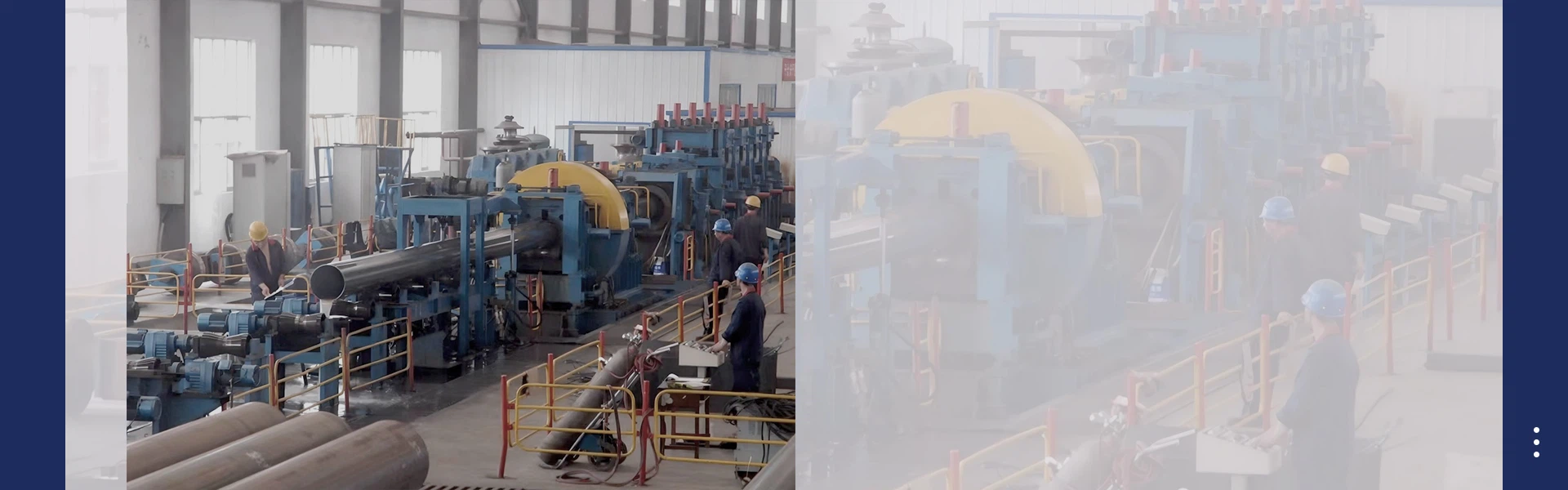
Cutting steel pipes is one of the most common operations in metalworking, construction, piping engineering, and the manufacturing of tubular products such as ERW and spiral-welded pipes. Selecting the appropriate sawing equipment not only affects cutting speed but also impacts cutting accuracy, cut quality, consumable costs, and waste generation. There is no single "best" sawing machine suitable for all applications; the ideal equipment must be determined based on pipe diameter and wall thickness, material grade, required production rate, cutting precision, and budget.

The Requirements of Cutting Steel Pipe
Before comparing specific equipment, it is necessary to first clarify the requirements that the pipe cutting saw must meet. A good pipe cutting should be a right-angle cut - that is, the cutting surface must be perpendicular to the axis of the pipe to ensure that both ends can be correctly connected, facilitating welding, tapping or flanging. The cutting surface should not have excessive burrs and flash, otherwise, a separate deburring process needs to be carried out. The edge temperature of the cut should not be too high to avoid damaging the metallurgical structure of the pipe, especially for alloy steel and quenched steel. Finally, this operation should also be economically viable, requiring a balance to be achieved among speed, blade life, energy consumption, labor costs and the value of the finished product. These requirements are the standards for measuring various sawing tools.
The Main Types of Pipe-Cutting Saws
Abrasive Cut-Off Saws
A grinding wheel cutting saw, often referred to as a pipe cutting saw, uses a thin abrasive disc rotating at high speed to cut pipes. The disc is inserted vertically into the pipe, and the friction between the abrasive and the metal will wear down the metal along the cutting line. These saws are cost-effective, portable, and can cut pipes of almost any diameter and hardness, making them widely used in construction sites and maintenance workshops.
The main drawback is related to quality. Since the cutting relies on grinding, the edges become rough and have severe burrs, and the contact area generates a lot of heat, which may cause the steel at the cutting site to change color or harden. The grinding wheel wears out rapidly, generating a large amount of dust, and requires frequent replacement. The precision is low, and for thin-walled pipes, the blade wheel may crush or deform the pipe material. The heat generated during cutting may also cause the thin section to deform, forming a hardened edge, making it difficult to process or weld. Therefore, the grinding wheel cutting saw is most suitable for rough cutting. It is used when precise, clean edges are not required, but more emphasis is placed on the machine's running speed and portability.
Band saws cut with a continuous loop of toothed blade that travels between two wheels. The blade moves in one direction, and the workpiece is fed against it, either by gravity, hydraulics, or a powered feed. Band saws are among the most versatile and economical saws for cutting steel pipe, because the blade engages the work over a long length, spreading the cutting load and allowing a relatively low cutting temperature with a clean, burr-free edge.
Circular Saws with Carbide Blades
Circular saws for steel pipe use a toothed circular blade, usually with carbide-tipped teeth, that rotates at high speed and is fed into the pipe. Unlike abrasive discs, which grind, a circular saw cuts with true saw teeth, producing a clean edge with little burr and good accuracy. The blade is rigidly supported in a machine frame, so the cut is square and repeatable.
Circular saws offer a good combination of speed and accuracy and are widely used for cutting pipe in production, particularly where the cut ends must be clean for welding. Because the blade is held rigidly in the machine frame and the pipe is clamped securely, the cut is square and the length repeatability is excellent, which matters greatly when many pipe pieces must be cut to identical lengths. Their main drawbacks are the cost of the carbide blades, the need for coolant to keep the teeth cool and to flush chips, and a limited maximum diameter relative to band saws. Because the blade must clear the full thickness of the pipe wall, thin-wall pipe can be cut very rapidly, whereas thick-wall and large-diameter pipe demand heavy-duty machines with larger blades and more powerful drives. The choice between a circular saw and a band saw therefore often comes down to whether throughput and length accuracy justify the higher blade and machine cost.
Cold Saws
A cold saw is a heavy-duty circular saw that cuts with a very slow blade speed and high torque, using a high-speed steel or carbide blade and a copious flow of cutting fluid. The term "cold" refers to the fact that the cut is made at a temperature low enough that the metallurgical properties of the steel are not altered, and the edge is exceptionally clean and accurate, often requiring no further machining before welding.
Cold saws are the preferred choice when the highest cut quality and accuracy are required, for example when cutting pipe that will be welded or machined directly, or when cutting alloy and hardened steels. The cost of the machine and blades is high, the cutting speed in terms of metres per minute is relatively low because of the slow blade rotation, and the machine is heavy and expensive to maintain. For most users, a cold saw is justified only when cut quality and edge condition are paramount.
Plasma and Laser Cutting
Plasma cutting uses a high-temperature ionised gas jet to melt and blow away the metal, and laser cutting uses a focused high-energy beam to melt the metal and blow it out with an assist gas. Both are thermal processes, and when integrated with a pipe-cutting machine they can cut pipe very quickly and can easily produce profiled or beveled ends in addition to straight square cuts. They are particularly valuable for large-diameter and thick-wall pipe and for cutting contoured openings in pipe.
The principal disadvantages are the high capital cost, the need for skilled operators and fume extraction, and the heat-affected zone at the cut edge, which may require subsequent grinding or heat treatment for critical applications. Plasma and laser processes are also sensitive to the surface condition of the pipe: scale, rust and moisture can cause erratic cutting and poor edge quality. Nevertheless, modern CNC pipe-cutting machines that integrate plasma or laser heads can cut square ends, bevels, holes and complex profiles in a single setup, dramatically reducing the handling time that separate operations would otherwise require. Thermal cutting is best reserved for large pipe, high-volume production, or complex profile cutting, where its speed and flexibility outweigh its cost and where the tolerances are acceptable.
Comparing the Saw Types
Each saw type occupies a different point on the trade-off between cost, speed, and cut quality. Abrasive saws are the cheapest and fastest to set up but give the roughest cut. Band saws offer the best balance of versatility, low cost per cut, and good edge quality for most pipe-cutting work. Circular carbide saws give a clean, accurate cut at high speed for smaller diameters. Cold saws provide the highest cut quality and accuracy but at high cost and slower linear speed. Plasma and laser cutting offer the greatest speed and flexibility for large or profiled work but at high capital cost and with a heat-affected zone.
For most general-purpose and production pipe cutting, the horizontal band saw is the practical benchmark, because it combines low consumable cost, clean square cuts, and the ability to handle a wide range of diameters. When production volumes are high and pipe diameters are modest, a circular saw or cold saw often delivers better throughput and edge quality. For very large pipe, thick walls, or contoured ends, plasma or laser systems become the most cost-effective choice despite their higher initial cost.
Selection Criteria and Recommendations
Choosing the best saw for a given application depends on several factors that should be weighed together.
1. Pipe diameter and wall thickness: band saws and abrasive saws handle the widest range; circular and cold saws are limited in maximum diameter.
2. Production volume: for high-volume production, saws with automatic feeding and measuring systems - band, circular, or cold - minimise labour and waste.
3. Required cut quality: welding and precision applications favour band, circular, or cold saws over abrasive and thermal cutting.
4. Material grade: alloy and hardened steels may require the slow, cool cut of a cold saw to avoid metallurgical damage.
5. Budget and operating cost: band saws have low blade cost; carbide circular blades and cold-saw blades are more expensive but last longer.
6. Portability and site use: abrasive and portable band saws are best for maintenance and on-site work; large fixed machines suit workshops.
As a general recommendation, a horizontal band saw is the best all-round choice for cutting steel pipe across most applications, offering a clean square cut, low cost per cut, and wide diameter range. Where production speed and edge quality must both be high, a carbide-tipped circular saw or a cold saw is preferable. For very large or thick-walled pipe, and for profiled or beveled ends, plasma or laser cutting is the most effective solution.
There is no universal "best" pipe cutting saw; the selection of the appropriate equipment depends on the pipe size, material, required production efficiency, cutting quality requirements, and budget. The abrasive wheel cutting saw is inexpensive and portable, but the cutting edge is rough and has more burrs; the band saw performs best in terms of cost, versatility, and clean right-angle cutting, and is the standard choice for routine and batch processing operations; tungsten carbide circular saws and cold saws are suitable for small diameters and critical applications, allowing for high-speed cutting and providing excellent cut quality; while plasma or laser cutting can offer the fastest speed and maximum flexibility for large-diameter, thick-walled, or irregular-shaped pipes. By balancing these factors against the specific requirements of the operation, manufacturers can select the sawing equipment that best combines quality, production efficiency, and economy.