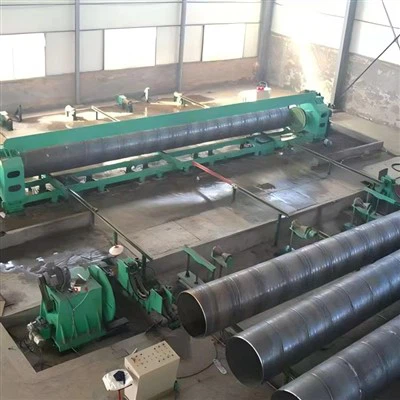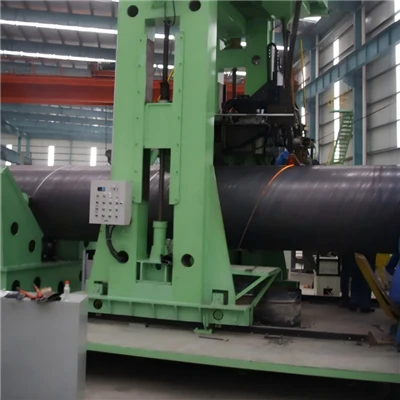
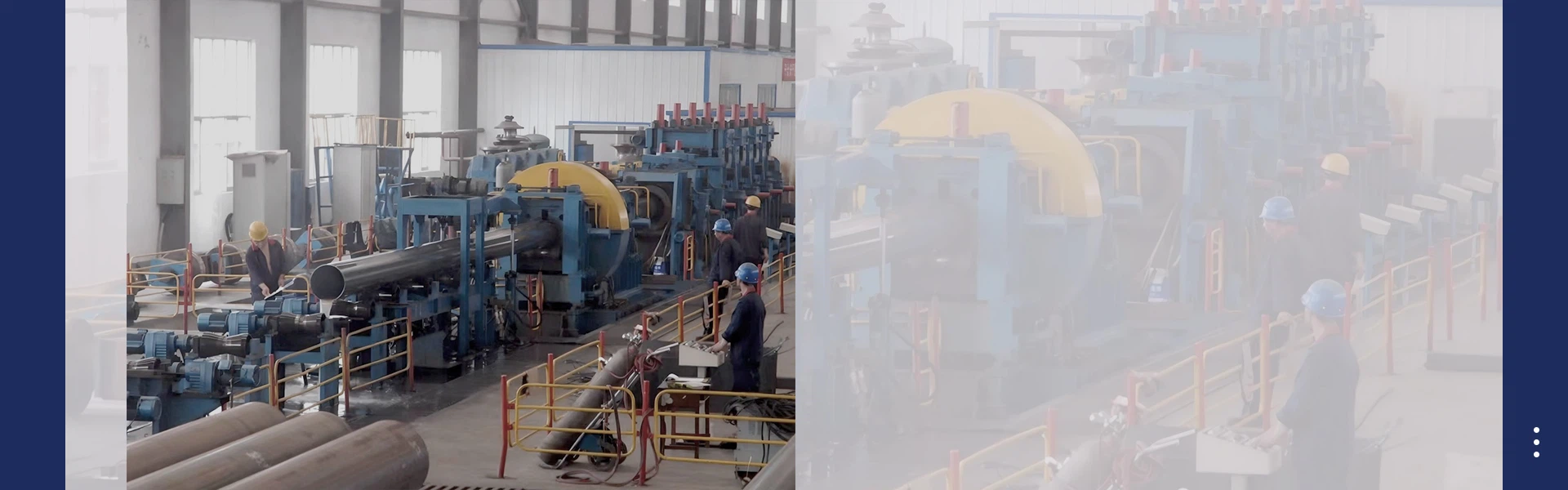
Spiral welded steel pipes, also known as spiral submerged arc welding (SSAW) steel pipes, are large-diameter welded steel pipes formed by continuously rolling and welding hot-rolled steel coils into a spiral tube structure. Unlike straight seam electric welded pipes which are limited by the width of the strip material and have extremely high production costs, spiral pipes have flexible diameter conversion capabilities, excellent structural stability, and outstanding pressure-bearing performance. These unique manufacturing features make spiral pipes indispensable in industrial pipeline transportation, municipal infrastructure, civil engineering construction, and energy transportation. Many people confuse spiral pipes with other types of steel pipes and mistakenly think that their application scope is limited. In fact, spiral pipes have a very clear market positioning and engineering application.

Basic Characteristics That Define Spiral Pipe Usage
To understand the application of spiral tubes, it is necessary to first analyze their inherent structure and mechanical properties. Spiral tubes are made through spiral rolling and double-sided submerged arc welding. The welds are distributed spirally along the tube body, scientifically dispersing the internal pressure stress. Compared with straight seam welded steel pipes, under the same diameter and wall thickness conditions, spiral tubes have better compressive strength and structural toughness. Moreover, the production technology of spiral tubes can manufacture super-large diameter steel pipes that ordinary ERW straight seam units cannot produce. The diameters range from 219 millimeters to over 3000 millimeters. At the same time, the investment in spiral tube production equipment is relatively low, and the material utilization rate is high, thus having high economic benefits in large-scale engineering projects.
To understand the application of spiral tubes, it is necessary to first analyze their inherent structure and mechanical properties. Spiral tubes are made through spiral rolling and double-sided submerged arc welding. The welds are distributed spirally along the tube body, scientifically dispersing the internal pressure stress. Compared with straight seam welded steel pipes, under the same diameter and wall thickness conditions, spiral tubes have better compressive strength and structural toughness. In addition, the production technology of spiral tubes can manufacture super-large diameter steel pipes that ordinary ERW straight seam units cannot produce. The diameters range from 219 millimeters to over 3000 millimeters. At the same time, the investment in spiral tube production equipment is low, and the material utilization rate is high, so it has high economic benefits in large-scale engineering projects. However, spiral pipes also have inherent limitations that define their applicable scope. Due to the long weld seam and relatively lower dimensional accuracy compared with ERW pipes, spiral pipes are not suitable for high-precision mechanical equipment pipelines or ultra-high-pressure industrial systems. They are mainly used for medium and low-pressure, large-diameter, long-distance transmission and structural load-bearing scenarios. These characteristics determine all core application fields of spiral pipes in engineering practice.
Core Application: Municipal Water Supply and Drainage Engineering
The most widespread application of spiral pipes is in urban municipal water supply and drainage projects. Modern urban construction requires large-diameter main pipelines to undertake tasks such as water supply for urban life, industrial water transportation, rainwater drainage, and sewage transportation. Municipal water supply pipelines usually operate under low-pressure and high-flow conditions, which is highly compatible with the performance of spiral pipes.
The spiral pipes used in water conservancy projects usually have an outer 3PE anti-corrosion coating and an inner epoxy coating. The anti-corrosion layer can effectively prevent soil corrosion and water erosion, significantly extending the service life of underground buried pipelines. Compared with concrete pipes, spiral steel pipes have stronger seismic resistance, better sealing performance and lighter weight, avoiding common problems such as pipe body rupture, leakage and pipeline settlement in concrete pipes. In urban expansion, river regulation, water diversion projects and community supporting pipelines, due to their stable performance and lower overall engineering cost, spiral pipes have become the preferred mainstream pipe material.
Energy Industry: Oil and Gas Gathering and Transmission Pipelines
Another important industrial usage of spiral pipe is medium and low-pressure oil and gas transmission. In petroleum and natural gas development projects, short-distance gathering pipelines, field transfer pipelines and town gas branch pipelines do not require ultra-high pressure resistance. Under such working conditions, spiral pipes can completely meet the design standards and have significant cost advantages over seamless pipes.
Spiral pipes produced in accordance with API 5L standards have stable weld quality and good mechanical uniformity. The helical weld structure can resist alternating pressure caused by fluid fluctuation, reducing pipeline fatigue damage. In coastal oil fields, inland gas fields and urban gas pipe network projects, a large number of spiral steel pipes are used for crude oil delivery, natural gas transmission and slurry transportation. It is worth noting that spiral pipes are mainly used for secondary branch pipelines and low-pressure trunk lines, while ultra-high-pressure long-distance main lines still adopt seamless pipes or high-grade straight-seam welded pipes.
Civil Engineering: Foundation Piling and Structural Support
Spiral pipe is widely used as structural steel pipe in infrastructure construction, especially for foundation piling, bridge support, wharf engineering and high-rise building foundation reinforcement. Large-diameter thick-wall spiral pipes are made into steel pipe piles, which are driven into the foundation soil layer to enhance ground bearing capacity and stabilize building structures.
Steel pipe piles made of spiral pipes have strong bending resistance, compression resistance and impact resistance. Compared with traditional concrete piles, steel pipe piles have lighter construction weight, faster construction speed and better seismic performance. In bridge foundation construction, highway reinforcement, port wharf bearing platforms and large stadium foundation projects, spiral pipe piles have become an indispensable structural material. In addition, spiral pipes can also be used for tunnel support, underground comprehensive pipe gallery support and temporary engineering protection structures, providing stable mechanical support for construction projects.
Industrial Fluid Transportation and Ventilation Pipeline
In industrial parks, factory production lines and thermal power plants, spiral pipes are commonly used for circulating water transmission, industrial wastewater discharge, flue gas ventilation and dust removal pipelines. Industrial production requires large-diameter circulating water systems to cool equipment and discharge waste water. Spiral pipes can meet the requirements of large-flow and long-distance transmission with stable pipeline sealing performance and strong anti-corrosion ability.
In addition, spiral pipes are widely used as ventilation and smoke exhaust pipes in factory workshops and underground garages. Its smooth inner wall reduces fluid resistance, improves ventilation efficiency and avoids dust accumulation and pipeline blockage. For low-pressure industrial fluid transmission and gas delivery systems, spiral pipes have excellent practicability and economy, far exceeding the cost performance of other steel pipe types.
Marine and Water Conservancy Engineering Applications
Water conservancy projects such as reservoir water delivery, river dredging, seawater desalination supporting pipelines and coastal reclamation projects also rely heavily on spiral pipes. Marine engineering environments are humid and highly corrosive. After special anti-corrosion treatment, spiral pipes can resist seawater erosion and salt spray corrosion, adapting to long-term underwater and buried working environments.
In addition, spiral pipes are used for water gate pipeline connection, pump station water delivery and flood discharge pipeline construction. Its strong structural toughness can resist water flow impact and hydrodynamic pressure, ensuring the long-term safe operation of water conservancy facilities.
Why Spiral Pipe Is Selected for These Scenarios
The wide application of spiral pipe is determined by its unique comprehensive advantages. First, it has super-large-diameter production capacity, which cannot be replaced by ERW pipes. Second, the helical weld structure disperses stress, providing higher structural safety for buried pipelines. Third, submerged arc welding ensures stable weld quality, with few defects and strong overall pipeline tightness. Fourth, the production cost is moderate, suitable for large-scale engineering procurement. Fifth, it can be matched with various anti-corrosion processes to adapt to complex soil, water and atmospheric environments.
Compared with seamless pipes, spiral pipes have lower cost and higher production efficiency for large-diameter specifications. Compared with straight-seam welded pipes, spiral pipes have stronger pressure resistance and wider diameter range. These advantages make spiral pipes occupy an irreplaceable mainstream position in medium and low-pressure large-diameter pipeline engineering.
Usage Limitations and Unsuitable Scenarios
Although spiral pipes have diverse applications, they also have clear usage limitations. First, they are not suitable for ultra-high-pressure industrial pipelines such as petrochemical high-pressure reaction pipelines and boiler superheater pipelines. Second, they cannot be used for high-precision mechanical processing equipment pipelines due to slightly lower dimensional accuracy. Third, spiral pipes are not recommended for small-diameter thin-wall pipelines because of their long weld seam and relatively higher defect probability. Clarifying these limitations helps standardize engineering selection and avoid misuse of pipe materials.
Spiral welded pipe is a large-diameter, cost-effective and high-stability steel pipe material mainly used for municipal water supply and drainage, oil and gas low-pressure transmission, building foundation piling, industrial fluid delivery, ventilation pipelines and water conservancy and marine engineering. Its core usage orientation is large-diameter, medium and low-pressure, long-distance transmission and structural load-bearing engineering scenarios. Benefiting from flexible forming technology, reasonable spiral stress structure and mature submerged arc welding process, spiral pipes have become the most widely used pipe material in urban infrastructure and large-scale civil engineering.
Understanding the specific uses and applicable boundaries of spiral pipes is essential for engineering designers, procurement personnel and construction units to select correct pipe types, optimize project costs and ensure long-term operational safety of pipeline systems. With the continuous development of anti-corrosion technology and welding technology, spiral pipes will be further popularized in new energy engineering, municipal pipe network renewal and marine infrastructure construction, maintaining important industrial value in modern engineering construction.