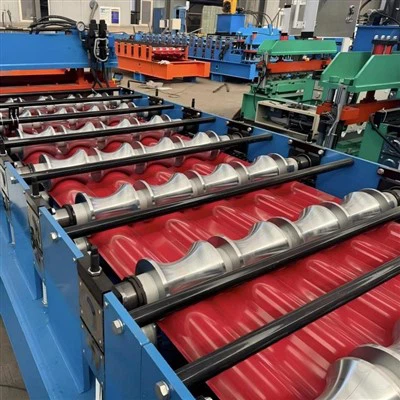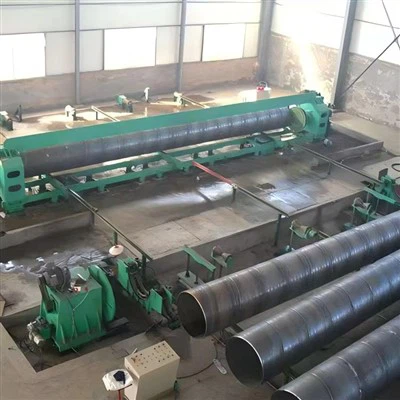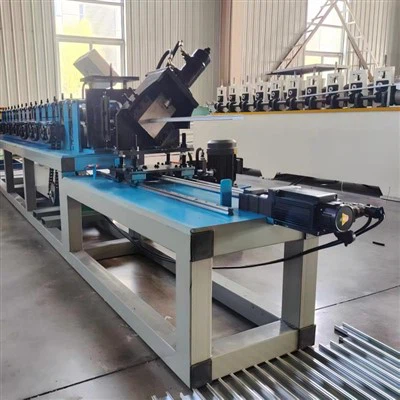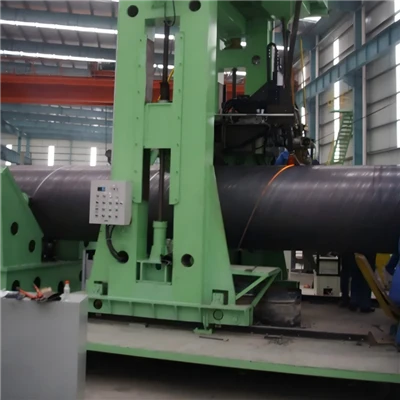
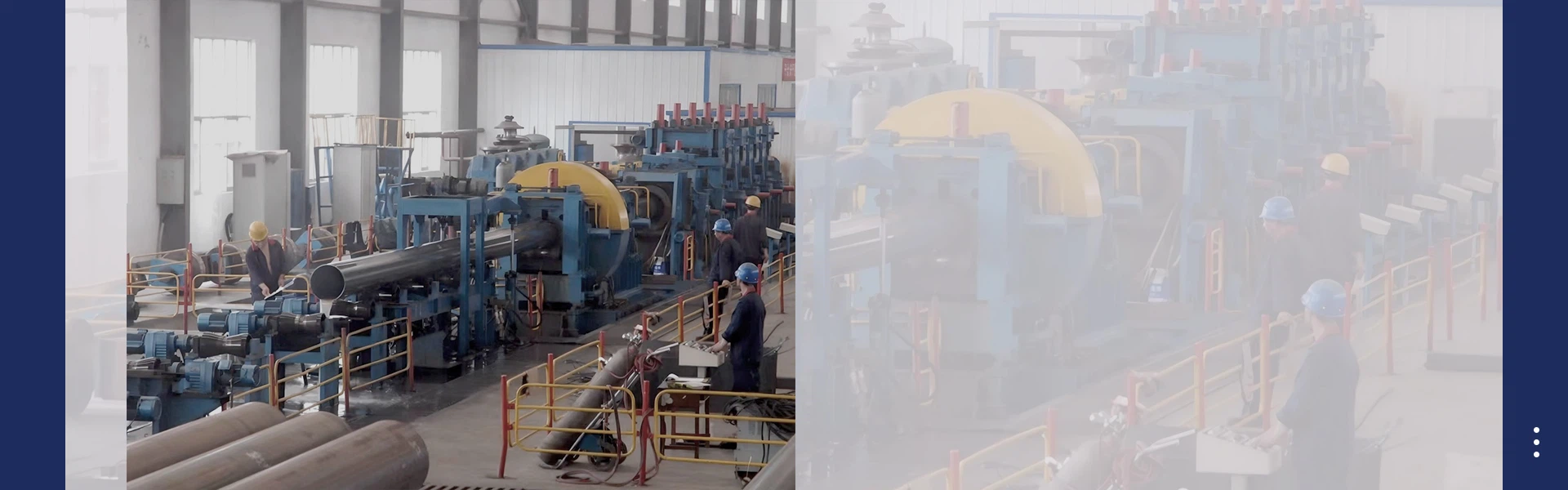
Spiral welded pipe, also known as spiral submerged arc welded pipe, is a specialized steel pipe manufactured by rolling steel strips into a spiral cylindrical shape and adopting automatic submerged arc welding technology for seam welding. With unique structural advantages including uniform stress distribution, large-diameter customization capability, excellent pressure resistance, and cost-effective mass production, spiral welded pipes differ significantly from seamless pipes and straight-seam welded pipes in application scenarios and performance positioning.

Introduction
With the rapid development of global infrastructure construction, energy transmission engineering and industrial manufacturing, high-quality, low-cost and high-adaptability steel pipe materials have become indispensable basic engineering supplies. Spiral welded pipe is a mainstream welded steel pipe product developed based on submerged arc welding technology. Different from straight-seam welded pipes with limited diameter specifications and high-cost seamless steel pipes, spiral welded pipes can realize continuous production of ultra-long and large-diameter pipe bodies by adjusting the rolling angle of steel strips, which breaks through the diameter limitation of traditional steel pipe production. Meanwhile, the spiral weld forms a staggered stress structure on the pipe wall, which enables the pipe body to bear uniform internal and external pressure, effectively avoid local stress concentration, and greatly improve the overall structural stability and pressure-bearing safety of the pipeline.
In practical engineering applications, spiral welded pipes are not only used as conventional fluid transmission pipelines, but also widely applied in structural bearing, foundation piling, special industrial medium transportation and other scenarios. Its comprehensive advantages of flexible specification adjustment, low manufacturing cost, excellent weld compactness and strong environmental adaptability make it replace many traditional steel pipe products in medium and low-pressure large-scale engineering projects. However, restricted by welding seam characteristics and process performance, spiral welded pipes also have obvious application limitations, and are not suitable for high-pressure, ultra-high-precision and special extreme working conditions. This paper will systematically elaborate on the main uses, typical application scenarios, application advantages and selection principles of spiral welded pipes in various fields, so as to clarify the application value and scope of spiral welded pipes in modern engineering.
Basic Structural and Performance Advantages of Spiral Welded Pipes
To accurately grasp the application scenarios of spiral welded pipes, it is necessary to first clarify their unique structural and performance advantages, which are the fundamental reasons for their wide popularization in multiple engineering fields. First of all, spiral welded pipes have excellent pressure-bearing performance. The spiral weld is distributed obliquely along the pipe body, which can disperse the hoop stress and axial stress generated by internal fluid pressure and external load. Compared with straight-seam pipes, the stress distribution is more uniform, and the risk of weld cracking and pipeline bursting is significantly reduced.
Secondly, spiral welded pipes have superior specification flexibility. The production process only needs to adjust the forming angle of the steel strip to produce steel pipes of different diameters with the same width of steel strip, which can realize the customized production of large-diameter and ultra-large-diameter pipelines that are difficult to manufacture by seamless pipes and straight-seam welded pipes. This feature makes it the preferred pipe material for long-distance large-flow fluid transmission projects.
In addition, it has high cost performance and construction adaptability. The continuous rolling and welding production mode greatly improves the production efficiency and reduces the unit manufacturing cost. At the same time, the pipe body has strong rigidity and good straightness, which is convenient for on-site cutting, welding and assembly construction. After anti-corrosion treatments such as outer wall coating and inner wall epoxy coating, it can adapt to humid, buried and marine harsh service environments, with long service life and low later maintenance cost.
Core Application Fields of Spiral Welded Pipes
3.1 Energy Industry: Oil and Gas Medium and Low-Pressure Transmission
The energy transmission industry is the largest and most core application field of spiral welded pipes, mainly used for long-distance transmission of crude oil, refined oil, natural gas and other energy media. In global oil and gas engineering construction, high-pressure main pipelines usually adopt seamless steel pipes, while medium and low-pressure long-distance transmission pipelines, regional branch pipelines and urban gas transmission trunk lines all widely adopt spiral welded pipes.
In long-distance natural gas transmission projects, spiral welded pipes with API standard certification are commonly used. Their uniform pipe wall stress and stable weld quality can effectively resist the internal pressure of natural gas and external geological stress, avoiding pipeline leakage and cracking accidents. For regional oil transmission pipelines and petrochemical product transmission pipelines, spiral welded pipes can adapt to the fluid transmission of viscous crude oil and refined oil due to their large-diameter and large-flow characteristics, improving transmission efficiency and reducing pipeline resistance . Different from small-diameter straight-seam pipes, large-diameter spiral welded pipes can reduce the number of pipeline joints in long-distance laying, effectively reduce the risk of interface leakage and improve the overall safety and stability of energy transmission pipelines.
In addition, spiral welded pipes are also used in auxiliary energy facilities such as power plant gas supply pipelines and thermal power steam transmission auxiliary pipelines, undertaking medium and low-pressure fluid transmission tasks, and providing stable guarantee for the normal operation of energy production and supply systems.
3.2 Municipal Engineering: Urban Water Supply, Drainage and Heating System
Municipal infrastructure is the most extensive civilian application scenario of spiral welded pipes, covering urban water supply trunk pipelines, sewage drainage pipelines, rainwater flood control pipelines and central heating pipelines. Modern urban construction has a huge demand for large-diameter and long-distance buried pipelines. Traditional small-diameter steel pipes and plastic pipes are difficult to meet the requirements of urban large-flow water transmission and large-scale sewage treatment, while spiral welded pipes just make up for this gap.
In urban water supply projects, spiral welded pipes are mostly used as municipal main water supply pipelines and regional water distribution pipelines. After internal anti-corrosion treatment, the pipe body is non-toxic, pollution-free and corrosion-resistant, which meets the drinking water transmission standards. Its large-diameter design can realize high-efficiency water supply in urban areas, effectively solve the problem of insufficient water supply pressure in urban high-rise buildings and remote areas, and ensure the stability of urban domestic water and industrial water supply.
In urban sewage and rainwater engineering, spiral welded pipes have strong compressive resistance and anti-deformation ability, and can resist the pressure of soil layer after buried laying, avoiding pipeline collapse and deformation. At the same time, the smooth inner wall reduces the adhesion of sewage dirt, reduces pipeline blockage, and is convenient for daily cleaning and maintenance. In urban flood control and drainage projects, ultra-large-diameter spiral welded pipes are used to build underground drainage corridors, which can quickly discharge rainwater and prevent urban waterlogging.
Moreover, spiral welded pipes with good thermal insulation performance are widely used in urban central heating systems. After adding thermal insulation layers on the pipe wall, they can reduce heat loss in the process of hot water and steam transmission, improve heating efficiency, and are suitable for long-distance heating transmission in urban communities and industrial parks.
3.3 Water Conservancy Engineering: Water Diversion, Irrigation and Seawater Transmission
Water conservancy engineering is another key application field of spiral welded pipes, including cross-regional long-distance water diversion projects, farmland irrigation projects, reservoir water delivery projects and seawater desalination and transmission projects. Water conservancy projects have the characteristics of long laying distance, complex geological conditions and large water flow demand, which put forward high requirements for pipeline stability and durability, and spiral welded pipes can fully meet the engineering needs.
In cross-basin water diversion projects, large-diameter spiral welded pipes are used as the main water transmission pipelines. Their excellent structural stability can adapt to complex terrain such as mountains, hills and river crossings, and resist geological changes such as foundation settlement and soil displacement. Compared with concrete pipelines, spiral welded pipes have better toughness and seismic performance, and are not easy to crack and damage in complex geological environments, ensuring the long-term stable operation of water diversion projects.
In agricultural irrigation engineering, spiral welded pipes undertake the water transmission tasks of farmland centralized irrigation and water conservancy facilities. The pipelines have strong corrosion resistance and can adapt to outdoor open-air laying and humid soil burial environments, with long service life and low maintenance cost, which is suitable for large-scale agricultural water conservancy construction . In addition, in seawater desalination and coastal water transmission projects, spiral welded pipes after special anti-corrosion treatment can resist seawater salt erosion and marine atmospheric corrosion, and are widely used in coastal city seawater transmission and industrial cooling water transmission projects.
3.4 Structural Engineering: Foundation Piling and Building Support
Different from the conventional fluid transmission function, spiral welded pipes also have important structural bearing functions, and are widely used in foundation piling and structural support of bridges, docks, high-rise buildings and marine engineering. This is a unique application advantage of spiral welded pipes compared with other steel pipes.
In bridge and municipal infrastructure construction, spiral welded pipes are used as bridge foundation pipe piles and pier support structures. The spiral pipe body has high overall rigidity and strong vertical and lateral load-bearing capacity, which can disperse the upper structural load and improve the stability of the bridge foundation. Especially in soft soil foundation and river crossing bridge projects, spiral welded pipe piles can effectively resist foundation settlement and water flow impact, ensuring the structural safety of long-term bridge operation.
In port and marine engineering construction, spiral welded pipes are made into marine pipe piles and dock guard piles. After anti-corrosion treatment such as cathodic protection and coating, they can resist wave impact, seawater erosion and tidal alternating load, and are used for the foundation support of port wharves, offshore platforms and breakwater structures. Their excellent toughness and impact resistance make them adapt to harsh marine working conditions and become the preferred structural pipe material for marine infrastructure.
In high-rise building and steel structure engineering, spiral welded pipes are used as building support columns, steel frame beams and foundation bearing pipes. The circular pipe structure has uniform stress, strong compression and torsion resistance, which can improve the overall stability and seismic performance of the building structure, and is widely used in large stadiums, industrial workshops and high-rise steel structure buildings.
3.5 Industrial Production: Chemical, Electric Power and Mining Medium Transmission
In industrial production fields such as chemical industry, electric power and mining, spiral welded pipes undertake the transmission of various industrial media and auxiliary fluid tasks. In the chemical industry, anti-corrosion spiral welded pipes are used to transmit conventional chemical raw materials, industrial wastewater and chemical reaction auxiliary fluids. Through special inner wall anti-corrosion treatment, they can resist the erosion of weak acid, weak alkali and salt media, and meet the fluid transmission needs of chemical production.
In the power industry, spiral welded pipes are widely used in power plant circulating water systems, cooling water transmission pipelines, desulfurization and denitrification flue gas pipelines and auxiliary water supply and drainage pipelines. The large-diameter pipeline design meets the high-flow circulating water demand of thermal power plants, and the stable pipe body structure adapts to the long-term continuous operation of power equipment, ensuring the normal cooling and flue gas treatment work of power plants.
In mining engineering, spiral welded pipes are used for mine water drainage, ventilation auxiliary pipelines and mineral aggregate slurry transmission. The pipe body has strong wear resistance and pressure resistance, which can adapt to the complex underground mining environment, effectively discharge mine sewage and accumulated water, and transport mining slurry, providing guarantee for safe mining operation.
Application Limitations and Selection Principles of Spiral Welded Pipes
Although spiral welded pipes have a wide range of application scenarios, they are not suitable for all engineering working conditions due to the existence of spiral welds. In high-pressure, ultra-high-temperature and high-precision industrial transmission projects such as petrochemical high-pressure reaction pipelines and aerospace fluid pipelines, seamless steel pipes with no weld seam and higher pressure resistance need to be selected instead of spiral welded pipes. In addition, spiral welded pipes are not suitable for small-diameter and ultra-thin-wall precision pipeline projects due to the limitation of welding process.
In engineering selection, the following principles should be followed: First, for medium and low-pressure, large-diameter and long-distance fluid transmission projects, priority should be given to spiral welded pipes to ensure cost performance and structural stability; second, for structural piling and bearing projects, spiral welded pipes with qualified wall thickness and weld quality should be selected according to the load demand; third, for corrosive working environments such as seawater and chemical media, anti-corrosion treated spiral welded pipes must be used to avoid pipeline corrosion and failure; fourth, high-pressure precision transmission projects should avoid using spiral welded pipes to eliminate welding seam safety risks.
Development Trend and Expanded Application Prospects
With the continuous progress of welding technology and anti-corrosion technology, the performance of spiral welded pipes is constantly optimized, and their application fields are further expanded. In recent years, high-precision low-hydrogen welding technology and automatic flaw detection technology have greatly improved the welding quality of spiral welds, gradually enabling them to be applied in some medium-high pressure energy transmission projects . At the same time, the emergence of new anti-corrosion materials and composite processing technology has improved the corrosion resistance and wear resistance of spiral welded pipes, making them more adaptable to extreme working conditions such as deep sea and harsh chemical environments.
In the future, with the vigorous development of new infrastructure, sponge city construction, cross-regional water conservancy projects and offshore wind power engineering, spiral welded pipes will be more widely used in urban smart drainage, new energy supporting pipelines, offshore engineering foundation piling and other fields. Customized high-performance spiral welded pipes will become the mainstream development direction, further replacing traditional pipe materials and promoting the high-quality development of engineering construction.
Spiral welded pipe is a versatile engineering steel pipe material with unique structural advantages and excellent comprehensive performance. Its core uses cover six major fields: medium and low-pressure energy transmission, municipal water supply and drainage, water conservancy water diversion and irrigation, building and marine structural piling, chemical and electric power industrial medium transmission, and mining engineering auxiliary pipelines. Different from other steel pipe products, its greatest application characteristics are large-diameter customization, uniform stress distribution and high cost performance, which make it irreplaceable in large-scale, long-distance and medium-low load engineering projects.
In practical engineering applications, scientific selection must be carried out according to working condition parameters such as pipeline pressure, service environment, medium characteristics and load demand, making full use of the performance advantages of spiral welded pipes and avoiding application limitations. With the continuous innovation of manufacturing and processing technology, spiral welded pipes will further expand their application boundaries in modern infrastructure, energy engineering and marine engineering, and play a more important role in global engineering construction and industrial development.