
In the modern metal manufacturing industry, efficiency, precision, and consistency are the core benchmarks of production quality. Among all metal processing equipment, the roll forming machine stands out as a foundational and highly efficient continuous forming device, widely applied in construction, automotive manufacturing, new energy, logistics, and infrastructure engineering. For professionals and beginners in the manufacturing field, comprehensively understanding what a roll forming machine is, how it operates, and its industrial value is essential for grasping modern metal profile processing technology.
1. Basic Definition of Roll Forming Machine
A roll forming machine is a specialized automated industrial equipment designed for continuous cold bending forming of metal materials. It processes flat metal coils or strips made of steel, aluminum, copper, and alloy metals into customized fixed cross-sectional profiles through multiple groups of precision-arranged roller stations. Different from traditional stamping, bending, and one-time pressing forming processes, the core feature of roll forming is incremental gradual deformation. Each roller station only applies a small amount of bending force to the metal material, and the flat raw material completes the overall shape transition through dozens of repeated and orderly small deformations, finally forming standardized metal profiles with stable dimensions and smooth surfaces.
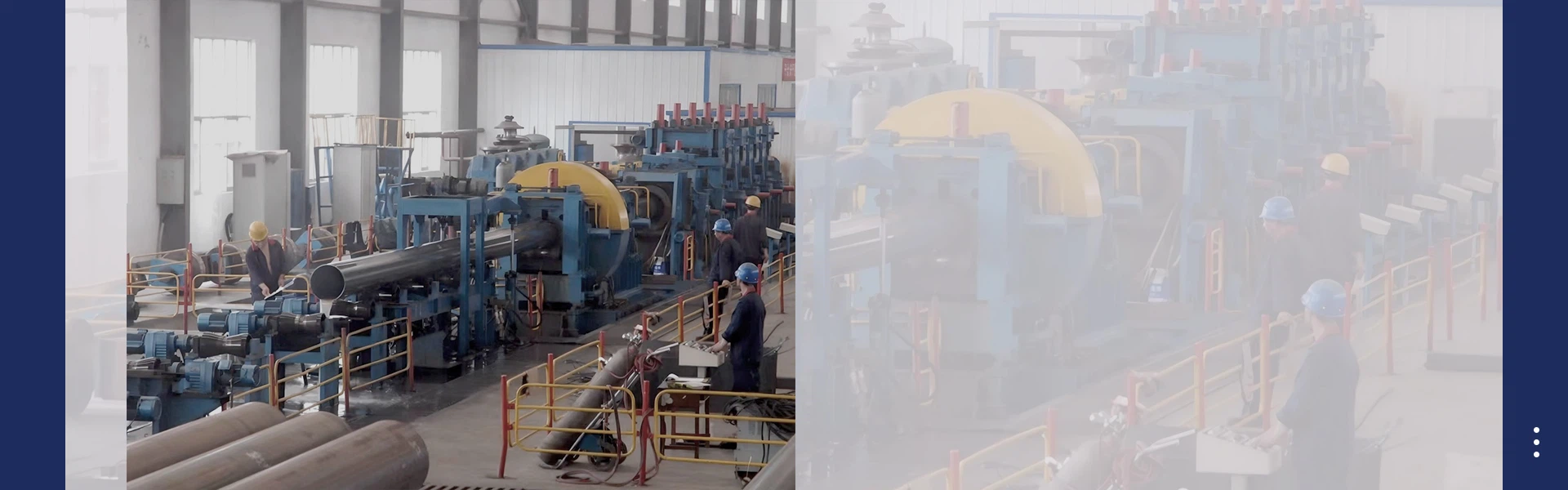
The entire production process of the roll forming machine is continuous and uninterrupted. The raw material enters the equipment in the form of coiled metal, and undergoes feeding, leveling, forming, punching, cutting, and discharging in one go. It can produce ultra-long metal profiles that cannot be processed by traditional batch processing equipment. As a core equipment of cold roll forming technology, it has become the preferred production device for medium and large-batch metal profile manufacturing due to its high automation, low loss, and high consistency.
2. Working Principle of Roll Forming Machine
The working logic of the roll forming machine follows the basic mechanical principle of metal plastic deformation. Metal materials have stable plastic deformation characteristics at room temperature. Under the continuous extrusion and guidance of paired upper and lower rollers, the internal stress of the metal reaches the yield limit, resulting in permanent shape changes without damage to the material structure. The whole forming process can be divided into four core stages, with clear division of labor and seamless connection.
First is the feeding and leveling stage. The uncoiler at the front end of the equipment releases the coiled metal raw materials, and the conveying device sends the metal strip into the leveling mechanism. Long-term coiled metal will produce bending and deformation stress. The leveling roller group flattens the uneven strip to ensure the flatness and straightness of the raw materials entering the forming stage, eliminating the dimensional errors caused by raw material deformation.
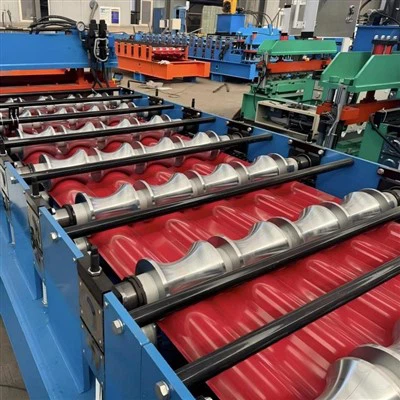
Second is the core gradual forming stage. The flattened metal strip enters the sequentially arranged forming roller stations. Each group of rollers is designed with exclusive contour curves according to the target profile. From the first station to the last forming station, the bending angle and deformation range of the metal increase step by step. For example, when producing C-shaped steel purlins, the metal strip is first bent into a flat arc, then gradually folded into a right-angle structure, and finally formed into a complete C-shaped section. This incremental deformation method effectively avoids metal cracking, surface scratches and internal stress concentration caused by one-time strong extrusion.
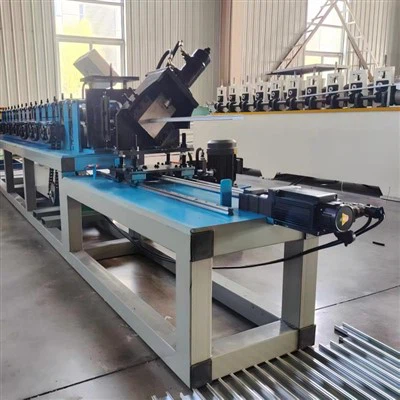
Third is the auxiliary processing stage. According to production demands, the equipment can be equipped with integrated punching, notching, embossing and flattening devices. While forming the profile, it completes hole opening and pattern processing on the metal surface, realizing one-time forming of finished products and avoiding secondary processing procedures. This integrated processing mode greatly improves production efficiency and product matching accuracy.
Fourth is the fixed-length cutting and discharging stage. After the metal profile is completely formed and sized, the high-precision cutting system automatically cuts the profile according to the preset length. Most modern roll forming machines adopt fly-cutting technology, which can complete cutting without stopping the equipment, realizing continuous production without interruption. Finally, the finished products are transported to the discharge table for automatic stacking and collection.
3. Core Structural Composition of Roll Forming Machine
A complete automated roll forming production line is composed of multiple functional systems, each of which coordinates and restricts each other to ensure stable operation and high-precision production. The core components include the uncoiling system, leveling system, forming host system, auxiliary processing system, cutting system, electrical control system and discharging system.
The uncoiling system is the feeding part of the equipment, mainly including the uncoiler and tension controller. It is responsible for stably releasing metal coils and controlling the feeding speed and tension to prevent material deviation and loose winding. It is suitable for metal coils of different weights and widths, with strong compatibility.
The leveling system consists of multiple upper and lower staggered leveling rollers, which is responsible for correcting the flatness of the metal strip. It can eliminate the internal residual stress of the coiled material and ensure that the material enters the forming station in a flat state, which is the key premise to ensure the dimensional accuracy of finished products.
The forming host system is the heart of the entire equipment, composed of dozens of forming stations, roller shafts, and precision bearings. The number of stations is determined by the complexity of the target profile. The more complex the profile structure, the more forming stations are needed to ensure gradual and stable forming. The rollers are made of high-strength wear-resistant alloy steel with fine polishing treatment, which can ensure the smoothness of the metal surface and extend the service life of the equipment.
The auxiliary processing system includes punching devices, pressing devices and correction devices. The punching device can complete precise hole position processing according to product drawings; the correction device can monitor the straightness and symmetry of the profile in real time during the forming process and fine-tune the roller parameters to avoid product deformation and deviation.
The cutting system is divided into stop cutting and fly cutting. Fly cutting is the mainstream configuration of modern high-speed roll forming machines. It tracks the running speed of the profile in real time through the servo system, synchronizes the cutting action, and realizes non-stop cutting, which greatly improves production efficiency. The cutting blade is made of high-hardness materials to ensure smooth and burr-free cutting sections.
The electrical control system is the brain of the equipment, adopting PLC intelligent programming control. Workers can set parameters such as product size, cutting length, and production speed through the touch screen. The system automatically adjusts the operation of each component, realizes full-automatic unmanned production, and has automatic alarm and fault detection functions to ensure production safety.
4. Main Classification of Roll Forming Machines
Roll forming machines have diverse types and can be classified according to processing materials, product types, production speed and automation level, covering almost all metal profile production scenarios in the industry.
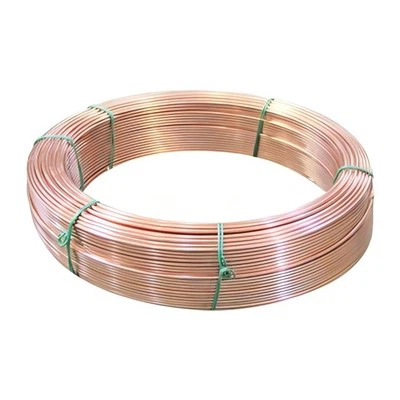
According to processing materials, they are divided into steel roll forming machines, aluminum alloy roll forming machines, copper strip roll forming machines and stainless steel roll forming machines. Different materials have different hardness and ductility, so the equipment is equipped with different roller hardness, extrusion pressure and forming speed parameters to adapt to the plastic deformation characteristics of different metals.
According to finished product types, they can be divided into building material roll forming machines, industrial profile roll forming machines and special-shaped profile roll forming machines. Building material equipment is used to produce roof panels, wall panels, floor bearing plates, C/Z purlins, etc.; industrial profile equipment produces cable trays, guide rails, solar support profiles, automobile body profiles; special-shaped equipment is customized for non-standard complex profiles to meet personalized industrial production needs.
According to automation level, they are divided into semi-automatic and full-automatic roll forming machines. Semi-automatic equipment requires manual auxiliary feeding and discharging, which is suitable for small-batch and multi-variety production; full-automatic production lines realize unmanned operation from feeding to finished product stacking, suitable for large-batch and standardized mass production with high production efficiency.
5. Core Advantages of Roll Forming Technology
Compared with traditional metal forming processes such as stamping, bending and welding, roll forming machines have irreplaceable technical and production advantages, which are the key reasons for their wide popularity in the manufacturing industry.
First, high production efficiency and continuous production. The roll forming machine realizes uninterrupted continuous processing. The production speed can reach 10-30 meters per minute according to different products, which is several times or even dozens of times higher than traditional batch processing equipment. It can realize long-term uninterrupted production and greatly shorten the production cycle of orders.
Second, high product precision and good consistency. The whole process is controlled by intelligent programs and formed by precise roller positioning. The dimensional error of the finished profile is controlled within ±0.5mm, and the symmetry, straightness and surface flatness of the product are highly unified. It avoids the dimensional deviation and unstable quality caused by manual operation and one-time deformation of traditional processes.
Third, low material loss and cost saving. The gradual cold forming process will not cause material tearing, damage and excessive extrusion deformation. The material utilization rate is as high as 98% or more, which is much higher than the 80%-85% utilization rate of stamping process. In addition, the integrated processing reduces secondary processing procedures, saves labor costs and processing costs, and effectively reduces the overall production cost of enterprises.
Fourth, strong product adaptability and flexible customization. By replacing different roller molds and adjusting equipment parameters, the same equipment can produce profiles of different specifications and shapes. It can meet the standardized production of conventional products and the personalized customization of special-shaped products, with strong production flexibility and wide application coverage.
Fifth, stable material performance and good product durability. Cold roll forming completes deformation at room temperature, which will not damage the internal metal crystal structure, nor produce thermal deformation and oxidation defects. The formed profile has uniform internal stress, high structural strength, good toughness and corrosion resistance, and the service life of the product is significantly improved.
6. Wide Application Scenarios of Roll Forming Machines
With the continuous upgrading of roll forming technology, its application fields are becoming more and more extensive, covering construction engineering, automobile manufacturing, new energy industry, logistics storage, electrical equipment and other fields, becoming an indispensable core equipment in modern manufacturing.
In the construction industry, it is the most widely used field of roll forming machines. The equipment can produce color steel roof panels, wall insulation panels, steel structure purlins, floor bearing plates, guardrail profiles, and keel profiles for architectural decoration. These profiles have light weight, high strength and good weather resistance, and are widely used in factory buildings, warehouses, stadiums, residential buildings and other construction projects, realizing the standardized and rapid construction of steel structure buildings.
In the automobile manufacturing industry, roll forming machines are used to produce automobile body profiles, door frames, window frames, chassis support parts, and interior and exterior decorative metal parts. The high-precision forming characteristics ensure the fitting accuracy of automobile parts, and the lightweight metal profiles help reduce automobile energy consumption and improve driving stability.
In the new energy industry, it provides core profile processing for solar photovoltaic power generation and wind power generation. It can produce solar panel support profiles, photovoltaic bracket guide rails, wind power equipment shell profiles, etc. The high-precision and high-strength characteristics of roll-formed profiles adapt to the outdoor harsh working environment of new energy equipment and ensure the stable operation of power generation equipment for a long time.
In the electrical and logistics industry, roll forming machines produce cable tray profiles, electrical cabinet frames, storage shelf beams, and logistics equipment guide rails. The standardized profiles ensure the assembly accuracy of electrical equipment and storage facilities, and improve the structural stability and service life of industrial facilities.
7. Development Trend of Modern Roll Forming Machines
With the rapid development of industrial intelligence and manufacturing upgrading, roll forming machine technology is also constantly iterating and evolving, showing the development trends of intelligence, high speed, precision, energy saving and multi-function integration.
Intelligent upgrading is the core development direction. Modern roll forming machines are gradually equipped with intelligent monitoring systems, which can monitor equipment operation status, product dimensional accuracy, and production data in real time. Through big data analysis, they automatically adjust operating parameters, realize fault early warning and unmanned intelligent production, and greatly improve production automation and management efficiency.
High-speed and high-precision optimization. With the improvement of industrial product precision requirements, the new generation of roll forming machines adopts high-precision servo transmission systems and imported precision roller components, which further improve production speed and forming accuracy, and can meet the ultra-high precision processing needs of aerospace, high-end automobile and other fields.
Energy saving and environmental protection design. Traditional processing equipment has high energy consumption and large noise. Modern roll forming machines adopt optimized transmission structure and frequency conversion energy-saving technology, which reduces equipment energy consumption and operating noise. At the same time, the high material utilization rate reduces waste discharge, meeting the development requirements of green manufacturing.
Multi-functional integrated development. The new generation of equipment integrates forming, punching, welding, cutting, embossing and other processes, realizing one-time forming of complex products, eliminating multiple handling and processing links, further improving production efficiency and product quality stability, and adapting to the diversified and personalized production needs of the modern manufacturing industry.

In word, a roll forming machine is a high-efficiency, high-precision and low-consumption continuous metal cold forming equipment. It realizes the batch standardized production of metal profiles through unique incremental deformation principle and integrated automated production mode. Compared with traditional metal processing technology, it has obvious advantages in production efficiency, product quality, material utilization rate and production cost. Widely used in construction, automobile, new energy, electrical and other industrial fields, it provides important equipment support for the standardized and intelligent upgrading of modern metal manufacturing industry.
With the continuous progress of industrial technology, roll forming machine technology will continue to innovate and break through. Intelligent control, high-precision processing and multi-functional integration will become the mainstream of the industry. In the future, roll forming machines will play a more important role in high-end manufacturing and emerging industries, and become an indispensable core equipment promoting the high-quality development of the global metal processing industry.