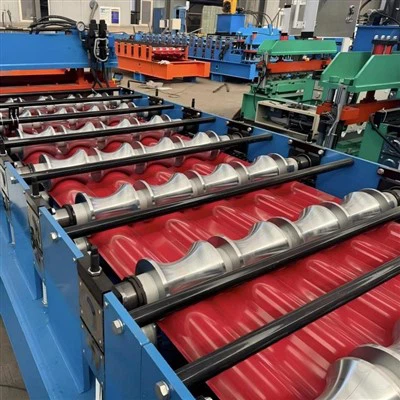
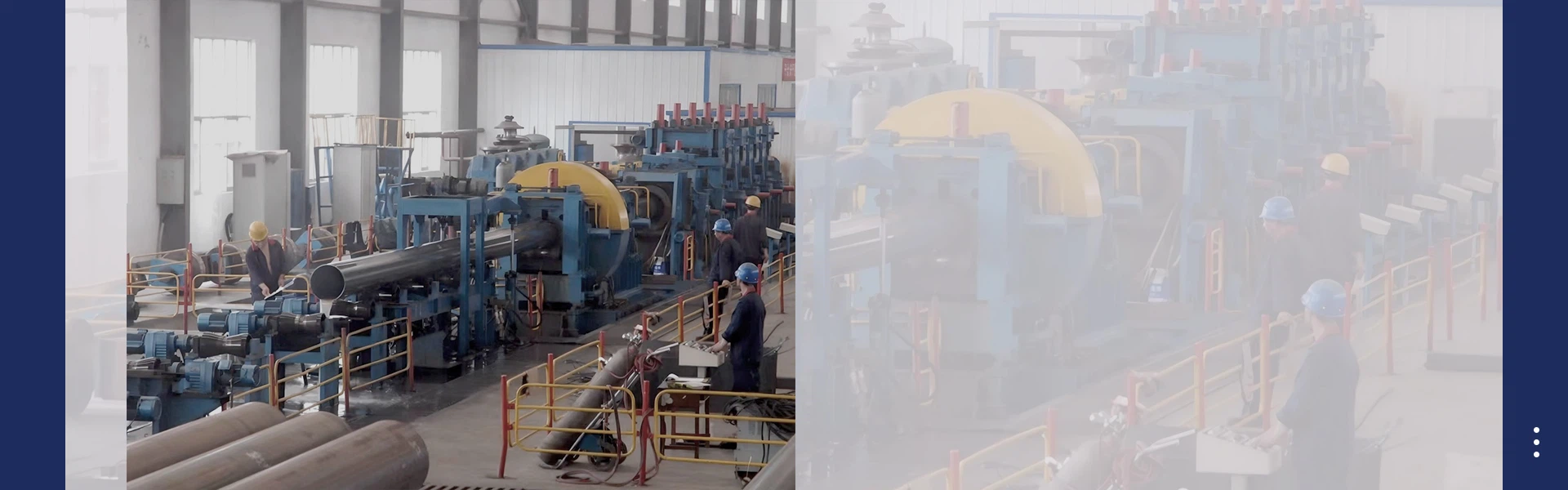
Welded steel pipes are indispensable materials in modern industrial infrastructure, widely used in oil and gas transportation, municipal water projects, bridge engineering, marine projects, and wind power facility construction, among others.
According to different welding and forming methods, welded steel pipes are mainly divided into straight seam welded steel pipes and spiral welded steel pipes. Among them, straight seam welded steel pipes include resistance welding (ERW) steel pipes and longitudinal submerged arc welding (LSAW) steel pipes. The welds of this type of steel pipe are longitudinal welds that are straight along the pipe body. In contrast, spiral welded steel pipes (SSAW) adopt continuous spiral forming and submerged arc welding technology, forming spiral-shaped welds that are inclined on the surface of the pipe body.
Although both types of steel pipes are manufactured through sheet forming and welding processes and can meet the requirements of fluid transportation and structural load-bearing, they have fundamental differences in forming principles, weld distribution, production processes, mechanical stress characteristics, size performance, and applicable working conditions. In actual engineering and material procurement, it is very important to distinguish the essential differences between straight seam weld and spiral weld, which helps to avoid incorrect selection and the resulting operational risks.
Basic Definition and Forming Principle Differences
1. Principle of longitudinal seam welding
Straight seam welding refers to a welding process where a continuous straight weld seam is formed along the longitudinal direction of the steel pipe. The raw material for straight seam steel pipes is a fixed-width steel plate or steel strip. During the production of steel pipes, flat steel is bent and rolled into cylindrical pipe blanks through multiple forming rollers. The two parallel edges of the steel strip are aligned along the longitudinal direction of the pipe body, and then the gap is welded and fused to form a neat longitudinal straight seam. For medium and small diameter straight seam pipes, high-frequency resistance welding (ERW) is used, where the steel strip edges are heated by high-frequency current to achieve instantaneous extrusion and melting, without the need for filler metal. For large diameter thick-walled straight seam pipes, longitudinal submerged arc welding (LSAW) is used, using welding wire and flux for penetration welding. Regardless of which process is used, the weld seam extends along the entire length of the pipe body.

2. Spiral Welding Principle
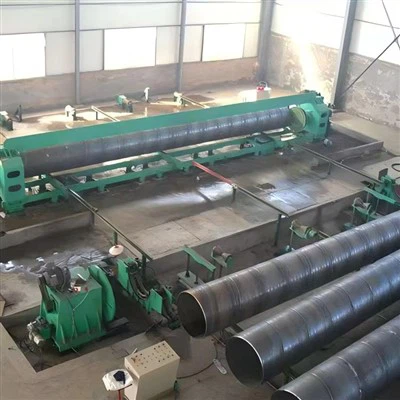
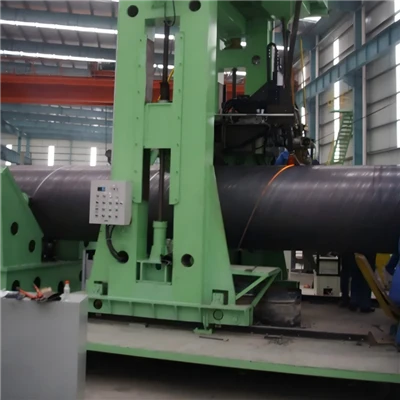
Spiral welding is a special pipe manufacturing process that combines inclined continuous forming and submerged arc welding. Unlike the straight bending of straight seam steel pipes, the steel strip is fed into the forming device at a fixed angle and is continuously rolled into a cylindrical tube blank through spiral rolling, creating uniform spiral gaps. Subsequently, the submerged arc welding system performs continuous welding along the spiral path, ultimately forming a smooth and dense spiral weld. The spiral welds are inclined at a certain angle and the weld length exceeds the length of the pipe. The core principle of spiral welding is to process a fixed-width steel strip into steel pipes of different diameters by adjusting the angle, achieving flexible diameter production that cannot be achieved by straight seam welding.
Differences in Manufacturing Processes
1. Straight seam welding process
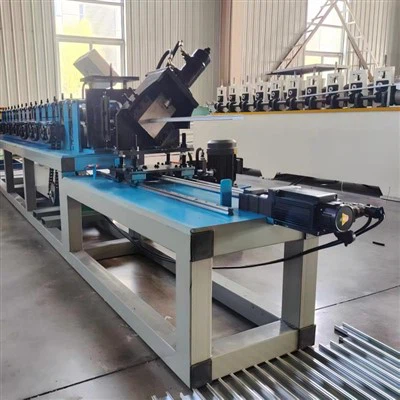
The production process of straight seam pipes is simple and highly automated. The entire process includes unwinding of steel coils, flattening, edge trimming, straightening, longitudinal weld welding, weld finishing, cooling, sizing, straightening and length-cutting. ERW straight seam pipes are welded using high-frequency resistance heating, featuring fast welding speed and high production efficiency. LSAW straight seam pipes use thick steel plate forming and multiple passes of submerged arc welding, with strict control over the slot accuracy and penetration depth. The forming parameters of the straight seam production line are fixed, the forming is stable, and the dimensional accuracy is high. However, its production flexibility is limited. Each steel strip width corresponds to only one pipe diameter, so the production range of ultra-large diameter pipes is limited by the width of the steel strip.
2. Spiral welding process
The spiral welding process employs continuous dynamic spiral forming and double-sided submerged arc welding. Its process flow includes unwinding, strip straightening, precise end face milling, adjustable-angle spiral forming, double-sided submerged arc welding on both the inside and outside, weld seam polishing, circulation cooling, size correction, fly-cutting, and full weld seam non-destructive testing. The most prominent feature of this process is the adjustable forming angle. By changing the feed angle of the steel strip, manufacturers can produce pipes with different outer diameters using the same raw material, significantly enhancing production flexibility. The entire production process is continuous and uninterrupted, suitable for large-scale production of large-diameter, medium-thick-walled pipes. However, the spiral forming and welding system has high requirements for parameter matching, and precise control of the forming angle, welding speed, current, and voltage is necessary to avoid weld offset and forming deformation.
Structural Differences
1. Welding structure characteristics
For straight seam welded pipes, there is only one longitudinal weld seam in the overall structure, with a short weld path and a straight line. The microstructure of the weld is stable. The heat affected zone is concentrated and narrow, and the overall structural uniformity of the pipe body is good. For spiral welded pipes, continuous spiral-shaped weld seams are adopted. Compared with straight seam pipes of the same specification, the weld seam length is longer. The longer weld seam increases the overall welding area and theoretically also increases the possibility of existing welding defects. However, the continuous spiral weld seam avoids local weld joint gaps. In addition, the spiral weld seam has the characteristics of overlap and continuity, thereby enhancing the overall structural integrity of the pipe body.
Dimension accuracy and production flexibility
The straight seam welded pipe has better dimension accuracy and surface quality. The forming process is stable, with small tolerances for outer diameter, wall thickness and roundness, smooth inner and outer walls, and uniform straightness. Standardized forming parameters make the straight seam pipe more suitable for precise installation and high-matching requirement pipeline projects. However, the disadvantage is that the production flexibility is poor, limited by the width of the steel strip, and it cannot be flexibly switched in pipe diameters during the production process. In contrast, the spiral welded pipe has slightly lower dimension accuracy than the straight seam pipe, with smaller ellipticity tolerance, but has extremely high production flexibility. By adjusting the spiral angle, a single specification of steel strip can produce dozens of different pipe diameters specifications, significantly reducing mold costs and shortening the production cycle for custom large-diameter pipes.
Technical Advantages and Limitations
1. Advantages and Disadvantages of Straight Seam Welding
Straight seam welding has the advantages of fast welding speed, high production efficiency, high product qualification rate, regular weld formation, narrow heat affected zone, and stable mechanical properties. It is mainly applied in the production process of medium-sized diameter, thin-walled and medium-thick-walled pipe materials. The fewer welds can reduce the probability of defect occurrence and facilitate comprehensive inspection and maintenance. Its main disadvantages lie in poor flexibility, limited production capacity for large diameters, and weak stress dispersion ability. Under ultra-high pressure and load change conditions, straight seam welding is more prone to stress concentration failure.
2. Advantages and Disadvantages of Spiral Welds
The core advantages of spiral welding lie in its ability to flexibly adjust the diameter, excellent stress dispersion performance, strong manufacturing capability for large-diameter pipelines, and high structural safety. Spiral welds can effectively inhibit crack propagation and are suitable for long-distance high-pressure transportation. The main disadvantages are longer welding time, lower single-machine production efficiency, higher risk of minor defects as the weld length increases, and slightly lower dimensional accuracy.
Differences in industrial application
Due to their distinct performance characteristics, straight seam welded pipes and spiral welded pipes have established clear boundaries of application in industrial engineering. Straight seam welded pipes are widely used in urban water supply and drainage, fire protection pipelines, building structural pipe piles, low-pressure gas transportation, and mechanical equipment supporting pipelines. Due to their high dimensional accuracy and stable welding quality, high-grade ERW and LSAW straight seam pipes are also suitable for short-distance high-pressure pipeline projects. While spiral welded pipes are mainly used for cross-regional oil and gas trunk pipelines, municipal large-diameter water transmission pipelines, marine engineering pipe piles, wind power infrastructure, and hydraulic pressure pipelines, which are long-distance transportation projects.
The core difference between straight seam welding and spiral welding lies in different forming trajectories, weld distribution patterns, etc. Straight seam welding features linear welds, high dimensional accuracy, high production efficiency, and a simple structure, and is suitable for standardized, medium to small diameter, and high-precision pipeline projects. Spiral welding employs inclined spiral welds and can flexibly adjust the diameter. It is indispensable in the construction of large-diameter, long-distance, and high-pressure pipelines. Neither of the two welding processes has absolute superiority or inferiority. Their application value depends on actual engineering conditions, pressure levels, pipe diameter specifications, and cost budgets. With the continuous upgrading of welding automation and intelligent detection technologies, the performance gap between the two is gradually narrowing. In the future, the refined and differentiated application of straight seam welding and spiral welding technologies will further promote the high-quality development of the steel pipe manufacturing and pipeline engineering industries.