Seamless pipe and electric resistance welded (ERW) pipe are the two most widely used categories of carbon steel pipe across global industry, municipal engineering and construction. For decades, there has been a persistent assumption that seamless pipe is inherently superior simply because it has no weld seam. In reality, the two products are manufactured by fundamentally different processes, each with its own set of strengths, limitations and optimal application ranges.
Seamless pipe is valued for its monolithic structure and high pressure-bearing reliability, while ERW pipe stands out for its precise dimensions, smooth surface, high production efficiency and competitive cost. With the advancement of modern welding technology, online heat treatment and full-coverage non-destructive testing, the performance gap between high-grade ERW pipe and seamless pipe has narrowed significantly in medium-pressure scenarios.
Fundamental Differences in Manufacturing Process
The performance difference between seamless and ERW pipe originates first and foremost from their completely different forming processes, which determine their inherent structural characteristics.
1.1 Seamless Steel Pipe
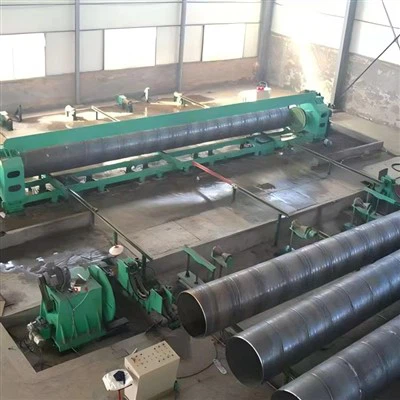
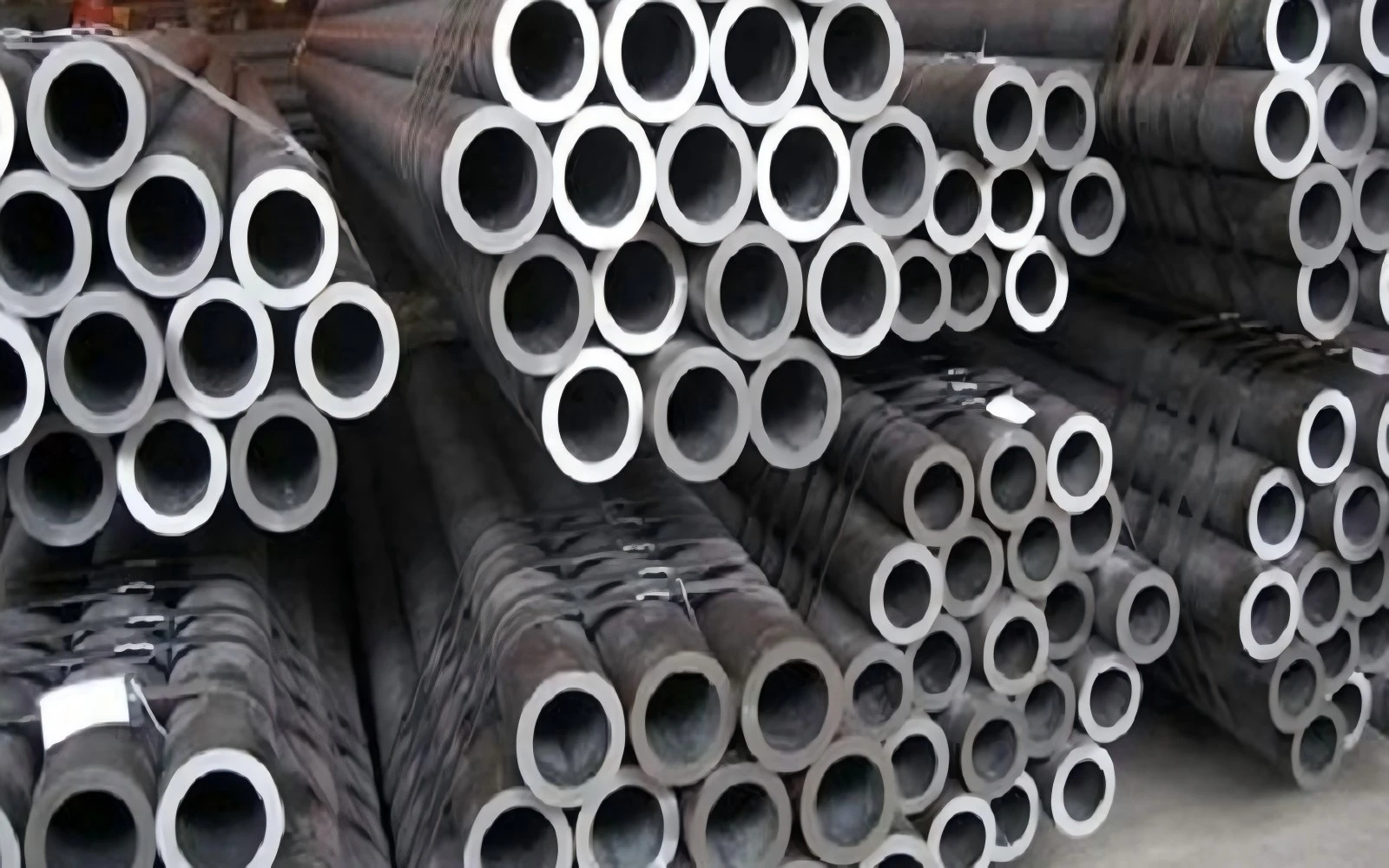
Seamless pipe is produced from solid round steel billets through hot piercing and subsequent rolling or drawing, with no longitudinal or spiral weld along the pipe body. The typical process begins with heating a solid carbon or alloy steel billet to around 1200°C, then piercing it with a conical mandrel to create a hollow shell. The hollow shell is then elongated and reduced through multiple hot-rolling stands until it reaches the required outer diameter and wall thickness. For higher-precision applications, the hot-rolled pipe may further undergo cold drawing or cold rolling to achieve tighter dimensional tolerances and a smoother surface finish.
Because the entire pipe body is formed from a single piece of steel, there is no welded joint - the structure is continuous and homogeneous around the full circumference. This absence of a weld is the defining characteristic of seamless pipe and the source of its reputation for reliability under extreme conditions.
1.2 ERW Steel Pipe
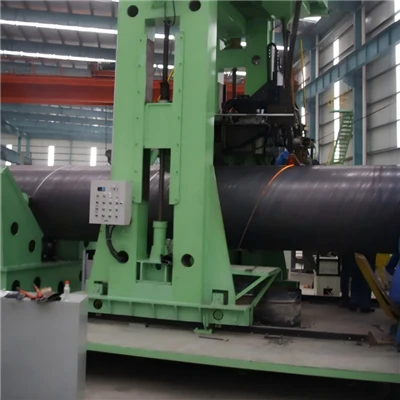
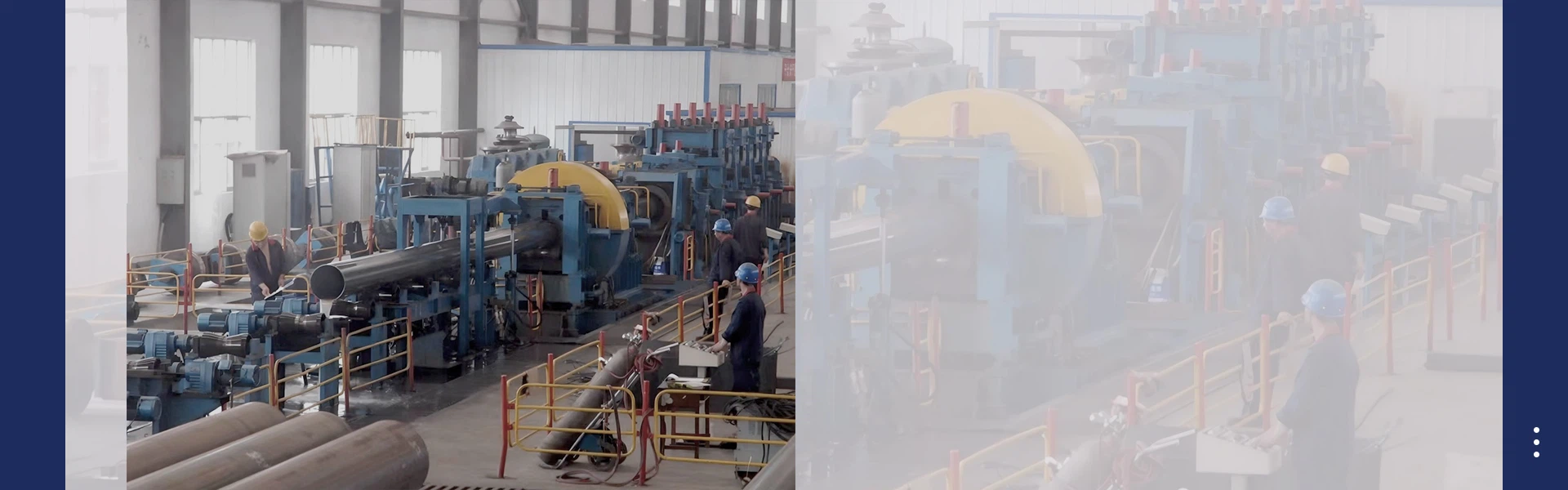
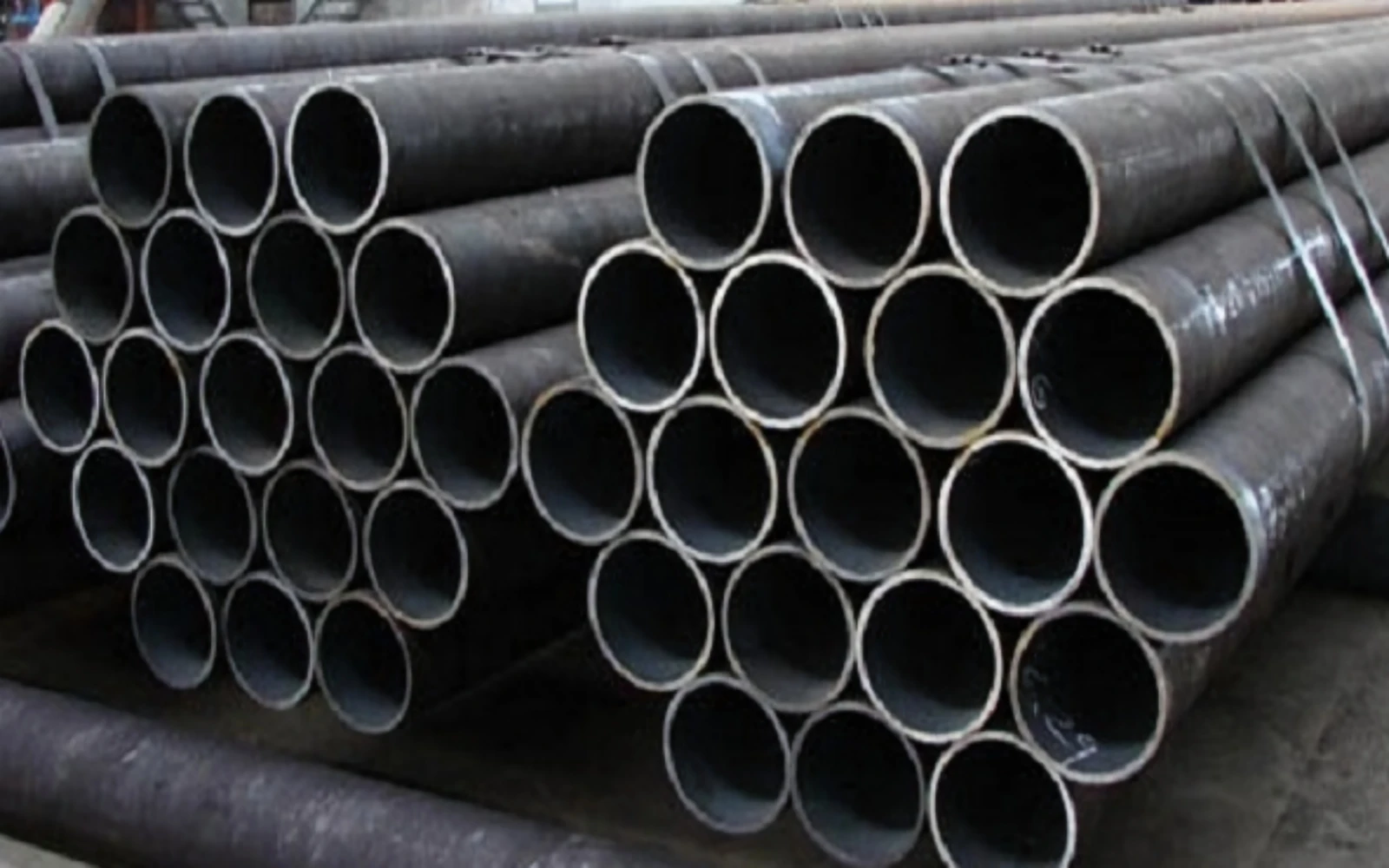
ERW pipe is manufactured by cold-forming a flat steel strip into a cylindrical shape, then joining the two abutting edges by high-frequency electric resistance welding. The steel strip is gradually bent into a round tube through a series of forming rollers, and high-frequency current is induced at the strip edges to generate resistance heat that melts the mating surfaces. The edges are then pressed together by squeeze rollers to form a solid-state weld bead. Modern high-end ERW lines include online normalizing heat treatment of the weld zone, internal and external weld seam flattening, and full-length ultrasonic or eddy-current testing.
Head-to-Head Performance Comparison
2.1 Pressure Rating and Structural Integrity
In terms of pressure-bearing capacity and structural reliability under extreme conditions, seamless pipe holds a clear inherent advantage. Because it has no weld seam, there is no potential weak plane where failure could initiate. The material properties are uniform in all directions, and the pipe can withstand high internal pressure, thermal cycling and mechanical shock without risk of weld rupture. For this reason, seamless pipe is specified for high-pressure oil and gas transmission lines, boiler tubes, heat exchanger tubes and hydraulic power systems where failure would have severe safety consequences.
ERW pipe, by contrast, has a longitudinal weld that is theoretically the weakest point of the pipe body. Although modern heat-treated ERW welds match base-metal strength very closely, design codes still apply a weld joint efficiency factor - typically 0.85 to 1.0 depending on standard and inspection level - which reduces the allowable design pressure compared with seamless pipe of the same grade and wall thickness. For medium and low pressure applications, this difference is negligible and ERW performs perfectly safely, but for high-pressure, high-temperature or high-hazard service, seamless pipe remains the conservative and preferred choice.
2.2 Dimensional Accuracy and Surface Quality
On dimensional precision and surface finish, ERW pipe is generally superior to seamless pipe. Because it is formed from precisely gauged steel strip and calibrated through sizing rollers, ERW pipe has tighter tolerances on outer diameter, wall thickness and roundness. Typical outer diameter tolerance for ERW pipe is within ±0.5%, compared with ±1% or more for hot-rolled seamless pipe. Wall thickness uniformity is also better, with far less eccentricity.
The inner and outer surfaces of ERW pipe are smoother and more uniform. After weld seam flattening, the internal surface has no protruding weld bead, which reduces flow resistance in fluid transmission applications and makes subsequent coating, galvanizing or painting more uniform. Seamless pipe, produced by hot piercing and rolling, tends to have a rougher internal surface, minor dimensional variations and occasional surface scale or imperfections. For applications where precise fit-up, low friction loss or high-quality surface finishing are important - such as mechanical structural parts, furniture tubing and pre-galvanized pipe - ERW is often the better option.
2.3 Cost Efficiency and Delivery Speed
Cost is one of the most decisive factors in most pipeline projects, and here ERW pipe holds a substantial advantage. ERW production uses steel coil as raw material with material utilization above 98%, and the continuous high-speed line delivers very high output per hour. Seamless pipe production involves billet heating, piercing, multiple rolling passes and lengthy finishing, with higher energy consumption, greater material loss and lower throughput.
As a result, ERW pipe is typically 20% to 40% cheaper per ton than seamless pipe of equivalent specification and steel grade. For large-scale municipal water supply, drainage, fire-fighting and general structural projects, this price difference translates into very significant total cost savings. In addition, ERW production has shorter lead times and can respond quickly to bulk orders, while seamless pipe, especially in thicker walls and larger diameters, often requires longer manufacturing and delivery cycles.
2.4 Batch Consistency and Production Flexibility
Thanks to its fully automated continuous production process, ERW pipe offers excellent batch-to-batch consistency. Dimensional, mechanical and surface quality remain stable over long production runs, which is highly beneficial for modular construction and prefabrication projects where uniform pipe dimensions are essential.
Seamless pipe production involves more process variables - billet heating, piercing temperature and rolling parameters - so there is slightly more variation between individual pipes. On the other hand, seamless technology can cover a wider range of wall-thickness-to-diameter ratios and can produce very thick-walled small-bore pipe that is difficult or impossible to manufacture by welding. For very thick wall, high-strength alloy and small-diameter high-pressure tubing, seamless remains the only viable option.
2.5 Corrosion Resistance and Service Life
Under uniform corrosion conditions, the difference in corrosion resistance between seamless and ERW pipe is small, because corrosion rate depends primarily on steel grade, surface treatment and operating environment rather than the presence of a weld. In theory, a poorly finished ERW weld could act as a preferential corrosion initiation site, but modern high-quality ERW pipe has flush, smooth welds that corrode at essentially the same rate as the base metal.
In more aggressive environments involving stress corrosion cracking, hydrogen-induced cracking or severe cyclic loading, the homogeneous structure of seamless pipe offers an extra margin of safety. For general buried water, gas and drainage pipelines with standard external anti-corrosion coatings, both pipe types can achieve a similar service life of 30 to 50 years.
Common Misconceptions Clarified
Several widespread misconceptions tend to distort the comparison between seamless and ERW pipe.
The first misconception is that "seamless pipe is always higher quality." Quality should be judged against the requirements of the application. For medium-pressure fluid service and structural use, a properly manufactured and tested ERW pipe is fully compliant with standards such as ASTM A53 and API 5L Grade B, and its dimensional accuracy and surface quality are actually better than standard seamless pipe. "Seamless" does not automatically mean better - it means different.
A second misconception is that "welded pipes leak easily." Modern ERW production lines perform 100% non-destructive testing on every weld, and finished pipes undergo hydrostatic pressure testing. Defective pipes are rejected before shipment. In practice, properly certified ERW pipe has a very low failure rate and has been used safely in urban gas distribution and water supply networks worldwide for decades.
A third misconception is that seamless pipe is always more expensive but always stronger. In thin-wall, medium-diameter specifications, the strength advantage of seamless pipe is marginal and rarely exploited in service, while the cost premium is substantial. Paying for seamless pipe in a low-pressure water line is often unnecessary over-specification.
Practical Selection Guidelines
Choosing between seamless and ERW pipe should be based on actual service conditions, code requirements and project economics, rather than blanket assumptions.
4.1 When Seamless Pipe is the Better Choice
Seamless pipe is clearly preferable in the following situations:
High-pressure and high-temperature service such as boiler tubes, superheater tubes, heat exchangers and high-pressure oil and gas trunk lines, where the consequences of failure are severe.
High-hazard fluid transport including toxic, flammable or explosive process fluids in refineries, chemical plants and power stations.
Hydraulic and instrumentation tubing where high reliability, leak tightness and uniform material properties are critical.
Very thick-wall and small-bore applications where welded processes cannot achieve the required wall-thickness ratio.
Severe corrosive or stress-corrosion environments where a homogeneous structure reduces the risk of preferential attack or crack initiation at a weld.
In these scenarios, the additional cost of seamless pipe is justified by the higher safety, reliability and design margin it provides.
4.2 When ERW Pipe is the Better Choice
ERW pipe is the more rational and economical option in the following cases:
Medium and low pressure fluid transport including municipal water supply, drainage, fire protection systems and natural gas distribution networks, where design pressures are well within ERW capability.
Building and structural applications such as scaffolding, fence posts, guardrails, light steel structures and mechanical support components, where bending and axial strength rather than internal pressure is the main requirement.
Projects requiring tight dimensional tolerances and smooth surfaces, including furniture tubing, automotive components and pipes intended for subsequent galvanizing or powder coating.
Large-scale infrastructure and municipal projects where cost control and fast delivery are priorities, and where the volume of pipe required makes the cost savings very significant.
General industrial process lines carrying water, air, steam at low pressure and non-hazardous fluids.
In all these applications, ERW pipe fully meets code requirements while delivering better value, faster delivery and more consistent dimensions.
There is no absolute superiority or inferiority between seamless steel pipes and resistance welded (ERW) steel pipes - both are suitable for different operating conditions and projects. Seamless steel pipes have an advantage in high-pressure, high-temperature and high-risk environments, as their overall weld-free structure provides unparalleled reliability and safety. While ERW steel pipes have a greater advantage in medium and low-pressure fluid transportation and structural applications, featuring higher dimensional accuracy, smoother surface quality, higher production efficiency and significantly lower costs.