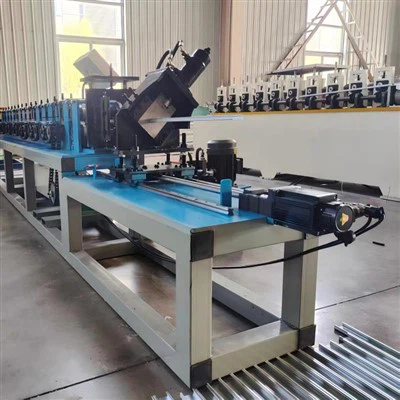
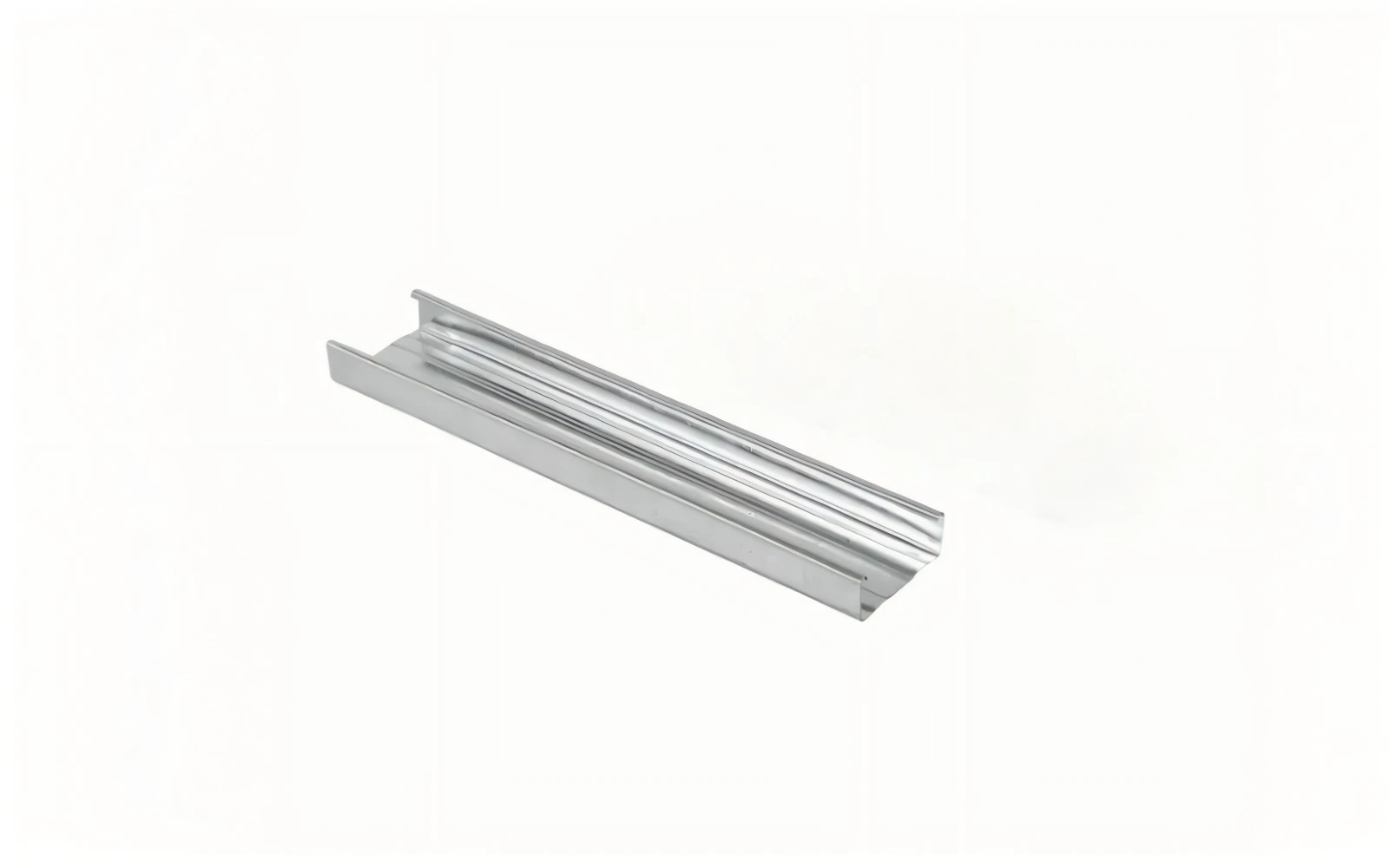
C channels, also known as cold-formed C-sections or C purlins, are among the most versatile and widely used structural steel profiles in modern construction and manufacturing. Produced through continuous roll forming from galvanized or carbon steel strips, they feature a symmetrical C-shaped cross-section with a flat web, two horizontal flanges and slightly returned lips. Unlike hot-rolled structural sections designed for primary heavy load-bearing frames, C channels are optimized for secondary structural applications, combining moderate load capacity, light weight, fast installation and low material cost.
1. Core Properties That Make C Channels Suitable
Before examining specific use cases, it is necessary to understand the inherent characteristics that determine where C channels deliver the greatest value.
1.1 Optimized Bending Performance
C channels are engineered to resist bending loads applied along their major (vertical) axis. The wide flanges distribute compressive and tensile forces efficiently, and the vertical web carries shear force. For uniformly loaded horizontal members such as roof purlins and wall girts, this cross-sectional shape uses material far more efficiently than flat bars or simple angle steel. The lip at the flange tip also improves local buckling resistance, allowing thinner material to carry equivalent loads.
1.2 High Strength-to-Weight Ratio
As a cold-formed thin-wall product, C channels weigh significantly less than hot-rolled channels or I-beams of similar load capacity. This reduces dead load on primary frames, lowers transportation and handling costs, and simplifies on-site lifting and installation. For large industrial buildings and solar arrays where hundreds or thousands of linear meters of secondary framing are required, this weight saving translates into substantial total project cost reduction.
1.3 Installation Efficiency and Connection Flexibility
The open C-shaped profile is inherently friendly to mechanical fastening. Brackets, clips and self-drilling screws can be attached directly to the web and flanges without drilling access holes from the side. In factory production, C channels can be pre-punched with standard hole patterns for purlin brackets, solar clamps and shelf connectors, so that on-site assembly requires only bolting and no welding. This dramatically shortens construction schedules and reduces reliance on skilled welders.
1.4 Standardization and Cost Competitiveness
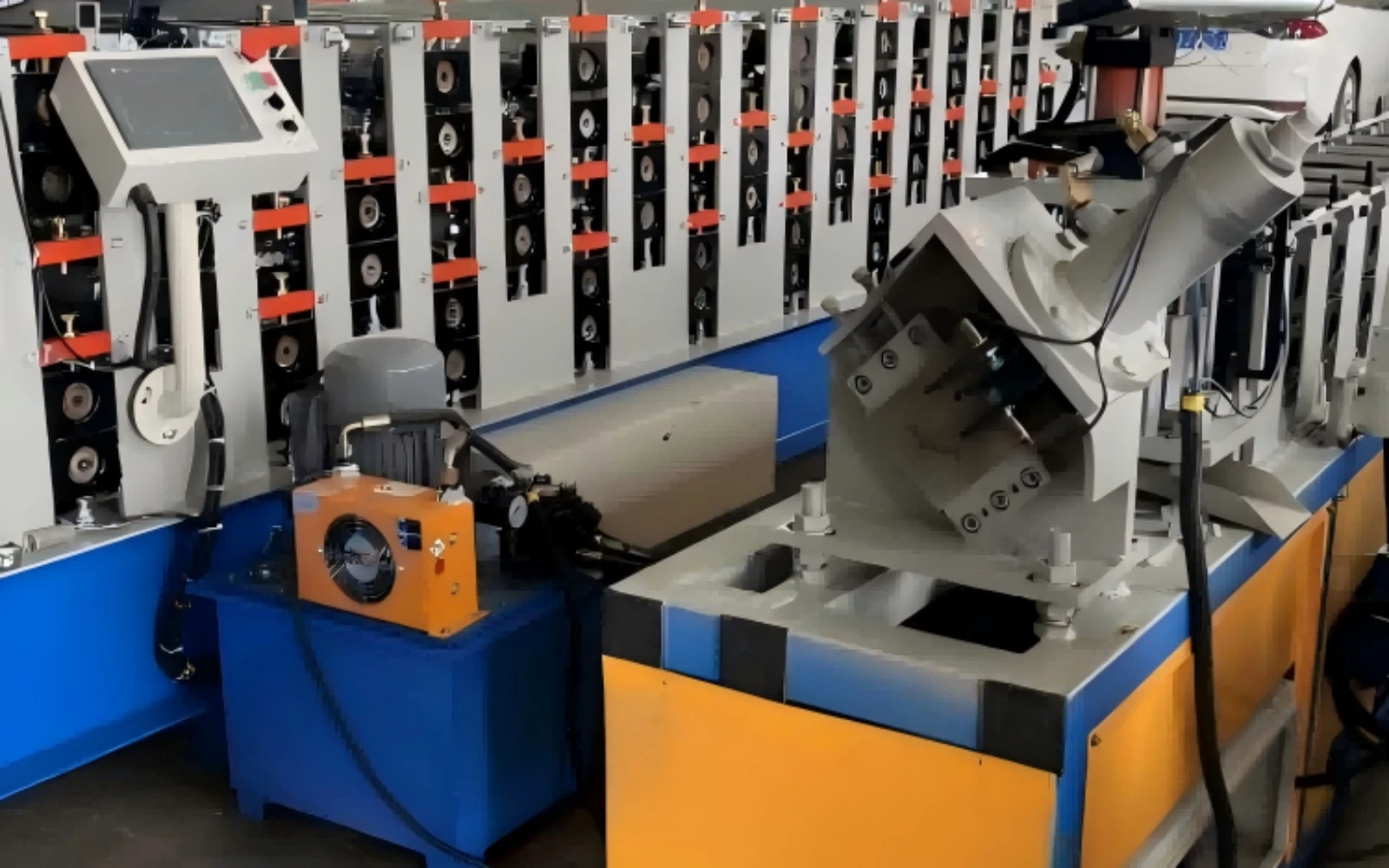
C channels are produced on continuous roll forming lines in large volumes, with highly standardized section sizes and thicknesses. Mass production lowers unit cost, and the high material utilization of roll forming - almost no scrap compared with cut-to-size hot-rolled sections - further improves economy. For projects with long repetitive runs of secondary framing, C channels are almost always the most cost-effective structural solution.
1.5 Flexible Surface Protection Options
C channels can be supplied in bare black steel, pre-galvanized steel coil, hot-dip galvanized finish or powder-coated surface. This allows specifiers to match corrosion protection to the service environment - from indoor dry warehouses to outdoor solar farms and coastal facilities - without switching to more expensive material systems.
2. Primary Application Scenarios for C Channels
2.1 Roof and Wall Purlins in Steel-Framed Buildings
The single largest and most classic application of C channels is as roof purlins and wall girts in pre-engineered metal buildings, industrial workshops, warehouses and logistics parks.
In a typical portal-frame steel structure, primary rigid frames carry the main vertical and lateral loads, while C purlins span horizontally between frame rafters to support roof sheeting, sandwich panels and snow, wind and live loads. Similarly, C-section wall girts span between columns to carry wall cladding and wind suction loads. C channels are ideal here because the loads are predominantly uniform and the bending axis is clearly defined. Standard depths from 80 mm to 300 mm cover spans from 3 m up to 8 m, matching the most common column spacing in industrial construction. Pre-punched C purlins bolt directly to cleats on the main frames, enabling extremely fast erection. For single-slope roofs and shorter spans, C purlins are generally more economical than Z purlins due to simpler end connections.
2.2 Secondary Structural Framing in Buildings
Beyond purlins, C channels are extensively used for secondary framing elements inside and around buildings. Common applications include lintels above door and window openings, wall studs in light steel partition walls, secondary beams for mezzanine floors, stair stringers and roof access platform supports.
In these roles, C channels provide sufficient load capacity for localized secondary loads while remaining lighter and easier to cut and fit than hot-rolled sections. Their open web also simplifies running electrical conduits, cable trays and small pipes through the structure. For light steel residential and modular construction, C channels serve as both wall studs and floor joists, forming the complete load-bearing skeleton of lightweight buildings.
2.3 Solar Photovoltaic Mounting Systems
One of the fastest-growing applications for C channels is solar PV mounting structures for both ground-mount and rooftop solar farms.
C sections are used as main beams, cross rails and support posts for PV module arrays. Their advantages in this field are manifold: hot-dip galvanized finish provides 20+ years of corrosion resistance in outdoor open-air environments; standardized sections and slot-hole connections allow easy angle adjustment and field modification; the material cost is significantly lower than aluminum alloy profiles while offering adequate structural strength; and roll-formed production can match long production runs for utility-scale solar projects. For rooftop solar, the light weight of C-channel mounting systems is especially important because it limits additional load on existing roof structures.
2.4 Warehouse Racking and Industrial Storage Systems
C channels are the foundational profile for most adjustable pallet racking, mezzanine shelving and automated storage systems.
Rack uprights are commonly formed from back-to-back C sections to create high-strength, thin-walled columns with regular slot patterns for beam-level adjustment. Horizontal beams and bracing members also use C channels. The cold-formed process ensures precise dimensional consistency, so that beam connectors clip securely into upright slots and shelf levels can be repositioned quickly. By varying steel thickness and section depth, engineers can design racking systems rated for light, medium and heavy pallet loads, all based on the same versatile C-channel geometry.
2.5 Automotive and Commercial Vehicle Body Structures
In the automotive and commercial vehicle sector, C channels are widely used in truck cargo bodies, van side rails, trailer floor cross-members, bus body frames and recreational vehicle chassis sub-structures.
Their high strength-to-weight ratio helps reduce vehicle curb weight and improve payload capacity. Roll-formed C sections offer consistent dimensional accuracy along long lengths, which is essential for automated vehicle assembly lines. They can be joined by welding, riveting or bolting, and they accept mounting holes easily. For truck side gates and drop-side bodies, C channels provide rigid edge framing while remaining slim and lightweight.
2.6 MEP Support and Pipe Hanger Systems
Mechanical, electrical and plumbing (MEP) engineering is another major domain where C channels are the standard solution.
Unistrut-style C channels - often called strut channels - serve as the backbone for pipe supports, cable tray brackets, duct hangers and seismic bracing systems. The slotted C profile allows installers to slide and adjust hangers and clamps along the channel without drilling new holes, which is invaluable when coordinating multiple service routes in crowded ceiling plenum spaces. Seismic bracing systems for fire mains, air ducts and electrical busbars are almost exclusively built from slotted C channels and matching fittings, because they provide code-compliant adjustability and reliable load transfer.
2.7 Fencing, Guardrails and Enclosure Structures
For industrial safety fences, machine perimeter guards, site hoardings, handrail infill panels and canopy support frames, C channels offer an economical and rigid framing solution.
They can be installed as continuous horizontal rails or vertical posts, and their flat flanges provide a clean surface for attaching mesh panels, cladding sheets or kick plates. Powder-coated or galvanized finishes deliver both durability and a neat appearance. For canopy roofs and walkway covers, C channels serve as lightweight rafters supporting polycarbonate or metal roofing sheets, combining structural function with clean visual lines.
3. Key Decision Factors for Selecting C Channels
Choosing C channels is not simply a matter of familiarity; it should be based on a clear match between project requirements and the profile's capabilities.
3.1 Load Type and Magnitude
C channels excel under uniformly distributed static loads and moderate bending about the major axis. They are the right choice when loads are spread along the member length - such as roof cladding weight, wind pressure on walls and distributed solar panels. If loads are dominated by heavy concentrated forces or impact and fatigue, a heavier hot-rolled section is usually more appropriate.
3.2 Span Length
For typical roof purlin applications, C channels are most economical for clear spans between approximately 3 m and 8 m. Within this range, thin-walled formed sections use material very efficiently. For spans above 9 m, section depth and weight increase rapidly, and it often becomes more cost-effective to switch to hot-rolled sections or trussed purlin systems.
3.3 Installation and Construction Conditions
If the project requires fast on-site assembly, minimal wet work and no on-site welding, C channels are almost always preferred. Their bolt-and-screw connection method reduces skilled-labor dependency and improves site safety. Conversely, if the structure will be fully shop-welded and transported as assembled modules, the assembly advantage of C channels is less relevant.
3.4 Environmental and Corrosion Requirements
For normal indoor, sheltered outdoor and rural environments, galvanized C channels provide fully adequate durability. For moderately corrosive coastal or industrial atmospheres, hot-dip galvanizing plus optional top-coating is usually sufficient. Only in highly aggressive environments - chemical plants with acid fumes, coastal splash zones or permanent immersion - should C channels be replaced with stainless steel or fiber-reinforced polymer sections.
3.5 Project Budget and Schedule
When cost control and tight construction schedules are priorities, C channels offer clear advantages. Lower material cost, lighter handling and faster erection all contribute to lower total installed cost compared with hot-rolled alternatives. For standard industrial buildings, warehouses and solar projects, this economic advantage is usually the decisive selection driver.
4. C Channels vs. Alternative Profiles
Understanding when to use C channels also means recognizing when another profile is a better fit.
4.1 C Channels vs. H/I-Beams
Use C channels for secondary framing, purlins, supports and light-to-medium bending members. Use H or I beams for primary columns and main beams carrying heavy concentrated loads over large spans. C sections are not replacements for primary structural beams; they complement them as an efficient secondary framing layer.
4.2 C Channels vs. Square/Rectangular Tubes
Choose C channels when you need open access for adjustable connections, frequent bolting and attachment of clamps and brackets. Choose rectangular hollow sections when torsional stiffness is important, or when the member is subject to multi-directional loads. For guardrail posts and columns under side load, tubes often perform better; for horizontal rails with bolted accessories, C channels are more practical.
4.3 C Channels vs. Angle Steel
Use C channels for longer spans and higher loads where bending performance matters. Use simple angle steel for small bracing, lacing bars and lightweight fixing cleats. Angle steel is cheaper per kilogram but much less efficient in bending, so for any meaningful span the C channel will be lighter and cheaper overall.
4.4 C Channels vs. Z Purlins
For single-span, simple-support roof purlins and wall girts, C channels are usually simpler and more economical. For continuous multi-span purlin systems where lapped connections can carry moment across supports, Z purlins offer better structural efficiency and are preferred for larger spans and heavier loads.
5. Scenarios Where C Channels Are Not Recommended
C channels have clear limitations and should not be specified beyond their capability.
First, they are not suitable as primary load-bearing beams under heavy concentrated loads, such as crane runway beams or main building girders. The thin-walled open section is vulnerable to web buckling and flange crippling under point loads.
Second, C channels have poor torsional resistance. If a member will be twisted or loaded eccentrically out of the main plane, a closed hollow section will perform much better.
Third, in extremely corrosive or high-temperature environments, standard galvanized C channels may degrade prematurely. In these cases, upgraded material or an alternative structural system should be evaluated.
Fourth, for clear spans well beyond 9–10 meters, the required C-channel section becomes so deep and thick that hot-rolled beams or truss solutions become more efficient and economical.
C channels are a highly optimized structural solution for medium-span, predominantly bending-dominated secondary structural applications. They deliver the greatest value in roof and wall purlins, solar mounting systems, warehouse racking, MEP supports, secondary building framing, vehicle body structures and enclosure systems - scenarios where uniform loads, fast assembly, light weight and competitive cost are the key requirements.