Seamless pipe and welded pipe are the two fundamental categories of carbon and alloy steel pipe used across global industry, construction and energy infrastructure. For decades, a widespread assumption has persisted that seamless pipe is inherently superior simply because it has no longitudinal or spiral weld seam. In reality, the two products are produced by entirely different manufacturing routes, each with distinct technical strengths, economic profiles and optimal application ranges. There is no universal answer to which is "better" - the right choice depends entirely on operating pressure, temperature, fluid hazard level, dimensional requirements, project budget and applicable engineering codes.

Seamless pipe is prized for its monolithic, weld-free structure and proven reliability under extreme pressure and temperature conditions. Welded pipe, produced in forms such as electric resistance welded (ERW), longitudinal submerged arc welded (LSAW) and spiral submerged arc welded (SSAW), offers tighter dimensional tolerances, higher production efficiency, greater diameter flexibility and significantly lower cost for most common specifications. With modern advances in welding technology, online heat treatment and 100% non-destructive testing, the performance gap between high-grade welded pipe and seamless pipe has narrowed considerably in medium-pressure service.

1. Fundamental Differences in Manufacturing Process
The performance differences between seamless and welded pipe originate first and foremost from their completely different forming methods, which define their inherent structural characteristics.
1.1 Seamless Steel Pipe
Seamless pipe is manufactured from solid round steel billets through hot piercing and subsequent hot rolling, cold drawing or cold rolling, with no weld joint along the length of the pipe body. The typical process begins with heating a solid carbon or alloy steel billet to approximately 1200 °C, then piercing it with a conical mandrel to create a hollow shell. The hollow shell is then elongated, reduced and sized through multiple rolling stands until it reaches the required outer diameter and wall thickness. For high-precision applications, hot-rolled seamless pipe may undergo further cold drawing or cold rolling to achieve tighter tolerances, improved surface finish and enhanced mechanical properties.
Because the entire pipe body is formed from a single piece of steel, the material structure is continuous and homogeneous around the full circumference. This absence of a weld is the defining characteristic of seamless pipe and the source of its reputation for reliability under extreme working conditions.
1.2 Welded Steel Pipe
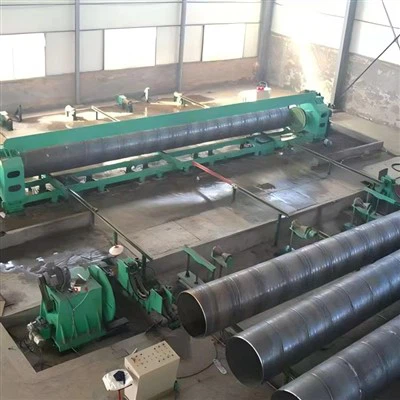
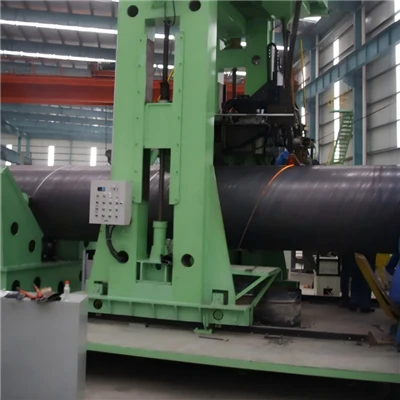
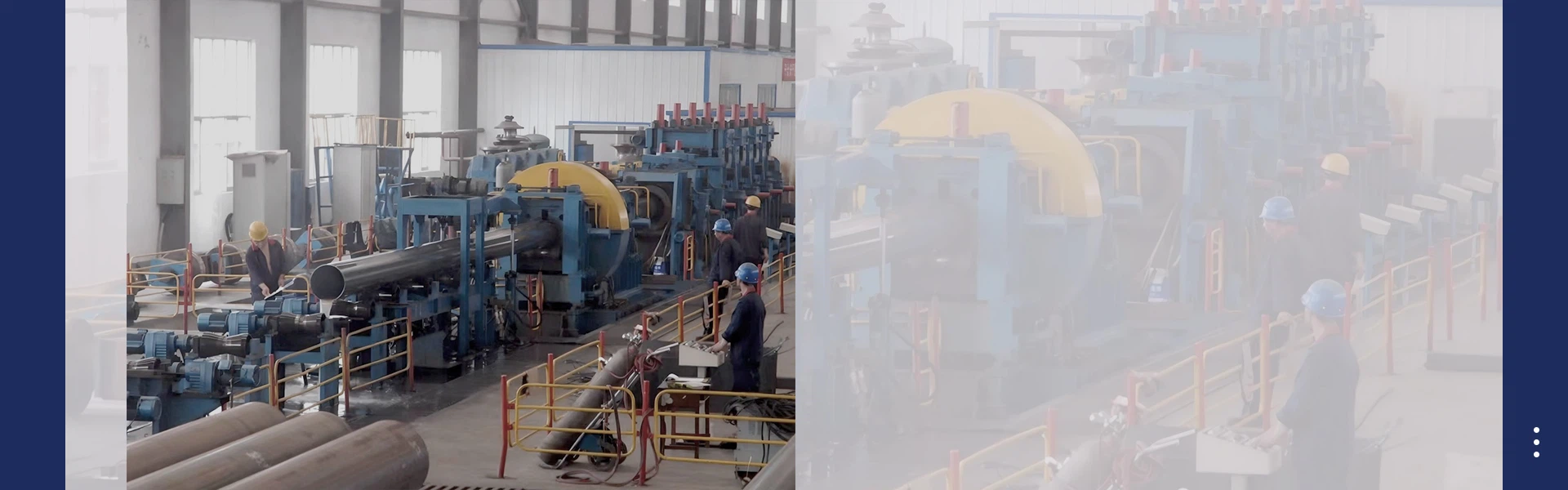
Welded pipe starts as flat steel strip or plate, which is formed into a cylindrical shape and then joined along the abutting edges by fusion welding. According to welding method and weld geometry, welded pipe is divided into three main product families. ERW pipe uses high-frequency resistance heating to melt the strip edges and presses them together without filler metal, making it the dominant solution for small and medium diameters. LSAW pipe is formed from individual wide steel plates and welded along a single straight longitudinal seam with submerged arc welding, typically used for large-diameter thick-wall high-pressure line pipe. SSAW pipe is formed by helically winding steel coil and welding the continuous spiral seam, offering very flexible diameter production at competitive cost.
In all cases, modern welded pipe production includes online weld heat treatment, internal and external weld flattening and full-length non-destructive inspection. When properly manufactured, the weld joint achieves tensile strength and toughness comparable to the base metal, with a weld joint efficiency of 0.85 to 1.0 depending on process and inspection level.
2. Head-to-Head Performance Comparison
2.1 Pressure Rating and Structural Integrity
In terms of pressure-bearing capacity and structural reliability under extreme conditions, seamless pipe holds a clear inherent advantage. Because it has no weld seam, there is no potential weak plane where failure could initiate. Material properties are uniform in all directions, and the pipe can withstand high internal pressure, thermal cycling and mechanical shock without risk of weld rupture. For this reason, seamless pipe is universally specified for high-pressure oil and gas transmission lines, boiler tubes, superheater tubes, heat exchangers and hydraulic power systems where failure would have severe safety consequences.
Welded pipe, by contrast, contains a weld that has historically been regarded as the weakest point of the pipe body. Modern high-grade welded pipe with normalized welds and full inspection delivers very reliable performance, but design codes still apply a weld joint efficiency factor that reduces allowable design pressure relative to seamless pipe of the same grade and wall thickness. For medium and low pressure applications, this difference is practically insignificant and welded pipe is perfectly safe, but for high-pressure, high-temperature or high-hazard service, seamless pipe remains the conservative and preferred choice.
2.2 Dimensional Accuracy and Surface Quality
On dimensional precision and surface finish, welded pipe is generally superior to standard hot-rolled seamless pipe. Because it is formed from precisely gauged steel strip or plate and calibrated through sizing rollers, welded pipe has tighter tolerances on outer diameter, wall thickness and roundness. Typical outer diameter tolerance for ERW pipe is within ±0.5 %, compared with ±1 % or more for hot-rolled seamless pipe. Wall thickness uniformity is also better, with far less eccentricity.
The inner and outer surfaces of welded pipe are smoother and more uniform. After weld seam flattening, the internal surface has no protruding bead, which reduces flow resistance in fluid transmission applications and makes subsequent coating, galvanizing or painting more uniform. Seamless pipe, produced by hot piercing and rolling, tends to have a rougher internal surface, minor dimensional variations and occasional surface scale or imperfections. For applications where precise fit-up, low friction loss or high-quality surface finishing are important, welded pipe is often the better option.
2.3 Cost Efficiency and Delivery Speed
Cost is one of the most decisive factors in most pipeline projects, and here welded pipe holds a substantial advantage. Welded pipe production uses steel coil or plate as raw material with very high material utilization, and continuous or high-volume production lines deliver very high output per hour. Seamless pipe production involves billet heating, piercing, multiple rolling passes and lengthy finishing, with higher energy consumption, greater material loss and lower throughput.
As a result, welded pipe is typically 20 % to 40 % cheaper per ton than seamless pipe of equivalent specification and steel grade, and for large-diameter applications the cost gap is even wider. For large-scale municipal water supply, drainage, fire-fighting and general structural projects, this price difference translates into very significant total cost savings. In addition, welded pipe production generally has shorter lead times and can respond quickly to bulk orders, while seamless pipe, especially in thicker walls and larger diameters, often requires longer manufacturing and delivery cycles.
2.4 Specification Range and Production Flexibility
Seamless technology is unrivalled for small-bore, very thick-wall and high-alloy tubing. It can produce extremely high wall-thickness-to-diameter ratios that are difficult or impossible to achieve by welding, and it is available in a very wide range of alloy grades for high-temperature and corrosion service.
Welded pipe, on the other hand, offers far greater flexibility at medium and large diameters. SSAW production can manufacture very large diameter pipes of 2000 mm, 3000 mm or more from standard-width steel coil, which seamless technology cannot produce economically or at all. ERW lines cover the most widely used small and medium-diameter range at the lowest cost. For most common diameter ranges, welded pipe offers more specification options, faster changeover and better availability than seamless pipe.
2.5 Corrosion Resistance and Service Life
Under uniform corrosion conditions, the difference in corrosion resistance between seamless and welded pipe is small, because corrosion rate depends primarily on steel grade, surface treatment and operating environment rather than the presence of a weld. In theory, a poorly finished weld could act as a preferential corrosion initiation site, but modern high-quality welded pipe has flush, smooth welds that corrode at essentially the same rate as the base metal.
In more aggressive environments involving stress corrosion cracking, hydrogen-induced cracking or severe cyclic loading, the homogeneous structure of seamless pipe offers an extra margin of safety. For general buried water, gas and drainage pipelines with standard external anti-corrosion coatings, both pipe types can achieve a similar service life of 30 to 50 years.
3. Common Misconceptions Clarified
Several widespread misconceptions tend to distort the comparison between seamless and welded pipe.
The first misconception is that "seamless pipe is always higher quality." Quality should be judged against the requirements of the application. For medium-pressure fluid service and structural use, a properly manufactured and tested welded pipe is fully compliant with standards such as ASTM A53 and API 5L, and its dimensional accuracy and surface quality are actually better than standard seamless pipe. "Seamless" does not automatically mean better - it means different.
A second misconception is that "welded pipes leak easily." Modern welded pipe production lines perform 100 % non-destructive testing on every weld, and finished pipes undergo hydrostatic pressure testing. Defective pipes are rejected before shipment. In practice, properly certified welded pipe has a very low failure rate and has been used safely in urban gas distribution and water supply networks worldwide for decades.
A third misconception is that seamless pipe is always more expensive but always stronger. In thin-wall, medium-diameter specifications, the strength advantage of seamless pipe is marginal and rarely exploited in service, while the cost premium is substantial. Paying for seamless pipe in a low-pressure water line is often unnecessary over-specification.
There is no absolute winner between seamless pipe and welded pipe - each is better suited to a different set of operating conditions and project objectives. Seamless pipe excels in high-pressure, high-temperature and high-hazard environments where its monolithic, weld-free structure delivers unmatched reliability and safety. Welded pipe, available in ERW, LSAW and SSAW variants, excels in medium and low pressure fluid service, structural applications and large-diameter projects, where it offers superior dimensional accuracy, smoother surface finish, higher production efficiency and substantially lower cost.
For engineers and purchasers, the correct approach is not to default to seamless pipe as "premium" and welded pipe as "economy," but to select the product that matches the actual design conditions. For the majority of municipal, commercial and general industrial applications, modern high-quality welded pipe is the most cost-effective and technically appropriate solution. For critical high-energy, high-pressure and high-hazard services, seamless pipe remains the gold standard. As welding, heat treatment and inspection technology continue to advance, welded pipe will continue to expand its application range, but seamless pipe will retain its indispensable position in extreme working conditions.