
Efficiency is one of the most important performance indicators in pipeline manufacturing. Regardless of which project it serves, such as oil and gas transportation projects, municipal water supply infrastructure construction, or industrial construction, manufacturers are constantly under pressure to ensure product quality while controlling operating costs and increasing production.
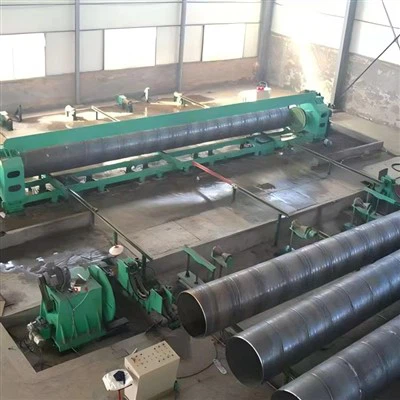
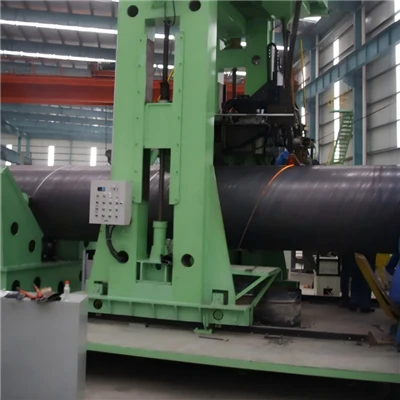
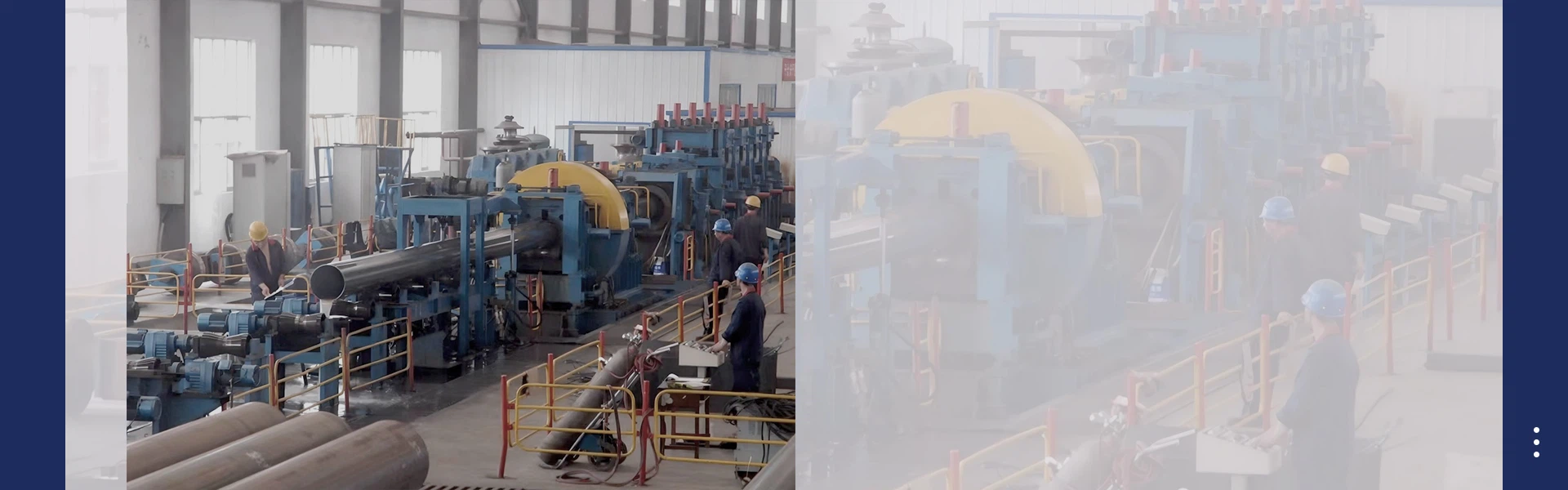
The spiral pipe welding machine is an industrial production system that rolls steel strips into spiral-shaped pipes and continuously welds the edges to produce pipes of different diameters and wall thicknesses.
Although many buyers will pay attention to the machine speed when evaluating equipment, the actual production efficiency depends on the combined influence of various factors, including raw material quality, pipe specifications, forming accuracy, welding performance, automation level, and operation management. Understanding these variables helps manufacturers optimize production and improve efficiency.
How the Quality of Steel Coils Affects the Performance of the Spiral Welded Pipe Machine
The first step of the spiral pipe production line is feeding, so the efficiency of the machine will be affected from the beginning. Therefore, the quality of the steel coils is very important. Stable coil dimensions and surface conditions can enable the forming and welding systems to operate smoothly, reduce the need for adjustments, and minimize downtime.
Changes in coil thickness, edge quality, or surface defects may lead to unstable forming, inconsistent welding, and increased inspection requirements. Therefore, dimensional consistency is a key factor in the performance of steel processing and manufacturing.
The impact of steel coil quality on production efficiency
|
Coil Condition |
Potential Production Impact |
|
Consistent width and thickness |
Stable forming and welding |
|
Surface defects |
Increased inspection and rework |
|
Poor edge quality |
Higher risk of weld defects |
|
Material inconsistency |
More machine adjustments |
How does the pipe diameter and wall thickness affect production efficiency
In fact, the pipe size also directly affects the production speed and equipment utilization rate. For instance, when producing large-diameter spiral welded steel pipes, it usually requires greater forming force, more precise centering, and higher operational capabilities compared to the production of small-diameter steel pipes. Similarly, producing steel pipes with thicker walls requires higher welding energy and longer processing time compared to those with thinner walls.
Different product requirements often necessitate specialized equipment configurations. Therefore, this is why many manufacturers choose to purchase dedicated large-diameter, heavy-duty or thin-walled spiral pipe production lines instead of relying on a single piece of equipment to meet all application needs.
The relationship between pipe specifications and production efficiency is illustrated below.
|
Pipe Type |
Production Challenge |
Efficiency Impact |
|
Thin-wall pipe |
Easier forming and welding |
Higher production speed |
|
Heavy-wall pipe |
Increased welding energy requirements |
Lower production speed |
|
Small diameter pipe |
Faster forming process |
Higher throughput |
|
Large diameter pipe |
More complex forming and handling |
Reduced line speed |
Selecting equipment that matches the expected product range is one of the most effective ways to enhance production efficiency.
The influence of forming accuracy on the spiral welding pipe machine
Forming accuracy is one of the key factors affecting production speed and product quality.
During the production process, the steel strip coil is continuously shaped into a spiral before welding. If the alignment of the rollers is not properly maintained, it may cause dimensional deviations, leading to production interruptions, increased scrap, and decreased output.
A stable forming system helps manufacturers maintain:
1. Consistent pipe roundness
2. Precise diameter control
3. Reliable weld alignment
Even a slight improvement in forming accuracy can significantly reduce adjustment time and enhance the efficiency of the entire production line. In fact, maintaining a multi-helix pipe forming machine well often leads to higher utilization rates because operators spend less time solving production problems.
How does the welding performance affect the production efficiency of the spiral pipe welding machine?
The welding process is usually regarded as the core part of the spiral tube production line. Only when the welding quality remains stable, can a high production speed bring benefits and achieve high efficiency. Poor welding performance may lead to incomplete fusion, pores or incomplete penetration, etc., all of which will increase the rework rate and reduce the effective output.
In the industrial manufacturing environment, maintaining the consistency of the welding process is crucial for reducing defects and maintaining production efficiency.
The factors affecting the welding production efficiency include the following aspects:
1. Stability of welding current and voltage
2. Control of heat input
3. Quality of edge treatment
4. Accuracy of seam tracking
Therefore, many manufacturers use ultrasonic pipeline inspection equipment during the production process or after production to verify the integrity of the weld seam. Early detection of defects helps to reduce subsequent processing losses and improve the overall manufacturing efficiency.
Operational Skills and Production Management
The performance of equipment itself does not determine production efficiency; human factors are a very important reason.
Experienced operators can detect abnormal situations earlier based on their experience, thereby optimizing equipment parameters and minimizing production disruptions to the greatest extent. Moreover, effective production management is equally important, as it can increase equipment utilization by shortening changeover times and maintaining a stable workflow.
Successful manufacturers usually focus on the following aspects:
1. Standardized operating procedures
2. Regular staff training
3. Preventive inspections
4. Production data monitoring
When operators understand both the equipment capabilities and the process requirements, the production line is more likely to consistently and stably achieve the target output.
Practical Strategies for Improving the Efficiency of Spiral Welding Tube Machines
Improving production efficiency cannot be achieved by merely enhancing one factor. Usually, both technological and operational improvements are required to achieve the desired results.
Here are a few aspects to consider:
1. Use high-quality steel coils of consistent specifications to reduce adjustment time and minimize downtime.
2. Optimize forming and welding parameters for each product type.
3. Implement a preventive maintenance plan to reduce downtime.
4. Integrate automated processing and monitoring systems when appropriate.
5. Track key performance indicators such as production output, scrap rate, and equipment utilization rate.
Therefore, the production efficiency of the spiral tube machine is determined by a series of multi-dimensional, interrelated and mutually restrictive factors throughout the entire production process, including the stability of the quality of raw steel coils, the specifications of the tubes, the forming accuracy, the welding performance, the standardization of daily equipment maintenance and management, as well as the professional technical level of on-site operators. All these factors are very important and cannot exist independently. They are mutually restrictive, and any change in any aspect of any link will affect the operation rhythm of the entire spiral tube production line, the product qualification rate, and the final output.
We should recognize that merely blindly increasing the running speed of the machines cannot achieve efficient industrial production of spiral welded steel pipes. Focusing solely on faster feeding and welding speeds will inevitably lead to unstable forming accuracy, increased welding defects, higher scrap rates, and more rework, which will instead reduce overall production efficiency and increase manufacturing costs. High output and high quality production depend on the systematic, optimization, and precise control of the entire production process.
The steel coil raw materials are of poor quality, such as uneven thickness, defects at the edges, mismatched welding current, voltage and forming parameters, as well as irregular daily maintenance and chaotic on-site management, all of which are key factors restricting the long-term stable production capacity of the spiral welded pipe unit. To break through these limitations and maximize production efficiency, the manufacturing enterprise must comprehensively implement refined and standardized production management measures.
These include:
1. Strengthening regular inspections, maintenance and replacement of worn-out components of the equipment to ensure the stability of the mechanical performance of the production line;
2. Also, formulate scientific and unified process parameter standards according to different pipe diameters and steel grades;
3. Implementing strict incoming material inspection and pre-treatment mechanisms to eliminate unqualified materials from the source;
4. Additionally, conducting regular professional training for operators to enhance their parameter adjustment capabilities and fault diagnosis efficiency;
5. Optimizing on-site production scheduling to avoid idle waiting and process interruptions.
Through the coordinated optimization of equipment, technology, materials and human resources, enterprises can effectively improve the operating efficiency of the spiral welded pipe unit, significantly reduce the welding defect rate and production losses, reduce unnecessary time and cost expenditures, and ultimately achieve stable, continuous, high-yield and high-quality industrial production.
With the continuous intelligent upgrading of the pipe manufacturing industry, advanced technologies such as real-time digital parameter monitoring, automatic fault warning systems, and intelligent parameter adaptive adjustment will be widely applied to the spiral welded pipe production line. These innovative technologies will further reduce human errors, lower equipment failure rates, stabilize production rhythms, and significantly enhance the intelligence level and overall production efficiency of spiral welded pipe manufacturing, providing strong technical support for the efficient and high-quality development of large-diameter welded pipe projects and pipeline infrastructure construction.