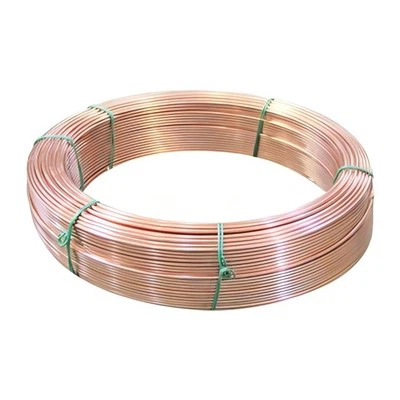
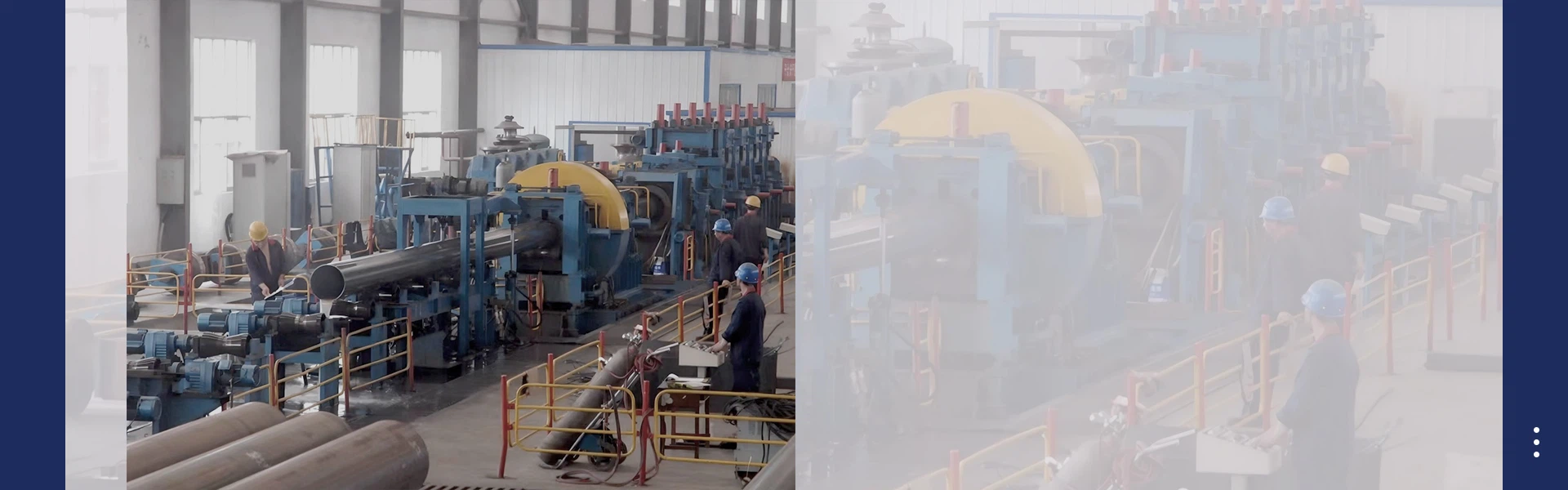
Steel pipes are an important component used in the transportation of oil and gas, municipal engineering, chemical industries, mechanical manufacturing industries, power engineering, and offshore infrastructure.
According to different manufacturing processes, industrial steel pipes are mainly divided into two categories: seamless steel pipes and resistance welded (ERW) steel pipes. Although both of these pipes can meet the requirements of fluid transportation and structural load-bearing, their forming principles, production processes, structural characteristics, mechanical properties, dimensional accuracy, and application scopes have significant differences. During actual procurement and pipeline design, many engineers may have a certain misunderstanding about the performance boundaries of ERW steel pipes and seamless steel pipes, which can lead to improper material selection, potential safety hazards, or cost waste.
Seamless steel pipes are produced by punching and rolling, without welding seams; while ERW steel pipes are made by cold bending steel strips and then welded by high-frequency resistance. The fundamental difference in manufacturing processes leads to significant differences in microstructure, compressive strength, and the stability of service life. Therefore, this article compares these two types of pipes from different aspects to provide a reasonable basis for industrial production and engineering material selection.
The differences in basic definitions and formation principles
1. The principle of seamless steel pipes
Seamless steel pipes are hollow steel pipes made through a continuous hot forming process. They do not require welding during the manufacturing process. The core manufacturing principle is hot piercing and continuous rolling. Seamless pipes are formed from a solid steel billet that is heated to a high temperature, then pierced, rolled, sized, and cooled. Under the high-temperature plastic condition, the solid round steel billet is pierced by a piercing machine to form a hollow pipe billet, and then multiple passes of rolling are used to precisely control the wall thickness and outer diameter. Since there are no cutting, splicing or welding processes during the manufacturing process, the pipe body completely retains the continuous metal fiber structure of the raw material. There are no structural weaknesses such as weld seams. Therefore, this characteristic determines that seamless steel pipes have high overall structural integrity and uniform load-bearing capacity.
2. The principle of ERW welded steel pipes
ERW steel pipes are typical longitudinal welded steel pipes, which are manufactured through the high-frequency resistance welding process. The basic principle is to use hot-rolled steel strips as raw materials, and then use multiple forming rollers to continuously roll the flat steel strips into the shape of a cylindrical hollow pipe. Then, by taking advantage of the skin effect and proximity effect of the high-frequency current, the edges of the pipe blank are rapidly heated to a plastic state. Under the mechanical extrusion effect of the forming rollers, the fused edges after heating are extruded and formed, forming a tight longitudinal weld. Unlike the forming process of seamless pipes, ERW steel pipes are produced by a combination of "forming + welding", with weld seams present in the pipe body. Although modern high-frequency welding technology can make the weld strength close to the base material strength, the weld area is still a metallurgical modification zone, and its microstructure is different from the base material. This is the most obvious structural difference between ERW steel pipes and seamless steel pipes.
Differences in Manufacturing Processes
1. The production process of seamless steel pipes
The production of seamless steel pipes is a complex process. The entire process includes steel billet inspection, high-temperature heating, rotational piercing, continuous rolling, size straightening, cooling, length-cutting, defect detection, and finished product inspection. First, the solid round steel billet is heated in a heating furnace to above 1200℃. The purpose of this is to enable it to have sufficient plastic deformation capacity. Then, the piercing machine pierces the steel billet to form a hollow tubular shell. Next, the tubular shell enters the rolling mill and undergoes multiple reductions and outer diameter corrections to ensure uniform wall thickness and meet dimensional accuracy requirements. Finally, the steel pipe is cooled, straightened, and cut into finished products. The entire process relies on hot rolling and plastic deformation, without any welding procedures. Therefore, the production cycle of seamless steel pipes is long, energy consumption is high, and production efficiency is relatively low. Thus, these drawbacks are more obvious when producing large-diameter and thin-walled specifications of seamless steel pipes.


2. The production process of ERW pipes
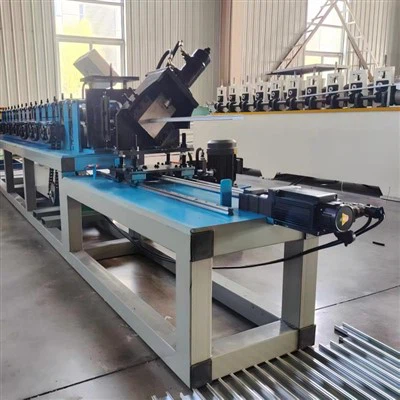
ERW pipes are manufactured on a continuous and efficient cold bending and welding production line. The main processes include unwinding of steel coils, flattening of the strip material, edge trimming, continuous rolling and forming, high-frequency resistance welding, removal of weld seams, cooling, sizing, straightening, fly-cutting, and non-destructive testing. The raw material for ERW pipes is hot-rolled steel coils, which can be continuously fed and continuously produced. The core production step is high-frequency solid-state welding, which can achieve weld fusion without the need for welding wires and flux. The characteristic of the entire production line is its ability to operate continuously, short production cycle and high efficiency. Compared with the production of seamless pipes, the ERW process has lower energy consumption, higher automation level, and stronger production capacity; however, the products are limited by the width of the strip material and the forming process, and there are certain limitations on the production of ultra-thick-walled and ultra-large-diameter specifications of pipes.

Structural and Microscopic Differences
1. Structural integrity
The seamless steel pipe has an overall uniform structure with no welds or weak points in the pipe body. Its internal metal fiber structure is continuous and uniform in all directions, and the stress distribution is consistent when it withstands internal pressure and external forces. The difference is that ERW steel pipes have obvious welds. The weld area undergoes the processes of melting, recrystallization and rapid cooling, resulting in differences in grain structure. Therefore, the structural uniformity of ERW steel pipes is slightly lower than that of seamless steel pipes, and the weld is always the key inspection part and relatively weak link of the pipe body.
2. The differences between dimensional accuracy and surface quality
ERW pipe materials have higher dimensional accuracy and more stable surface quality. Because it adopts strip rolling and precise sizing technology, the wall thickness tolerance, roundness and straightness of ERW pipe materials are well controlled, the inner and outer walls are smooth, and the dimensional deviation is small. Seamless pipes are formed through high-temperature punching and rolling, and their wall thickness uniformity is easily affected by the heating temperature and rolling stability. Therefore, the wall thickness tolerance and surface roughness of seamless pipes are relatively higher.
Mechanical Performance and Safety Differences
Pressure tolerance and structural stability
The seamless steel pipe has excellent overall compressive and impact resistance. Due to the absence of weld seams, common welding defects such as microcracks can be completely avoided. Under ultra-high pressure, low temperature and intense shock working conditions, the seamless steel pipe can still maintain stable mechanical properties and is less likely to suddenly fracture. ERW steel pipes can meet the working pressure requirements of most conventional pipelines, but the weld area is more sensitive to fatigue loads and low-temperature impacts.
Application scope differences
1. Applications of seamless steel pipes
Seamless steel pipes are mainly used in extremely demanding working conditions. For instance, their main application scenarios include high-pressure boiler pipelines, petrochemical high-temperature and high-pressure pipelines, high-pressure natural gas transportation trunk lines, hydraulic power pipelines, low-temperature cryogenic engineering, and high-precision mechanical manufacturing equipment, etc. These fields have extremely high requirements for structural safety, necessitating zero defect rates and excellent adaptability to extreme environments. Therefore, seamless steel pipes are preferred in these applications.
2. The application of ERW pipes
ERW pipes are widely used in medium and low pressure conventional scenarios, such as urban water supply and drainage pipelines, fire protection pipelines, building steel structure pipe piles, secondary transportation pipelines for oil and gas in the general industry, transportation pipelines in the light industry and chemical sector, as well as general mechanical supporting pipelines.
The fundamental difference between ERW welded steel pipes and seamless steel pipes lies in their completely different manufacturing principles and forming mechanisms.
Seamless steel pipes are produced through a process of overall high-temperature punching and rolling, featuring no welds, uniform metal structure, excellent overall mechanical properties, and strong adaptability to extreme working environments. However, their production costs are high, efficiency is low, and the size tolerances are large.
On the other hand, ERW steel pipes are manufactured through cold forming of sheet materials and high-frequency resistance welding. They have the advantages of high production efficiency, low cost, high dimensional accuracy, and smooth surface. However, their disadvantage is the structural difference between the weld and the base material.
When selecting materials for engineering applications, one should consider the actual working pressure, temperature environment, and budget cost, and choose the appropriate type of pipe material accordingly. Seamless steel pipes are suitable for industrial scenarios with high pressure, low temperature, high risk, and high reliability, while ERW steel pipes are the most economical and efficient choice in conventional low and medium-pressure pipeline transportation and structural engineering. With the continuous advancement of welding and heat treatment technologies, the performance gap between high-quality ERW steel pipes and seamless steel pipes is gradually narrowing, which will further promote the future development of the steel pipe manufacturing industry towards diversification and refinement.