TIANJIN BINHAI YASHANWAY IMPORT AND EXPORT CO., LTD
Established in 2009 and based in Tianjin, a key steel hub in China, we export our products to the Middle East, West Africa, Southeast Asia and global markets.
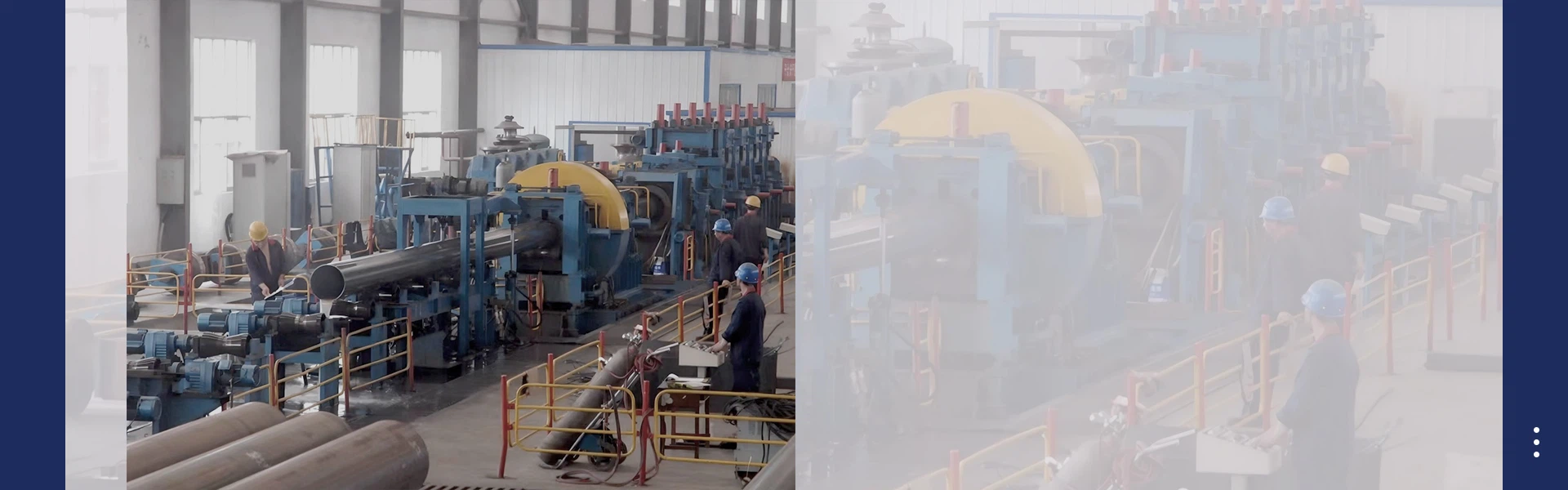
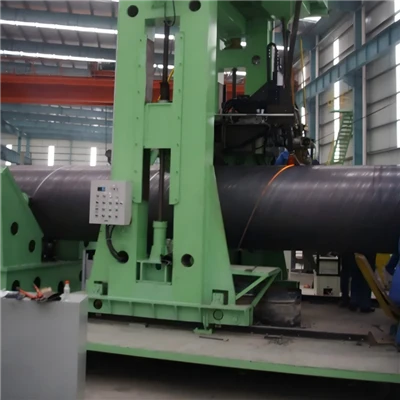
The ERW (electric resistance welded) Pipe is made of cold forming a steel strip into a cylindrical shape. The edges are then fused together using a high-frequency electrical current, producing a highly durable, cost-effective pipe with no added filler material.
It is used to transport oil, natural gas and other vapor-liquid objects. It can meet various requirements of high and low pressure, and plays an important role in the field of transmission pipes in the world.
What is the manufacturing process of ERW Pipe?
Our manufacturing process generally involves the following stages in a step by step procedure:
1. Uncoiling
The raw material is steel coil, is unrolled and flattened. The end of the new coil is butt-welded to the tail of the previous coil to ensure a continuous, manufacturing process.
2. Edge Preparation and Forming
Before forming, the edges of the strip are trimmed or milled to ensure highly precise widths. The strip then passes through a series of breakdown and rolls, which bend the steel into a circular shape gradually.
3. Welding
As the pipe's open edges are pressed together, a high-frequency electrical current passes through the material. The resistance to this current rapidly heats the edges to their melting point, and squeeze rollers bond them together, fusing them into a permanent, longitudinal seam.
4. Deburring and Heat Treatment
The casing or milling tools is used to remove the excess welds on the inside and outside of the pipe, creating a smooth surface. Then, the welded area passed through an induction heater to normalize the weld-relieving internal stress and creating a uniform, strong microstructure.
5. Sizing and Cutting
The pipe goes through a final set of sizing rolls to ensure exact roundness, straightness, and the precise outer diameter. A flying saw then cuts the continuous pipe into required individual lengths.
6. Inspection and Testing
The pipes undergo rigorous testing, including ultrasonic and electromagnetic testing to check the weld integrity, followed by hydrostatic pressure testing to ensure they do not leak under high pressure.
The core manufacturing process of ERW steel pipes is high-frequency resistance welding. When high-frequency alternating current passes through the two edges of the steel strip, the skin effect and proximity effect of the high-frequency current cause the current to concentrate on the contact surface at the edges of the steel strip. The instantaneous generated resistance heat rapidly heats the edge metal to a plastic forging temperature ranging from 1200°C to 1350°C. Under the continuous extrusion pressure of the welding rollers, the heated metal edges undergo plastic melting, and the surface oxide layer and impurities are squeezed out, forming a dense, uniform and high-strength weld seam. This physical and metallurgical combined process realizes rapid and continuous welding, ensuring that the weld strength reaches or even exceeds the base material strength under the premise of meeting the process parameters. The entire production line operates in a continuous cycle, laying the foundation for large-scale, standardized and high-efficiency steel pipe production.
Technical Advantages of ERW Manufacturing Process
Compared with other steel pipe manufacturing technologies, ERW process has industrial significiant advantages:
1. First of all, the production speed is fast than other steel pipe making machine, so the efficiency is high. The continuous rolling and high-frequency welding mode realizes streamlined mass production, which is far more efficient than seamless pipe rolling and manual welding.
2. Secondly, the dimensional accuracy is high. The roll-forming process and precise sizing ensure uniform wall thickness and stable pipe roundness.
3. Thirdly, the quality of welding joints is stable. High-frequency resistance welding realizes solid-phase melting, resulting in a dense weld structure and excellent comprehensive mechanical properties.
4. Fourth, it has low production costs and high material utilization rate, moreover, there is no waste of welding materials, which is meeting the standards of energy-saving and efficient industrial production.
These advantages make ERW steel pipes play a important role in medium and low-pressure pipeline transportation and structural engineering.
Common Defects
In the high-speed manufacturing process of ERW pipes, various subtle and macroscopic quality defects are prone to occur due to fluctuating equipment parameters, raw material differences, and improper manual operation, which directly affect the structural stability, air tightness and service life of finished steel pipes.
▪️The most common typical defects include incomplete weld fusion, weld slag inclusion, microscopic and macroscopic welding cracks, pipe body ellipse deformation, uneven wall thickness, and surface scratches. Each defect has distinct formation mechanisms and adverse impacts on pipe performance, requiring targeted process supervision and technical control.
1. Incoplete fusion, also called virtual welding, is primarily caused by insufficient welding current, excessive welding speed, or unclean strip edges with oxide and oil contaminants. This defect leads to weak bonding of the weld seam, which is easy to crack or leak under internal pressure, making it a fatal hidden danger for pressure pipeline applications.
2. Slag inclusion refers to impurities of oxides that remain within the weld metal. They are usually caused by improper extrusion force, incomplete removal of welding slag during welding, or unqualified reactions of fluxes. These inclusions can damage the compactness of the weld structure, reduce the mechanical strength and toughness of the joint, and easily induce stress concentration and fatigue failure during long-term service.
3. Welding cracks, including hot cracks and cold cracks, are mainly caused by mismatch of thermal forming parameters and uneven rapid cooling. Hot cracks occur when the welding temperature is high and are due to excessive sulfur impurities in the raw materials; while cold cracks form during the cooling process and are caused by excessive residual stress, which seriously threatens the structural safety of high-strength steel pipe pipelines.
4. In addition, the geometric defects such as the ellipticity and unevenness of the pipe wall thickness are mainly caused by unstable rolling forming pressure, wear of the forming rollers, and unreasonable size parameters. These factors result in unqualified pipe roundness and size tolerance, which in turn affect the subsequent connection and installation of pipe fittings.
5. Surface scratches are mainly caused by the friction between the steel belt and the equipment during the feeding and forming processes, and they can damage the surface integrity and anti-corrosion performance of the pipe body.
Process Control Points
Almost all defects of ERW steel pipes arise from three core factors: substandard raw material quality, unreasonable matching of process parameters, and non-standard operation procedures. To effectively prevent defect formation and ensure stable product quality, standardized full-process control must be implemented throughout the entire production process.
1. First of all, strict incoming material inspection at the factory is the primary barrier for quality control. Manufacturers need to comprehensively test the chemical composition, mechanical properties, and surface condition of steel coils, eliminating raw materials with excessive impurities, rusty surfaces, cracks, or uneven thickness, thereby eliminating potential quality risks at the source.
2. Secondly, standardized pre-treatment of steel strips is of utmost importance. The edges of the steel strips must be precisely trimmed and thoroughly cleaned to remove burrs, oxides, oil stains and scale, ensuring that the welding edges are smooth, flat and uniform, so as to achieve consistent high-frequency heating and complete metallurgical fusion.
3. Thirdly, precise dynamic matching of core welding parameters is of utmost importance. Production technicians need to adjust the welding current, running speed and extrusion pressure in real time based on the pipe material specifications and steel grade, to prevent weld spalling due to overheating or incomplete fusion caused by insufficient heat input, thereby ensuring the dense and uniform microstructure of the weld seam.
4. Fourth, a scientific cooling process control is necessary. After welding, a stable and slow cooling rate should be maintained to prevent the concentration of residual stress and cold cracks caused by a sudden drop in temperature.
In addition, it is necessary to establish a real-time equipment monitoring and regular maintenance mechanism. Regular calibrations of the forming rolls, sizing rolls and high-frequency welding equipment should be conducted to eliminate quality fluctuations caused by equipment aging and parameter deviations.
Through the operation of standardized throughout the entire process, real-time parameter monitoring, and strict quality supervision, the defect rate of ERW steel pipes can be effectively reduced, the overall qualification rate of the finished products can be significantly improved, and the stable and reliable quality of the steel pipes suitable for high-standard industrial applications can be fully guaranteed.
The manufacturing process of ERW steel pipes is a systematic and standardized continuous production system that integrates raw material pre-treatment, rolling forming, high-frequency resistance welding, surface finishing calibration and precise inspection. Each link is interrelated and mutually restrictive, jointly determining the final quality and performance of the steel pipes. Different from traditional welding processes, the high-frequency resistance welding technology enables ERW steel pipes to possess stable welding performance, high dimensional accuracy and excellent production efficiency, making them an indispensable basic material in modern infrastructure and industrial manufacturing. With the continuous improvement of industrial production standards, the manufacturing process of ERW steel pipes is also developing towards intelligence, high precision and high efficiency. A thorough understanding of the entire production process and key quality control nodes is of great significance for optimizing production processes, improving product quality and expanding the application scope of ERW steel pipes.